
Share
Post
Viber icon
Viber
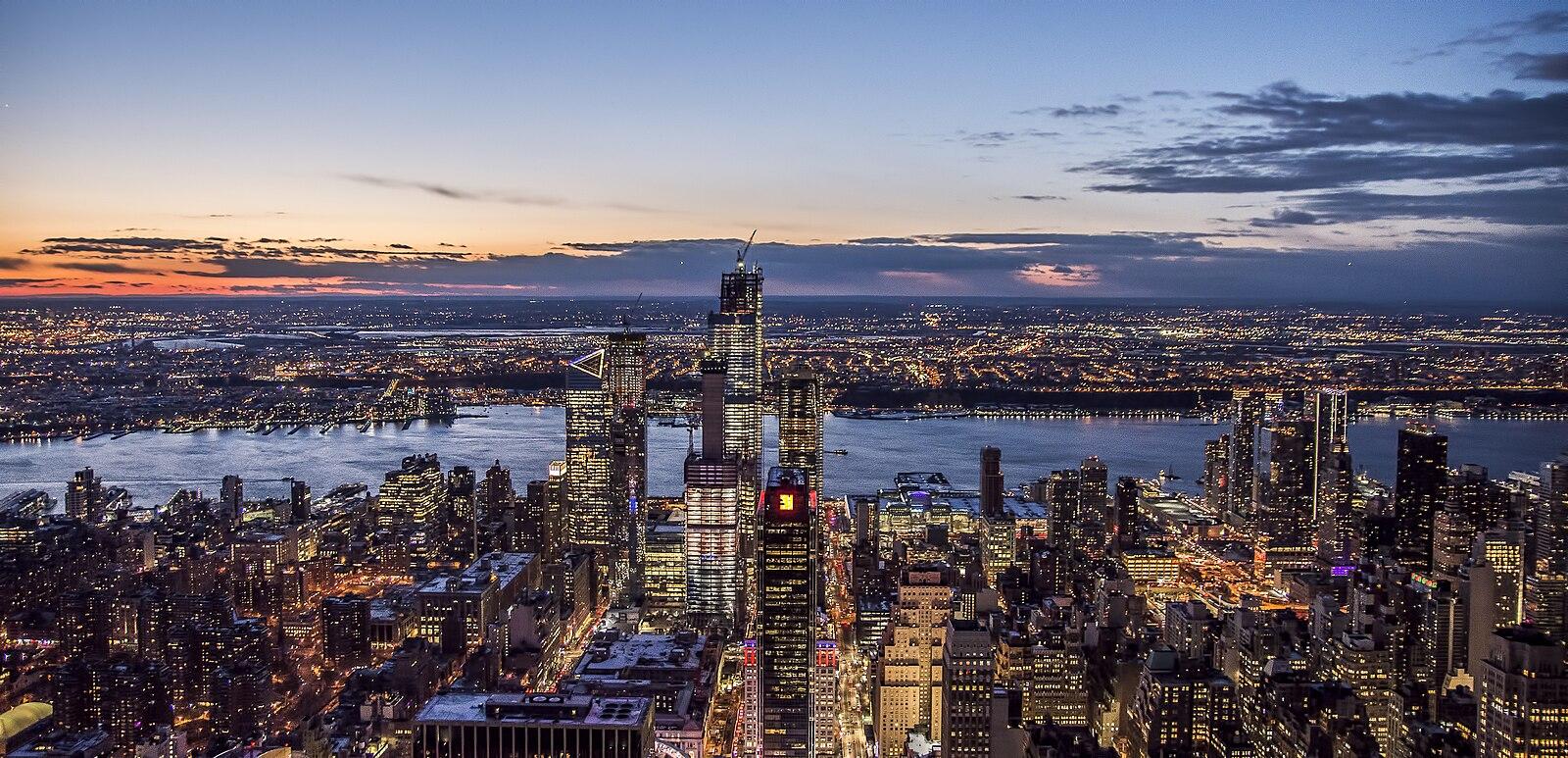
A view of the New York City skyline at dusk. State regulatory actions have cleared the legal path for the city to be considered for full-scale, Vegas-style casino licenses. (Photo by Bruce Emmerling / Wikimedia Commons)
NEW YORK CITY — New York City has cleared a key regulatory hurdle toward hosting its first full-scale, Las Vegas-style casinos, a step that brings the nation’s largest city closer to a major expansion of legalized gambling after years of legislative and political debate.
In December 2025, state and local actions aligned requirements under New York law, allowing the downstate casino licensing process to move forward. The decision does not authorize construction or gaming operations. Instead, it removes the final procedural barrier that had previously prevented full casino licenses from being considered within the city.
State law permits up to three casino licenses in the downstate region, which includes New York City, Long Island, and nearby counties. The licenses would allow table games, slot machines, hotels, entertainment venues, and related commercial development comparable to integrated resort casinos operating in Las Vegas and other global markets.
A long path shaped by law and timing
New York’s casino policy dates to a 2013 statewide referendum that amended the state Constitution to allow commercial casinos. Early licenses were restricted to upstate regions and paired with a temporary ban on downstate casinos, a measure intended to protect initial investments.
That restriction expired in 2023, triggering a multi-year review process involving the New York State Gaming Commission, local advisory committees, environmental assessments, and land-use approvals. The December 2025 actions confirmed that downstate sites, including those within New York City, may now formally enter the licensing pipeline.
What the law allows and what remains unresolved
State statute caps the number of downstate casino licenses at three. The Gaming Commission retains sole authority to award licenses following financial reviews, suitability investigations, and regulatory compliance checks.
Each proposal must first receive approval from a local community advisory committee composed of state and local elected officials. Without that approval, the commission is legally prohibited from issuing a license. As of publication, no downstate licenses have been awarded.
Revenue, jobs, and competing expectations
State officials have consistently framed downstate casinos as a revenue strategy. Budget projections anticipate billions of dollars in licensing fees, gaming taxes, and related economic activity over the life of the licenses.
By law, casino revenues are directed toward public education, local government aid, and infrastructure funding. Supporters argue that large-scale casino resorts could create thousands of construction and permanent jobs while expanding the city’s hospitality and entertainment capacity.
Opposition and regulatory safeguards
Casino expansion has drawn opposition from community organizations and some elected officials, who cite concerns about gambling addiction, traffic congestion, neighborhood disruption, and environmental effects.
Regulators emphasize that casino licenses carry extensive oversight requirements, including responsible gaming programs, coordination with law enforcement, labor protections, and ongoing compliance audits. Violations can result in fines or license revocation.
Regional impact and next steps
The arrival of full-scale casinos in New York City would represent a significant shift in the Northeast’s gaming landscape. Analysts say new resorts could alter tourism patterns, affect existing casinos in upstate New York and neighboring states, and influence employment and transportation demand across the region.
The Gaming Commission is expected to continue its evaluation process into 2026. Even if licenses are granted, large-scale casino projects would require several years of construction before opening.
For now, New York City has not approved casinos outright. What it has done is clear the legal path that makes them possible.