
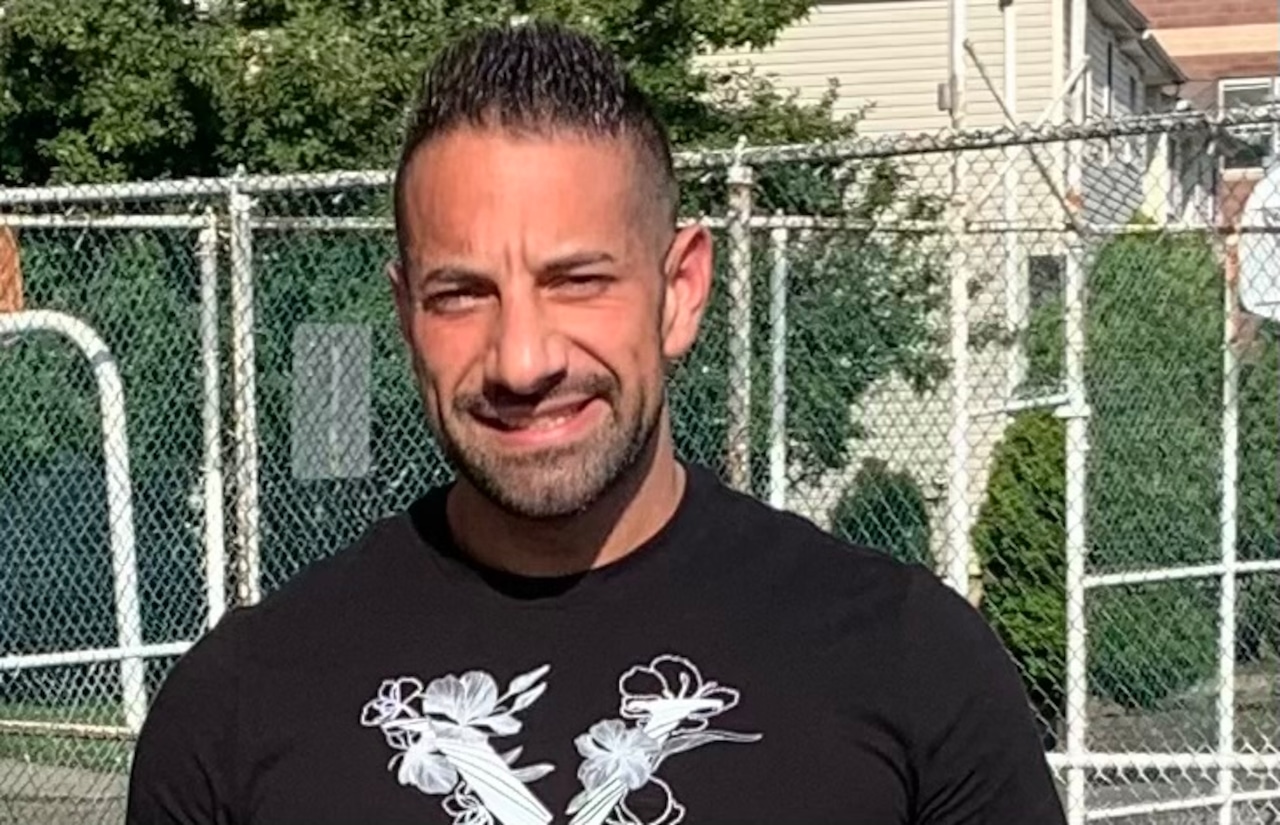
Editor’s Note: In honor of the many everyday Staten Islanders who give back, make change, inspire others, advocate and/or care about their community, we are highlighting some of the standouts, and honoring them as Staten Island’s Brightest Lights of 2025.
Staten Island’s Brightest Lights of 2025: Michael Murdocco
Michael Murdocco’s journey is a powerful testament to resilience and redemption. His story begins with promise—good grades, a bright future—but spiraled into years of substance abuse that nearly cost him everything. Instead of letting addiction define him, he fought his way back, determined to reclaim his life and share his experience to help others avoid the same path.
“The old me died, and that’s when I was resurrected and started a new life,” he said about the start of his recovery.
Today, he speaks openly about the choices and circumstances that led him to heroin, using his voice as a tool for change. Through candid conversations, he’s breaking down stigma and offering hope to those still struggling.
Here is his story, originally published July 14, 2025:
STATEN ISLAND, N.Y. — Michael Murdocco believes he’s overdosed at least twice.
Waking up in his car one night in front of the home of someone from whom he had purchased heroin, he vaguely recalls firefighters putting him in an ambulance after administering naloxone — a medication that rapidly reverses the effects of an opioid overdose.
“I told them I was taking a nap,” he said. “But everyone knew I wasn’t taking a nap.”
Rushed to Richmond University Medical Center, he was discharged a few hours later. The fact that he had snorted all of the heroin he had on him likely saved him from having NYPD officers putting him in a police patrol car and taking him to a Staten Island precinct stationhouse, he admitted.
Murdocco, a Westerleigh resident, was once a promising student at Port Richmond High School’s Collegiate Academy. Today, at 41, he’s a recovering addict who credits divine intervention with saving his life.
“If I didn’t get sober when I did, I would 100% be in the ground already,” Murdocco told the Advance/SILive.com. “There is no doubt in my mind.”
Murdocco’s struggles with addiction began during freshman year, not long after learning of his parents’ impending divorce. That summer, he began experimenting with marijuana and alcohol. Fast forward to junior year, and he was barely attending school.
“I basically dropped out,” he said. “I would just go for third period just to not get the phone calls home.”
His drug use escalated to ecstasy that he’d score in the Manhattan clubs he’d get into with a fake ID. But despite the downward spiral he was swirling into, Murdocco was offered the opportunity to return for his diploma rather than settling for a GED. Buckling down, he managed to maintain a 94 average and went on to make honor roll.
After high school, Murdocco briefly attended college in New Jersey, maintaining a near-perfect GPA in the hopes of receiving a scholarship that he ultimately wouldn’t get. With things not playing out as he had planned, he took his father’s advice and applied to the electrical union.
“I’ve never lifted a tool in my life,” Murdocco told his father at the time. Regardless, he joined Local 3 in July 2006 and ended his college career early.
At this point he’d spend his off-hours dabbling as a DJ, surfing the bar scene on waves of alcohol and cocaine, unaware of the darker addiction that awaited him.
Injury led to pill addiction
And by 2010, his life took several sad detours, including the death of his grandmother. He suffered a workplace injury that both tore his shoulder and took off a piece of his finger.
He was prescribed 30-milligram oxycodone pills for pain management.
“That’s where I think that whole epidemic started,” he said. “I got hooked really bad on the pain pills.”
His doctor, a pain management specialist who would go on to be convicted in 2017 for his role in a multi-million-dollar opioid distribution ring in which authorities alleged he prescribed 2.6 million oxycodone pills, upped Murdocco’s script to 240 pills a month, Murdocco said. A dosage of eight pills daily.
Murdocco said he would often alternate between taking the prescribed dose and taking liberties with the directions on the bottle as he crushed and snorted up to 12 pills a day.
Still, he went about his daily routine.
“It was basically I was more in survival mode than living,” he said. “Because now I was physically dependent on these pills.”
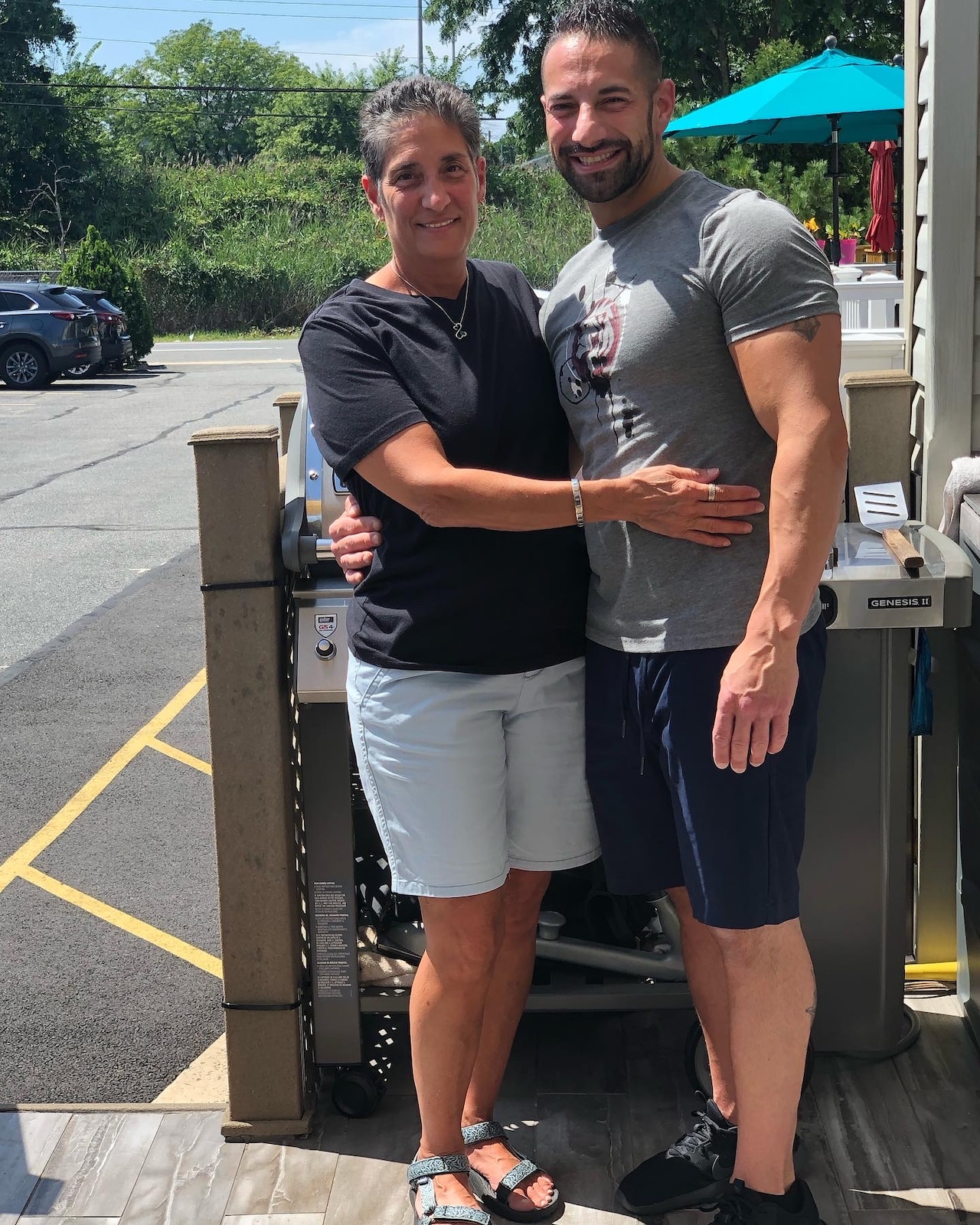 Michael Murdocco emphasizes the importance of having a supportive family. He maintains that building a strong recovery foundation is essential for those looking to crawl out of those dark downward spirals. Here he is pictured alongside his mom, Sharon.(Photo courtesy of Michael Murdocco)
His addiction strained his relationship with his younger brother. His life became what he described as “a free-for-all for a couple of years,” as his days ticked by while he self-dispensed oxycodone, cocaine and ketamine.
It wasn’t until summer 2015 that Murdocco reached his tipping point. He had run out of an entire month’s worth of pills before his next scheduled doctor’s appointment and was facing withdrawal symptoms with work in the morning. He dialed an acquaintance who happened to use heroin.
“I just wanted something to hold me over, so I didn’t have to go through withdrawals,” he explained. But after trying heroin, he realized it was cheaper than pills and produced the same effects. Within months, he was sniffing “two to three bundles a day, which is like 20 or 30 little bags.”
“When I was on heroin, it was like being possessed,” Murdocco explained. “It’s like you’re in your body, but you’re not. You’re not in control of anything.”
Admits struggle to family
By November 2015, he finally admitted to his family that he was struggling, even though they had their suspicions. Two days after Christmas, he entered Clearbrook Treatment Center in Pennsylvania for a 28-day program.
“I had to ask my father for money to go get heroin just so I wouldn’t be in withdrawal until I got to the rehab and they put me into detox,” he explained.
Despite completing the program, Murdocco wasn’t fully committed to recovery. He returned home, attended some Narcotics Anonymous meetings, but didn’t work with a sponsor or complete a 12-step program.
Eventually, he began drinking occasionally, which led back to using cocaine and back to the waiting room of the pain management doctor’s office.
It wouldn’t be until Martin Luther King Day in 2017 that Murdocco felt completely defeated. Mentally, physically and spiritually drained, he “just felt like an empty soul.”
‘God came to me’
“But something came over me that day. For me, it was God,” he explained. “God came to me. God did something to me that day that I can’t explain. And I don’t know how he did it.”
His cousin put him in touch with Alicia Palermo-Reddy who’s become well-known throughout the rehab community and the borough as “the Addiction Angel.”
A registered nurse and 2016 Advance/SILive.com Women of Achievement honoree, Palermo-Reddy set about supporting those with drug issues nearly 20 years ago in response to the high rate of prescription pill overdose deaths on the Island. She now serves as outreach coordinator for Grand Union Holistic Solutions in Travis.
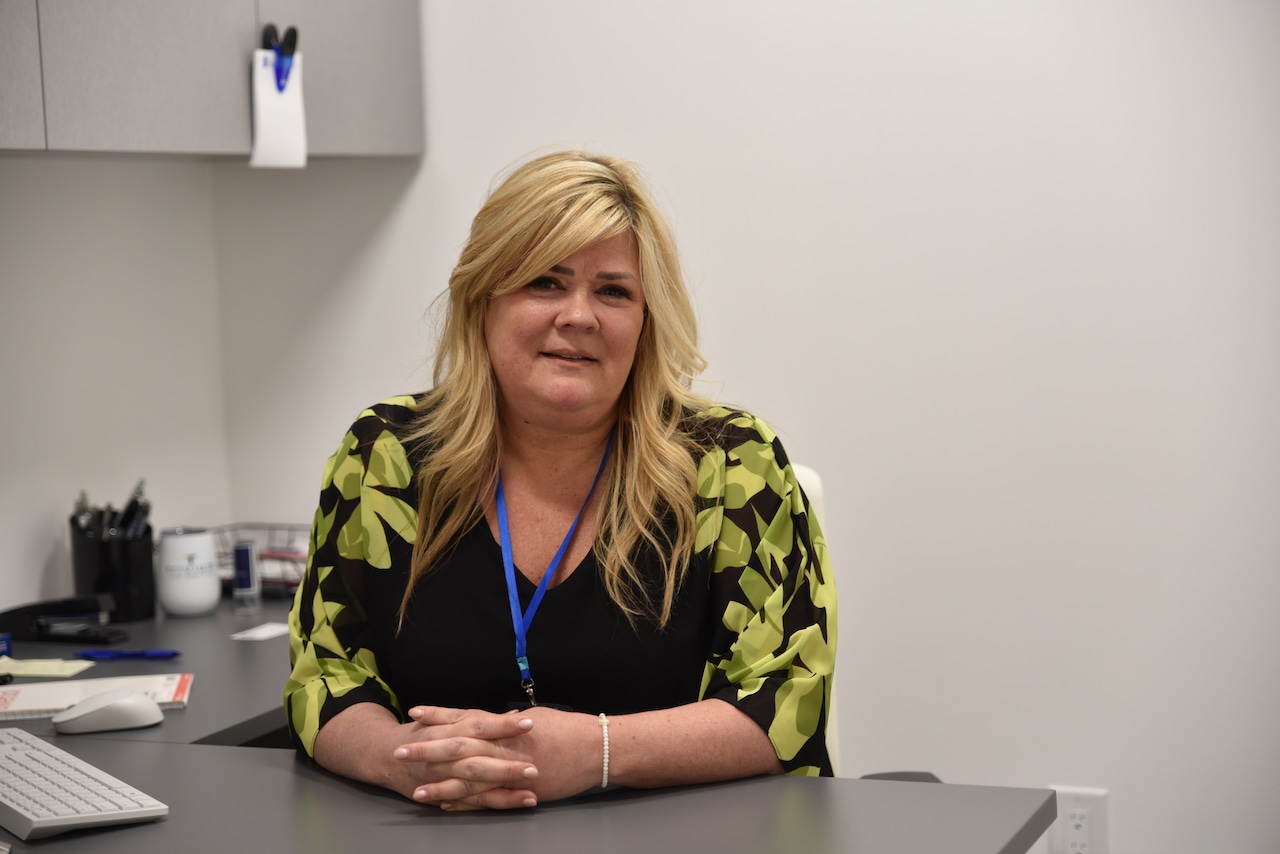 Alicia Palermo-Reddy, known as “the Addiction Angel,” has spent nearly 20 years supporting Staten Islanders facing drug issues. In 2017, she arranged treatment for Michael Murdocco at a rehab facility in West Palm Beach, Florida. (Advance/SILive.com | Scott R. Axelrod)
Without hesitating, Palermo-Reddy arranged treatment for Murdocco at The Recovery Team in West Palm Beach, Florida.
Before leaving however, he chose to endure four days of cold turkey opioid withdrawal in his home.
“It’s like having the flu times a thousand,” he described. “I wouldn’t wish it on my worst enemy. But I told myself this time, you know what? You did this to yourself. You’re going to suffer this time, so you never forget how you feel right now. So that you never have to feel this way again.”
Down in Florida, he fully committed to recovery, staying nearly 100 days and progressing through various levels of treatment. He worked with a sponsor, attended daily meetings and helped other patients.
“This time I was actually enjoying it, smiling, finding peace inside myself for the first time since my parents got divorced,” he noted.
‘The old me died’
Murdocco compares his transformation to a religious experience: “Jesus died and was resurrected at 33. The old me died, and that’s when I was resurrected and started a new life.”
Today, Murdocco remains sober and tries to focus on helping others struggling with addiction. His phone is on and he’s willing to listen.
Emphasizing the importance of having a supportive family, he maintains that building a strong recovery foundation is essential for those looking to crawl out of those dark downward spirals.
“It’s like putting up a building,” he explained. “If you put up a building on sand, it’s going to crumble and come down. But if you use reinforced steel and concrete, that building is going to last forever.”