
Just under a month out from Gov. Kathy Hochul releasing her executive budget proposal, education leaders are pushing for a continuation of last year’s reforms to the Foundation Aid formula.
After a yearslong phase-in, Foundation Aid has remained in the spotlight during budget talks following Hochul’s 2024 proposal to end Hold Harmless, which prevents districts from receiving less funding than the previous year even if the formula generates a cut. Uproar over that proposal led to a $1 million study by the Rockefeller Institute to update the stagnant formula which had been using Census data from 2000, among other badly outdated metrics.
Last year’s state budget replaced outdated poverty metrics and added additional funding for English language earners, a bump for the regional cost index in Westchester County and provided a built-in 2% increase for districts.
Now, as the state’s fiscal picture is looking slightly rosier than initially anticipated thanks to higher than expected tax revenue, K-12 advocates want to see a continued process rather than a one-time fix.
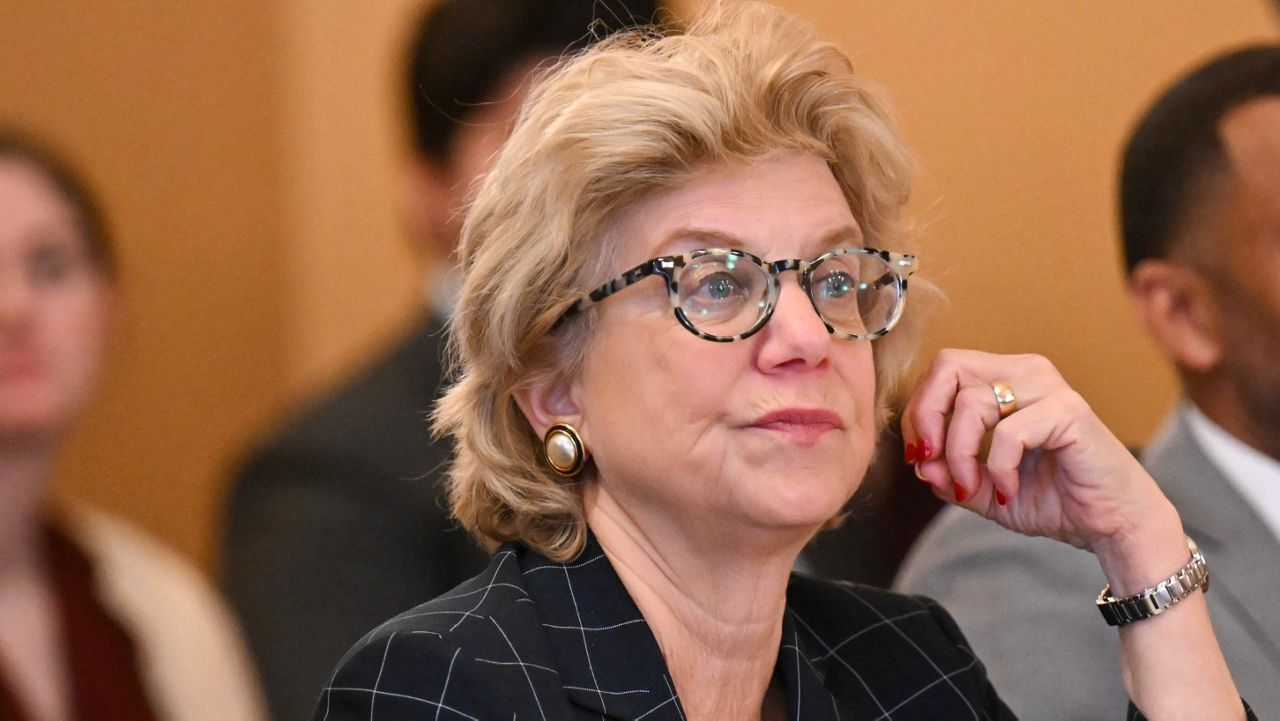
State Sen. Shelley Mayer, chair of the upper chamber’s education committee, says that before talk of the formula itself, the first priority needs to be ensuring that any fallout from federal budget cuts is not felt by New York’s students.
“Do no harm. No cuts to last year’s funding,” she said Thursday.
Mayer hopes the governor will go even further.
“Districts that are not owed Foundation Aid should get at least a 3% increase over last year’s numbers, provided the state has sufficient funds, which I am optimistic it will,” she said.
Beyond that, Mayer agrees with a recent request from the State Board of Regents for changes to the formula which would even better accommodate needs relating to for English language learners, address funding issues relating to students experiencing homelessness, and “support districts seeking to maintain existing levels of educational services.”
“As the Regents recommended, we need to reflect the additional cost of the huge number of students who are not in permanent housing and the additional cost of English language learners,” she said.
Mayer added that additionally, the regional cost index needs to be revisited for New York City.
Budget officials say changes to the Foundation Aid formula are not shaping up to be a key focus of conversations around school funding as they were last year.
Bob Lowry, deputy director of the New York State Council of School Superintendents, thinks that would be a mistake. The Rockefeller study offered a broad range of options, and it remained up in the air last year if the changes which were made were a one and done deal, or if there was more tweaking to come.
“We definitely would urge that the state not abandon the progress it started to make on updating the Foundation Aid formula,” he said.
While Mayer stressed the need for an updated look at the regional cost index for New York City, Lowry wants to see it revised statewide.
“The values in that have never been updated, except for Westchester County, and the way it’s constructed, there are some hard-to-explain differences in aid for districts that are right next to each other,” he said. “That’s something that Rockefeller recommended but the Regents didn’t deal with.”
The good news: the state’s mid-year budget update was more optimistic in light of federal cuts than initially anticipated. It projected more than $37 billion in school aid, a 4.9% increase over last year, and that could potentially tick slightly higher once the executive budget is finalized in the coming weeks.
“That’s much more encouraging than what we were contemplating last spring and over the summer,” Lowry said.
Brian Fessler, chief advocacy officer for the New York State School Boards Association, agreed that the state budget picture is looking brighter, but stressed that overall federal uncertainty is still creating headaches for districts trying to plan ahead — whether literally due to the limited amount of federal funding that goes to schools or due to related factors.
“School folks are waiting for that federal education funding, directly or indirectly, to settle and I don’t know that were ever going to get to that point, even if we have these continued extended continuing resolutions,” he said.
It’s customary in Albany for school aid in the executive budget to come in lower than what advocates desire and what the Democratic majorities in the state Legislature propose in their rebuttals ahead of negotiations.
Mayer is ready for that conversation.
“My job is to fight for change. I am a voice for students and districts, and when inflation and affordability is an issue for individuals, it’s also an issue for districts,” she said.
She is also primed and ready to come back to Albany with immigration issues in mind, telling Spectrum News 1 that action needs to be taken nearly on.
Mayer is pushing legislation that would require schools to have a clear policy prohibiting ICE from entering schools unless they have a judicial warrant and she anticipates that the legislature will come back to Albany with momentum to pass that and other legislation relating to immigration.
“I think the consensus of the members of the Senate majority is we’ve got to do something quicker, we cannot stand on the sidelines. We are talking to other states,” she said. “There is real risk to schools, and other places that I think should be sacred but schools are my purview and, as far as I’m concerned, we should move quickly.”
Mayer said while the New York For All Act is often seen as a catch-all, she feels the Legislature should be taking targeted steps simultaneously.