
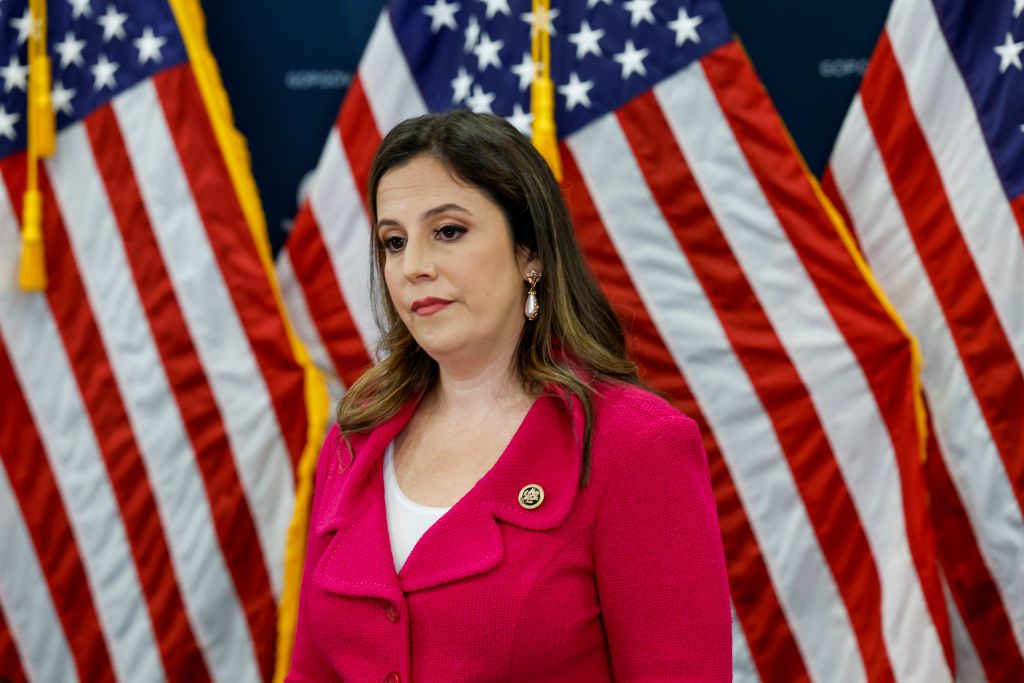
In a surprising turn, Rep. Elise Stefanik abruptly suspended her campaign for New York governor and announced she won’t seek re-election to Congress. Stefanik had been the GOP’s leading contender, already securing endorsements from roughly three-quarters of Republican county chairs in the state.
Publicly, she cited the political math of running as a Republican in a deep-blue state and the prospect of a divisive primary as key factors for dropping out of the race. Indeed, Nassau County Executive Bruce Blakeman had launched a campaign in early December, setting up an intraparty fight that Stefanik deemed an “unnecessary and protracted” use of time and resources. Her exit, coming just a month after formally entering the race, has upended the GOP’s plans and cleared the path for Blakeman to take the mantle.
State GOP chair Ed Cox praised Stefanik and quickly called on Republicans to unite behind Blakeman. But the challenge is vast: no Republican has won New York’s governorship since George Pataki’s tenure ended in 2006. If Republicans wanted to flip New York, they would need to overcome a statewide party enrollment that heavily favours Democrats — 48% to Republicans’ 22% in 2025. In New York City, the partisan skew is starker: Democrats make up 66% of registrants, while Republicans sit at 11%.
Although she entered Congress as a more conventional Republican, Stefanik increasingly aligned herself with Trump. Given the rising anti-Trump sentiment across the country, as shown by the Democratic special election wins in New Jersey and Virginia, Stefanik was not a good choice to flip the state. After all, the path to Republican victory in New York runs through moderate suburbs and culturally liberal city voters.
Any GOP nominee will need to assemble an unusual coalition and message for a Republican — one that reconciles conservative values with New York’s moderate sensibilities. Practically, that means doubling down on issues like public safety and economic affordability, where voter concerns are high, while softening the party’s image on polarising topics like immigration.
Despite Democratic optimism following Stefanik’s withdrawal, all hope is not lost for a Republican in the New York governorship. First, only 18% of Democratic voters approve of their actions in Congress, versus 73% disapproving. Secondly, and more importantly, voters outside Mamdani’s base in New York City may well back a Republican if the alternative is giving Mamdani a free hand to legislate with Hochul, rather than opting for a stronger Albany that imposes clear limits on the city’s mayor.
The next governor will have to contend with a Mamdani mayoralty and the demands of its radical wing, a prospect that may push New Yorkers sceptical of Mamdani’s promises to look beyond Hochul. In that context, the 2026 Republican contender need not run on polarising issues, but must persuade voters they can govern competently. Now that Stefanik is out of the picture, New York Republicans can adapt to an electorate that is fiscally frustrated yet culturally liberal.