
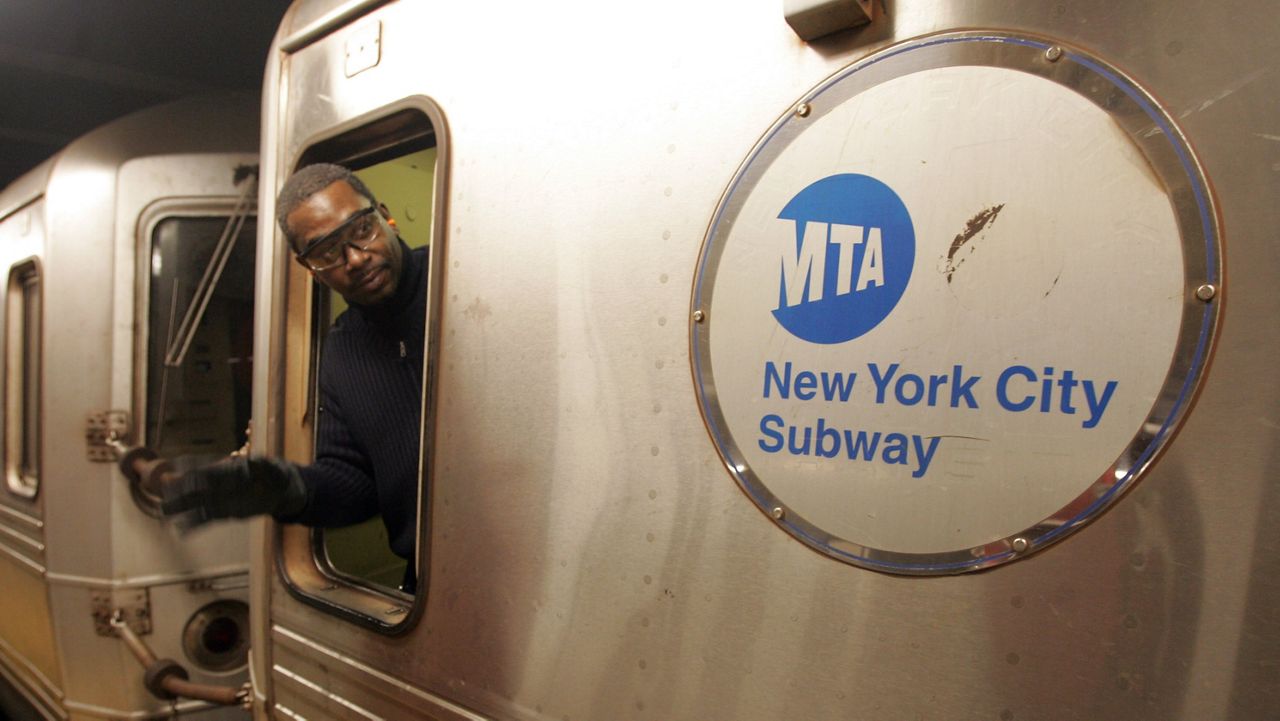
Gov. Kathy Hochul vetoed legislation Friday that would have required city subway trains to operate with at least two workers at all times.
Most subway trains in the city consist of 10 cars, staffed by both an operator who drives the train, and a conductor who makes announcements and opens and closes doors.
What You Need To Know
Gov. Kathy Hochul has vetoed state legislation that would have required subway trains in the city to operate with at least two workers at all times
Most subway trains in the city consist of 10 cars, staffed by both an operator who drives the train, and a conductor who makes announcements and opens and closes doors
Several transit advocacy groups supported the veto, saying one-person train operation is the standard across the world
The Transportation Workers Union, however, strongly supports two-person crews, citing safety concerns
Shorter trains, like the G and the Times Square shuttle, only have an operator.
The bill passed by the state legislature would have permanently mandated both an operator and a conductor on all trains.
The MTA is interested in moving widely towards one-person train operation, OTPO.
The Citizens Budget Commission, Partnership for New York City, Regional Plan Association, Reinvent Albany, and the Transit Costs Project at the NYU Marron Institute of Urban Management said in a joint statement that OPTO is the “global norm used by the vast majority of subway authorities across the world.”
“We strongly support efforts to provide New Yorkers with world-class public transit. This bill would have done the opposite by raising MTA operating costs and constraining the MTA’s ability to implement modern operating methods, adopt new technologies, and provide better service for riders,” the groups said.
In her own statement defending the veto, Hochul echoed the groups’ stance on OPTO safety and savings for the MTA.
“This bill would cost as much as $10 million annually, reducing service, and limiting the MTA’s ability to benefit from capital investments in modern rolling stock and signals,” Hochul said in a statement, in part.
The Transport Workers Union, however, strongly supports two-person crews, citing safety concerns.
John Samuelsen, president of the TWU International, posted responses on social media saying the veto was “futile” and that “Conductors will be on subway cars serving and protecting Blue Collar NYC as long as the NYC Transit system exists.”
John V. Chiarello, president of TWU Local 100, which covers public transit workers in the city, also weighed in.
“While we are of course disappointed that OPTO was vetoed by Governor Hochul, our contract prohibits the further unilateral expansion of the practice on the subway system, and we will continue to operate the trains as we have been, and how it is safest—with both a train operator and conductor aboard. OPTO will not expand due to this veto,” Chiarello said in a statement.