
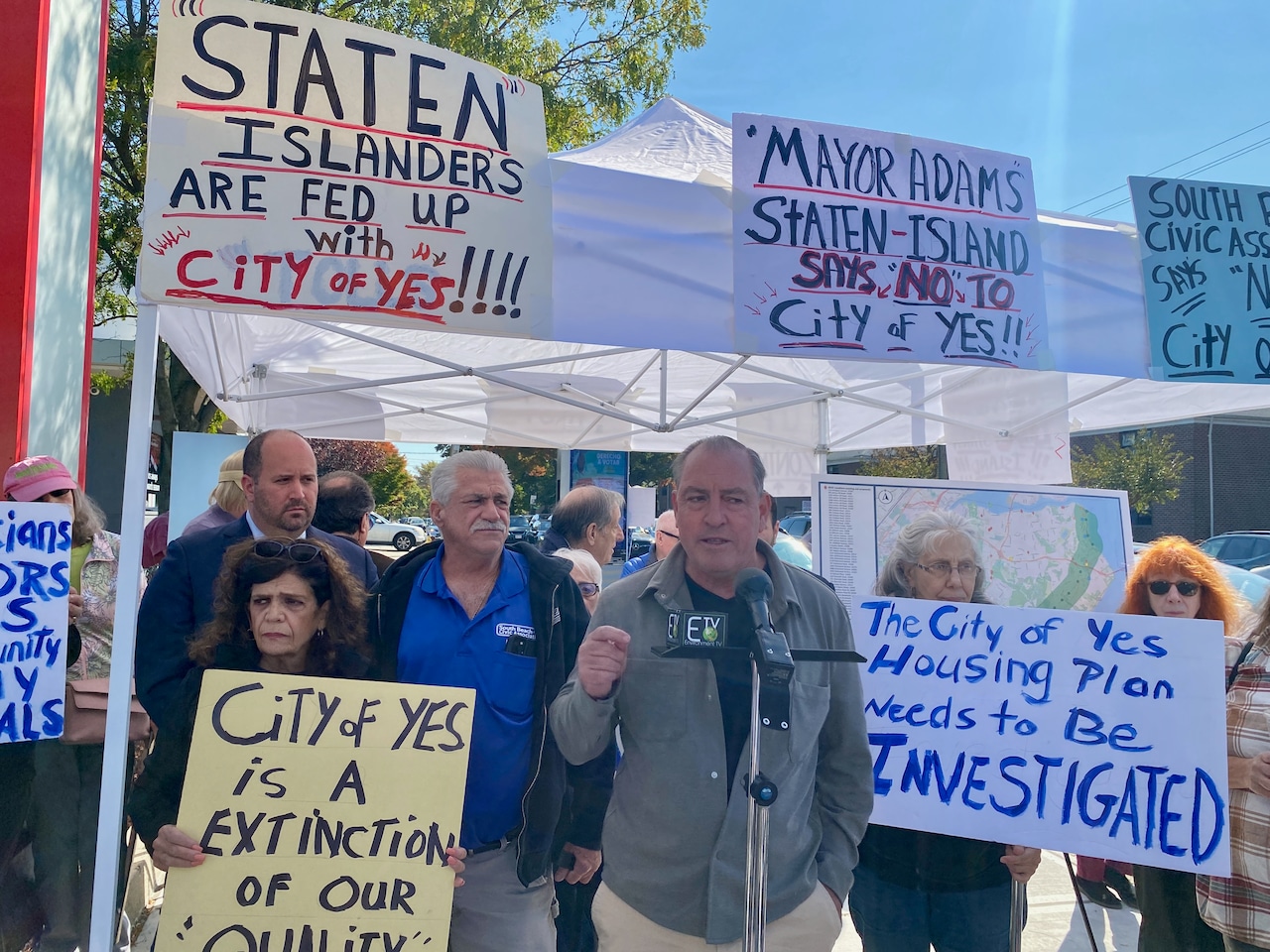
STATEN ISLAND, N.Y. — It’s been more than a year since the City of Yes for Housing Opportunity was implemented, but Staten Islanders are still fighting back against the controversial zoning initiative that they fear will lead to overdevelopment across the borough.
The changes to the New York City zoning code are expected to bring a city-estimated 82,000 units of new housing to the five boroughs in the coming years through a series of regulation changes, including the legalization of ancillary dwelling units, loosening of parking mandates and allowance of higher-density development in transit hubs and town centers.
Earlier this month, Mayor Eric Adams celebrated the one-year anniversary of the City Council passing the plan, which officials have repeatedly said will bring “a little more housing to every neighborhood.”
“One year ago today, our city said ‘yes’ to more housing and a more affordable future for working-class New Yorkers. We turned the page on decades of half-measures and proved that government can still meet the challenges of our time with energy, ambition, and resolve. One year later, we are already seeing the results, with thousands of new affordable homes in the pipeline across our city,” Adams said at the time.
But while city officials rejoice, many Staten Islanders remain up in arms over the zoning changes, fearing they will drastically change the character of their low-density neighborhoods due to new rules as to what can be developed where.
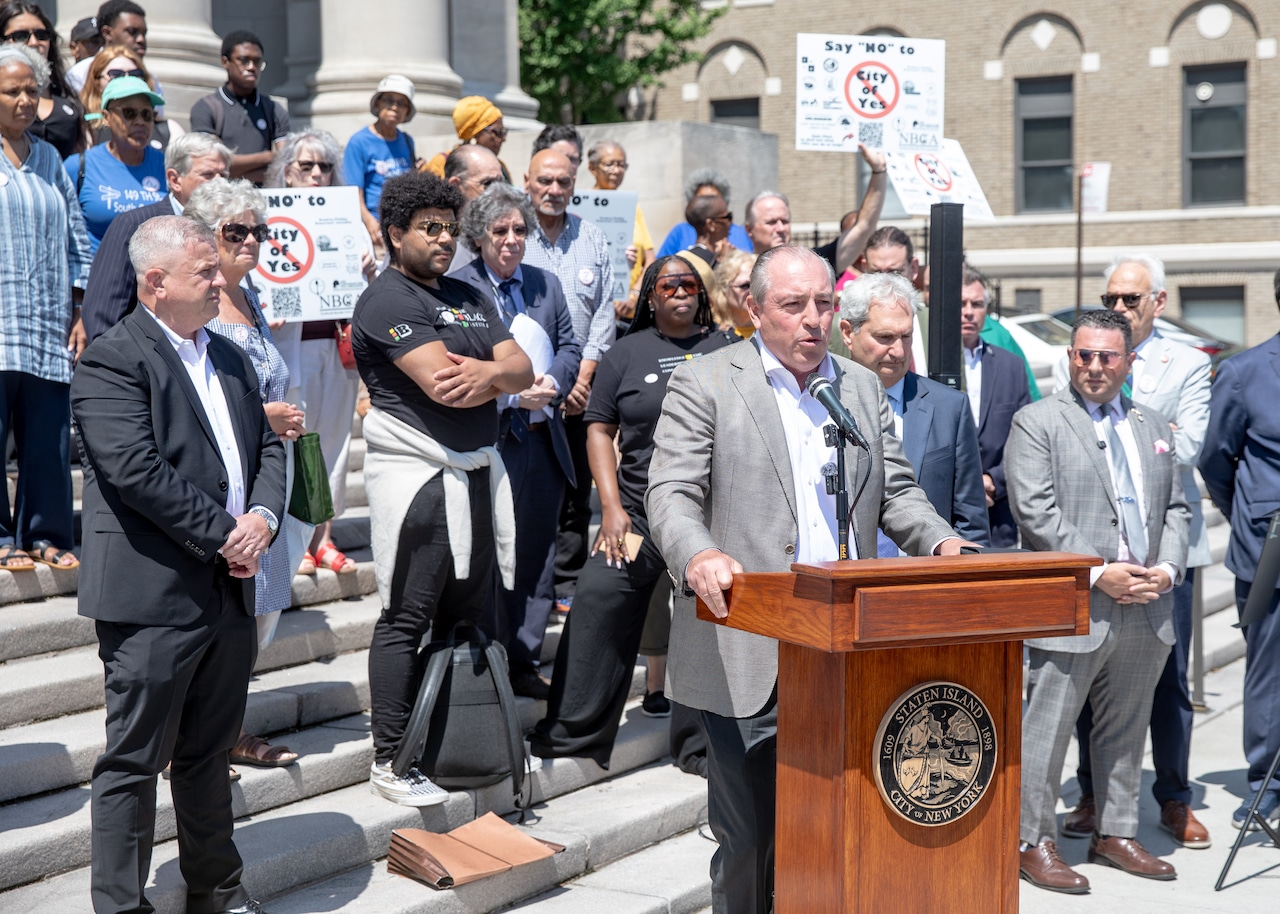 Borough President Vito Fossella holds a press conference following litigation against the City of Yes of outside Richmond County Surrogate Court on Wednesday, July 16, 2025. (Advance/SILive.com | Jason Paderon)Jason PaderonLawsuit filed, dismissed
In March, a host of local civic groups and conservative elected officials, represented by attorney Jack Lester, brought a lawsuit against the city challenging the zoning changes.
A host of Staten Island’s elected officials had signed onto the lawsuit, including Borough President Vito Fossella, a Republican representing the full borough; Rep. Nicole Malliotakis, a Republican representing Staten Island and South Brooklyn; State Sen. Andrew Lanza, a Republican representing the South Shore; Assemblymember Michael Reilly, a Republican representing the South Shore; Assemblymember Michael Tannousis, a Republican representing the East Shore and South Brooklyn; Assemblymember Sam Pirozzolo, a Republican representing the Mid-Island; and Councilmember David Carr, a Republican representing the Mid-Island and part of South Brooklyn.
Three local civic groups — the Old Town Civic Association, the South Beach Civic Association and the Westerleigh Improvement Society — were also party to the suit.
Lester argued that Mayor Eric Adams’ administration failed to meet state-mandated environmental review requirements for the three-pronged rezoning plan, which included carbon neutrality and economic opportunity components in addition to housing.
He had argued that the Department of City Planning circumvented mitigation requirements under New York’s environmental review laws, and split the “City of Yes” plan into three parts — carbon neutrality, economic opportunity and housing opportunity — to avoid some of those requirements.
But Supreme Court Judge Lizette Colon disagreed, dismissing the lawsuit and writing in her decision that the city’s land-use approval process “functioned as intended and created a voluminous and diverse record.”
“It is not the place of the court to second-guess policy decisions, nor interject policy opinions into this review of [state environmental law] compliance,” she wrote. “Rather, the court is merely here to confirm that respondents fulfilled their environmental review obligations under state and city law. To that extent, the court finds that the actions of respondent in creating the Final Environmental Impact Statement are not affected by an error of law and are not arbitrary, capricious or an abuse of discretion.”
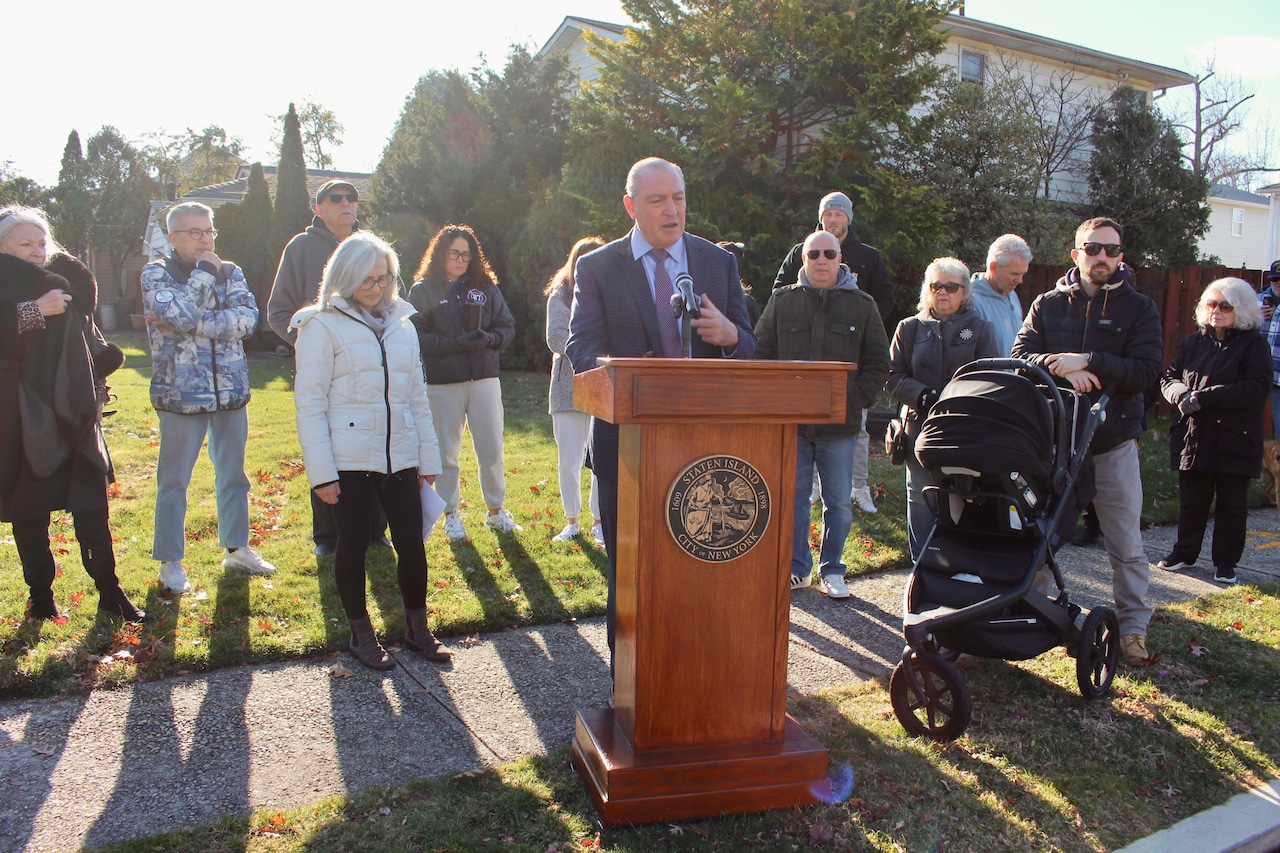 Borough President Vito Fossella held a press conference on Wednesday, Dec. 3, to oppose a plan to replace a single-family home in Great Kills with five, two-family homes. (Advance/SILive.com | Erik Bascome)Advance/SILive.com | Erik BascomePublic outcry
While the lawsuit may have been dismissed, Staten Islanders are still fighting back against the zoning changes by applying public pressure to developers looking to build higher-density housing in places they would not have been able to before.
At a Community Board 3 meeting in October, South Shore residents raised concerns about plans to replace a single home on Uncas Avenue with five, multifamily homes.
Residents who attended the meeting argued that the development would lead to overcrowding and change the character of the neighborhood, which features mostly single-family homes.
“It would just be such a detriment to that area. It would just change the entire makeup of the community,” said one resident who has lived in the neighborhood for 30 years. “We’re also afraid, very afraid of this setting a precedent for future developers to gobble up other lots and do the exact same thing.”
Christopher Stout, a New York City developer who owns the Uncas Avenue property, eventually scrapped the plans for the project, telling the Advance/SIlive.com he took into account the neighborhood outcry and decided not to move forward.
“After reviewing community feedback on the proposed townhouse project, we decided not to move forward at this time. While we stand behind the quality and integrity of our developments, we also make it a priority to invest in areas where our work is a clear fit for the neighborhood. We appreciate those who shared their perspective and look forward to continuing to bring responsible, high-quality housing to the community in the future,” Stout told the Advance/SILive.com.
However, just one week after Stout abandoned the Uncas Avenue project, a similar project he has in the works was brought to light.
Earlier this month, the borough president held a press conference in Great Kills to blast another one of Stout’s plans to demolish an existing single-family home and build five, two-family homes in its place, this time on the corner of Oakdale Street and Ramblewood Avenue.
Fossella, who is a Great Kills resident, again blamed the project on the City of Yes.
“I’m not a big fan of the expression we told you so, but we’re seeing today the results of we told you so with respect to the City of Yes. We fought as much as we could on behalf of the people of Staten Island, on behalf of the people in this community, to prevent what’s about to happen here and elsewhere across the South Shore,” Fossella said.
“We said then and we are finding out now what’s going to happen is that one home could be knocked down… and now the plan is to replace this one home with five, two-family houses. So one family leaves and 10 families come in,” he continued.
But this time Stout plans to hold strong, telling the Advance/SILive.com he has no plans to reverse course in the way he did with the Uncas Avenue property.
 Representatives from the Building Industry Association of NYC spoke with the Advance/SILive.com editorial board on Nov. 25, 2025, to voice concerns about the City of Yes.Advance/SILive.com | Jan Somma-HammelConcerns over transit-oriented development
One particular area of concern regarding the wide sweeping zoning changes is how they may disproportionately impact the neighborhoods along the Staten Island Railway in terms of density increases.
Under the zoning changes, the city has re-legalized the construction of small apartment buildings in low-density areas so long as they meet various requirements, which include being located near a mass transit station.
But officials from the Building Industry Association of NYC recently told the Advance/SILive.com that the new rules allow these apartments to be built too far from Staten Island Railway stations that qualify them for the development.
“It’s very aggressive. It’s basically a blank sheet of paper. If you’re within 2,500 feet of any of the Staten Island Railway stops, either station, you qualify,” said Robert Kelly, chair of government relations for the Building Industry Association of NYC.
“There’s a spot for some of these buildings, right? And I believe they’re much closer to the train stations themselves than what the City Council or [City Planning] Commission has devised… it’s just too large,” he added.
To qualify for a transit-oriented development increase in density, a lot on Staten Island must be located within a half-mile of a Staten Island Railway station.
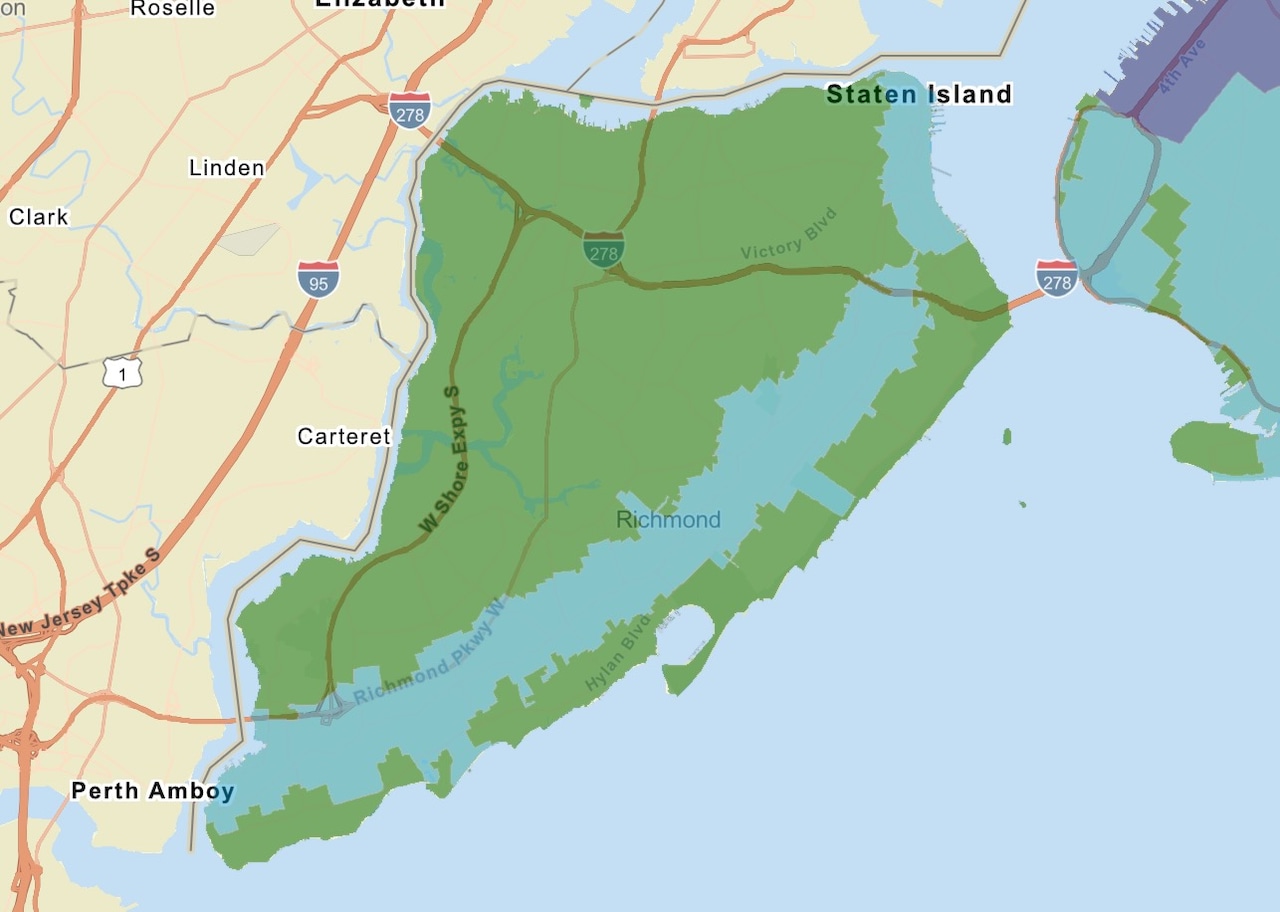 This map from the Department of City Planning shows areas on Staten Island where transit-oriented development now permits small apartment buildings in low-density neighborhoods. (Department of City Planning)Department of City Planning
A Department of City Planning map that highlights the areas where transit-oriented development is permitted shows that the borough’s “transit zone” essentially spans the entire length of the rail line due to the spacing of the stations.
Additionally, the lot must be at least 5,000 square feet and on the short end of the block or facing a street that is at least 75 feet wide.
These apartment buildings can range from three to five stories, depending on the existing zoning in the area.
A representative from the Department of City Planning told the Advance/SILive.com that the half-mile radius was chosen as a commonly-used urban planning measure for a comfortable walking distance to transit.
“Modest apartment buildings exist in town centers across the outer boroughs, and in fact help give New York neighborhoods much of the character that we know and love. City of Yes made targeted zoning changes to re-legalize these three-, four-, or five-story buildings where they fit into the neighborhood, enabling a little more housing in every neighborhood in order to address the city’s dire housing crisis. Over time, these changes will play an important, but gradual, role in giving New Yorkers the housing options they need,” a City Planning spokesperson said.