
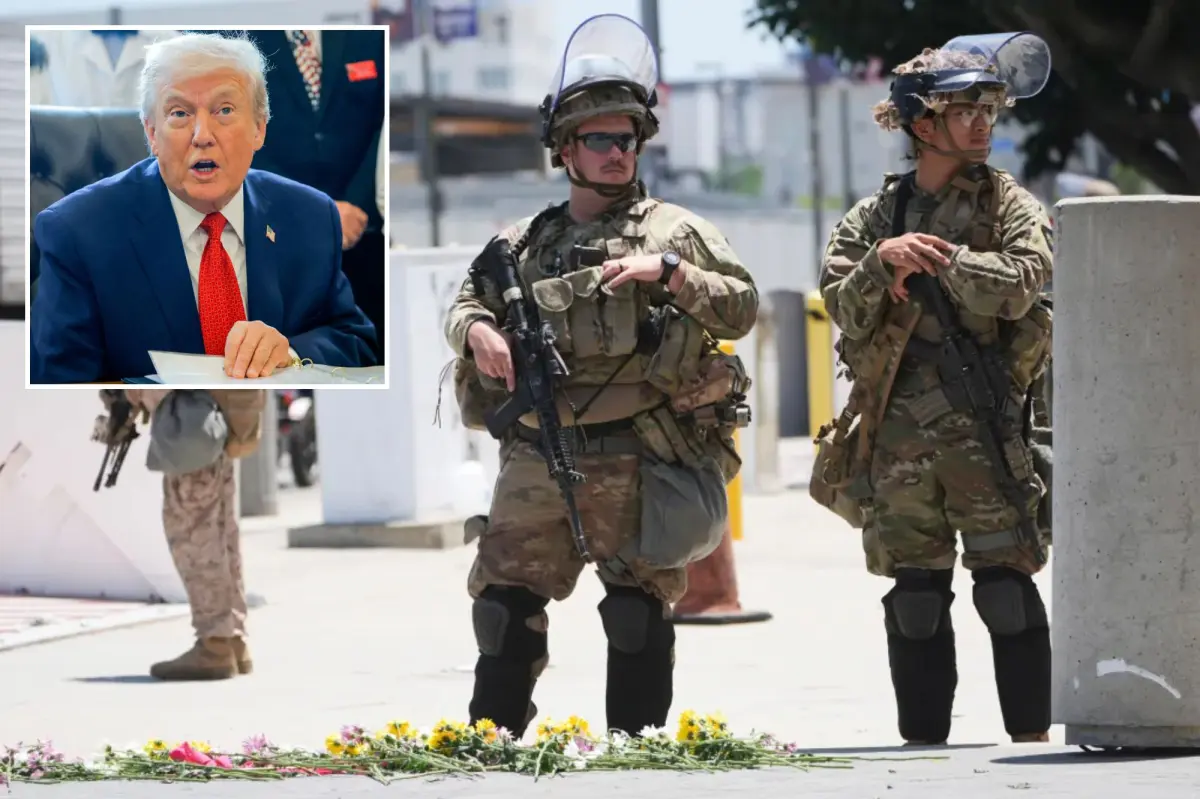
The Supreme Court on Tuesday rejected President Trump’s bid to immediately send the National Guard to Chicago, marking a rare setback for him in the country’s highest court.
Trump had petitioned the Supreme Court last week to overturn a lower court ruling upheld by the appeals court blocking him from deploying about 300 National Guard troops to Chicago to protect Immigration and Customs Enforcement (ICE) agents.
“At this preliminary stage, the government has failed to identify a source of authority that would allow the military to execute the laws in Illinois,” the Supreme Court wrote in its order.
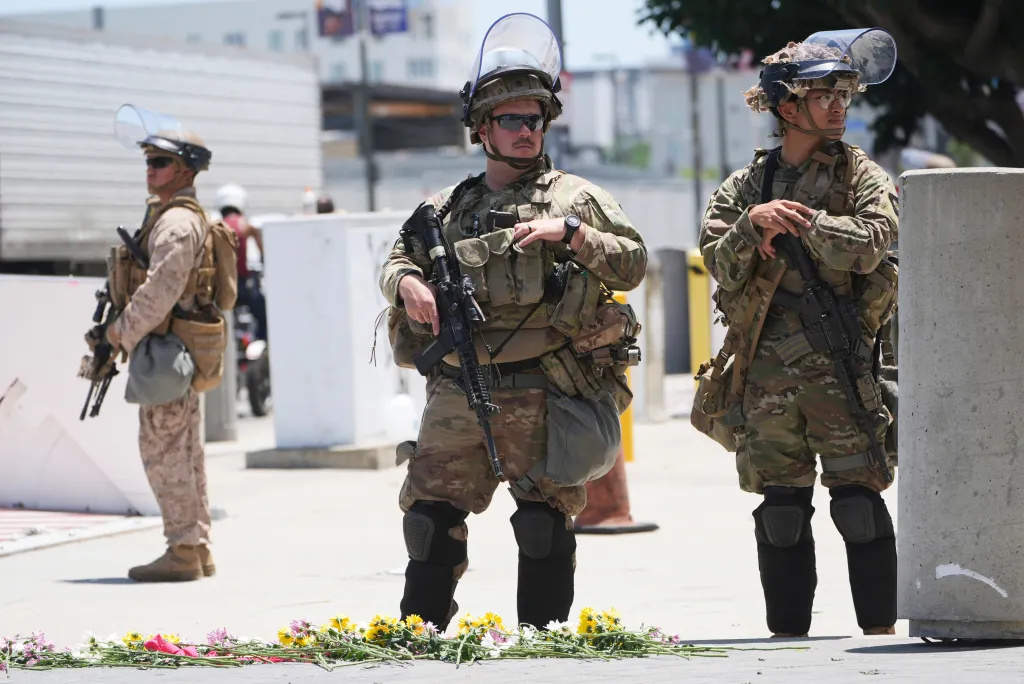 The Supreme Court has rejected Trump’s bid to sent the National Guard to Chicago. AP
Conservative Justices Clarence Thomas, Samuel Alito and Neil Gorsuch all dissented. Meanwhile, conservative Justice Brett Kavanaugh issued a concurring opinion that was more narrow in scope than the Supreme Court’s opinion.
“The court’s legal interpretation, as I understand it, could lead to potentially significant implications for future crises that we cannot now foresee,” Kavanaugh warned in his concurring opinion.
Kavanaugh warned that the Supreme Court’s decision would prevent a sitting president from federalizing the National Guard in emergency situations such as a mob storming a state courthouse.
Trump’s justification for the attempted troop deployment to the Windy City used a law that permits the president to take over the National Guard if he isn’t able to execute the law with “regular forces.”
“Thus, at least in this posture, the Government has not carried its burden to show that [the statute in question] permits the President to federalize the Guard in the exercise of inherent authority to protect federal personnel and property in Illinois,” the high court wrote in its decision.
The president’s legal team pleaded with the high court to reject the lower court rulings because “conditions for federal immigration agents on the streets of Chicago remain dangerous and chaotic.”
His lawyers argued that “regular forces” meant typical federal officers such as ICE agents. But the Supreme Court’s majority concluded “regular forces” refers to the military and determined the statute “likely applies only where the military could legally execute the laws.”
Since August, Trump has sought to deploy the National Guard to cities across the country, such as Portland and Memphis, but has faced setbacks in court for all those efforts.
The president has been successful in sending troops to Washington, DC since August, but the lower courts have expressed doubt about the legality of the move as a federal judge delves into the merits of a challenge against the deployment.
The federal government enjoys more authority over DC than other cities across the country.
Tuesday’s order marked the first time the Supreme Court weighed in on Trump’s attempts to send the National Guard to a city.
For much of his second term, Trump has enjoyed a high success rate with cases that have come before the Supreme Court’s motions docket. Still, the White House downplayed the setback.
“He activated the National Guard to protect federal law enforcement officers, and to ensure rioters did not destroy federal buildings and property,” White House spokeswoman Abigail Jackson said in a statement.
“Nothing in today’s ruling detracts from that core agenda.”