
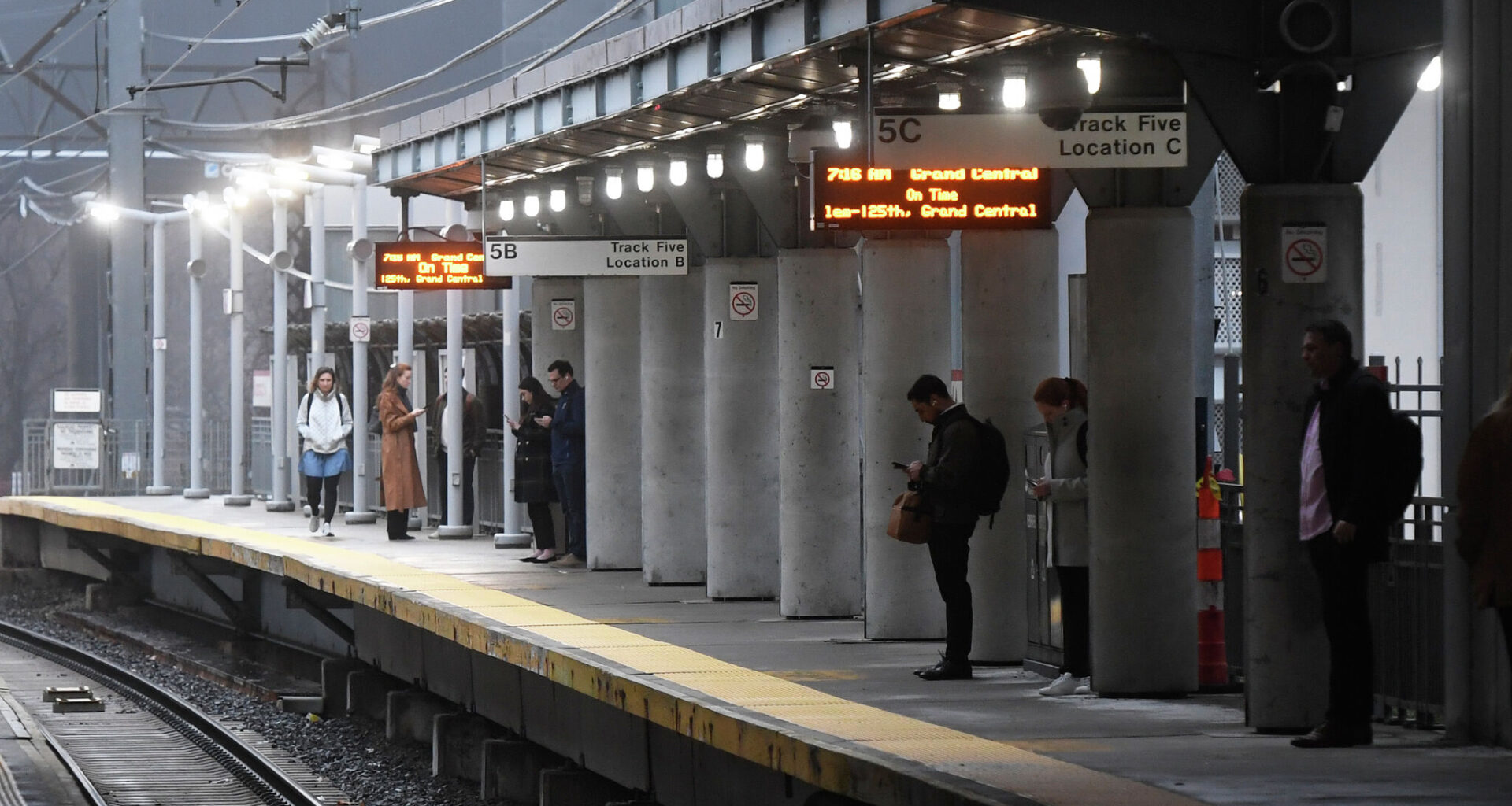
The Metropolitan Transportation Authority said it’s about stopping scammers, but one rider said he’s not sure Metro-North’s new policy that tickets must be activated before boarding the train makes sense.
“It’s going to create potential situations where there’s negative interactions between passengers and conductors, because there often are circumstances where people are genuinely trying to purchase the ticket, but the WiFi connectivity or otherwise is not working, and people are struggling to do that,” said Stamford resident Craig L. Price, who commutes into Manhattan three days a week.
Effective in 2026, Metro-North is requiring an $8 surcharge if your ticket is activated on the train. Once activated, the tickets remain active until 4 a.m. the following day.
There has always been a surcharge for riders buying their tickets on the train, but digital customers, using the MTA’s TrainTime phone application, could buy a ticket in advance and then activate it once they board the train, before the conductor scans the ticket.
MTA Deputy Chief Jessie Lazarus said this has led to “gamification” and “opportunistic fare evasion,” in which customers will not activate their tickets until the last possible second and then use that ticket for a second ride.
“To address this, initially we proposed that all tickets would activate upon purchase and be valid for four hours, even though 90% of one-way tickets are used within four hours of purchase. We did hear a lot from customers who said this change would prevent them from maintaining that day-of flexibility or spontaneity that they do value a lot with their commuter railroad travel,” Lazarus said during the MTA’s September board meeting.
The surcharge was raised by $2, having been $6 since 2009, though Lazarus told the board the MTA would rather not collect surcharges at all.
“We really don’t want to collect money this way,” she said. “Ideally, no customer experiences the surcharge.”
Price’s schedule changes enough that it did not make sense for him to purchase a monthly ticket, but MTA has done away with 10-packs, which, combined with the train activation surcharge, seems like a way to increase revenue, he said.
“This is a way for MTA to get more money,” Price said. “It takes away the flexibility for the passenger and it makes more money, theoretically.”
But MTA Chairman and CEO Janno Lieber said in September the intention is for all riders to pay what they owe.
“Part of our goal here is to get rid of the creeping up of what we call ‘opportunistic fare evasion’ – people who don’t activate their tickets and wait until they see the conductor come through, and gamify it they hope they don’t actually get charged,” he said. “Most of our railroad riders we’re hearing from are angry about that, and we’re trying to respond to the fact that, overwhelmingly, railroad riders want to see everybody paying – that it’s a fair system.”