
BY LAURIE MERMET for The Chief
When New York City passed a law in 2021 saying fast food bosses needed a legitimate reason to fire workers, New Yorkers had strong opinions. Critics said it would hurt businesses and kill jobs. Supporters said they needed protection from getting fired for no good reason.
Three years later, a new report from the city Comptroller Brad Lander shows what actually happened: The fast food industry grew.
The report, released last week, found that since the law took effect in July 2021, the number of fast food restaurants in the city rose from 8,269 to 8,385. More significantly, employment surged 18 percent, jumping from 64,617 to 76,291 workers in the same period.
Now city leaders want to expand these protections to other workers, including delivery and Uber drivers.
Before this law, fast food workers could get fired for almost any reason — or no reason at all — as long as it wasn’t discrimination.
The law requires employers to give written explanations for firings, layoffs or hour cuts of 15 percent or more. For smaller issues, workers get multiple warnings and a chance to improve before being fired, and when layoffs happen, the newest workers go first instead of the veterans.
Didn’t slow growth
The fast food restaurant growth happened while the industry was still bouncing back from Covid-19. The law doesn’t appear to have slowed things down at all, the report showed. Growth after the law beat the rates from pre-law and pre-pandemic.
“[The law] was implemented while this industry was obviously hit hard by the pandemic, and there’s no evidence to suggest that it slowed down growth in employment while the industry was recovering,” said Matan Rider, research and policy analyst for worker’s rights at the Office of the NYC Comptroller who heavily contributed to the report.
After the law passed, the number of restaurants grew by an average of 0.2 percent each quarter. Employment grew even faster, at 1.7 percent per quarter.
The report looked at actual cases to see how the law worked.
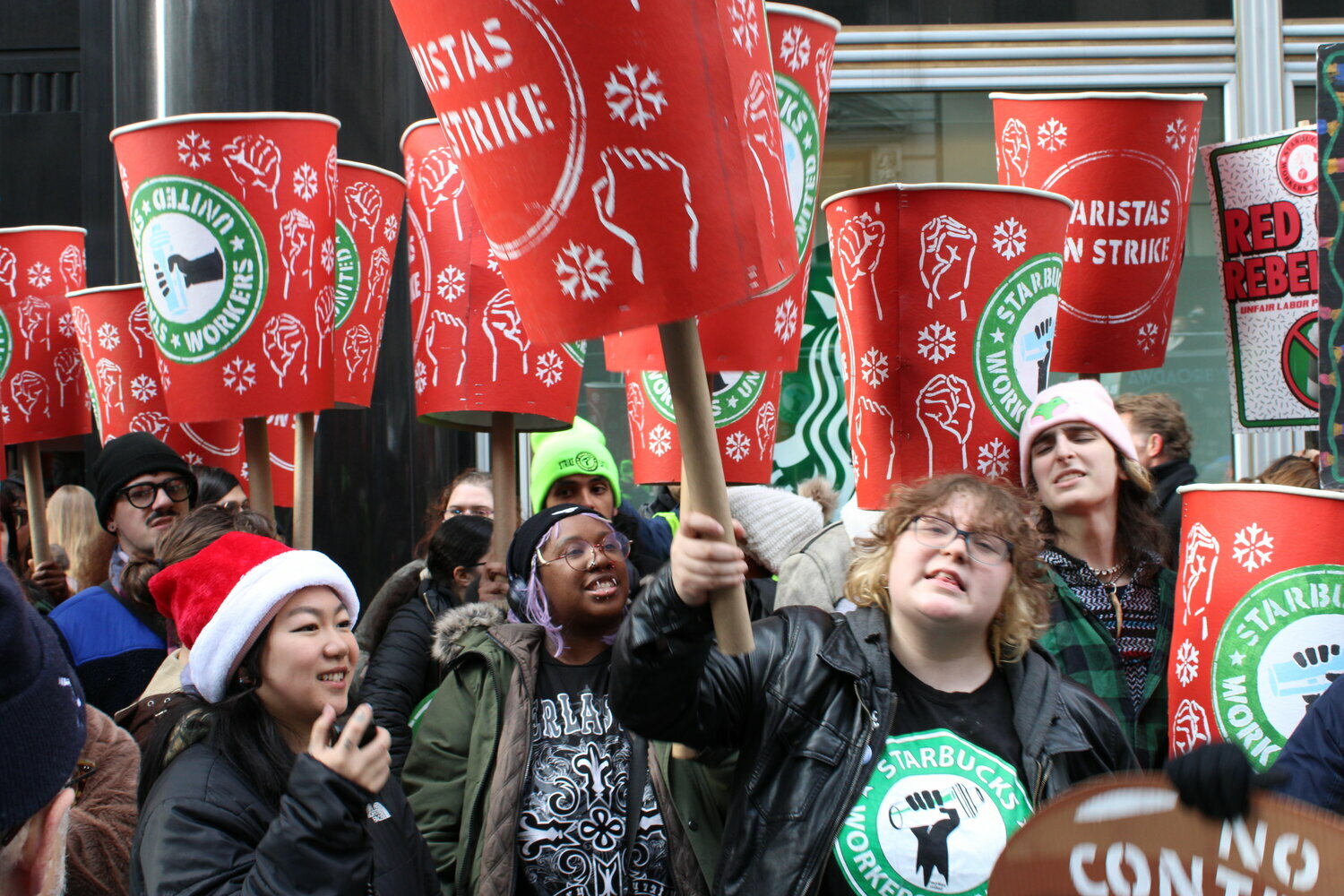
At a Queens Starbucks, a worker helping to unionize the store got fired, and the company said he lied about workplace violence and missed part of a Covid-19 screening. City investigators found no proof that the employee lied and discovered that other employees skipped the screening frequently without getting fired.
Ultimately, the worker got his job back and received back pay.
‘Adds a lot of needed protections’
In another instance, at a Subway location in Brooklyn, employees found coworkers to cover their shifts when personal emergencies came up but got fired anyway. The city found they’d been let go without a good reason and that the Subway owner didn’t have the warning system the law requires.
From 2021 to 2024, the city’s Department of Consumer and Worker Protection recouped over $185,900 for 48 workers across 55 cases under the just cause law. The biggest settlement came in December 2024 when Starbucks paid $38 million covering more than 15,000 workers at 200 locations for unreasonably cutting hours.
“The stories from workers show that this law adds a lot of needed protections that help them deal with difficult situations,” Rider said.
He said the city timed the report in-part for the law’s three year anniversary and wanted to add evidence to the debate about expanding it. The report is adding fuel to the question of whether all NYC workers should get these protections.
City Council Member Tiffany Cabán thinks so, as she’s pushing for the Secure Jobs Act, which would give every worker in the city the same protections fast food workers have now. She first introduced it in December 2022 and brought it back in May 2024. It hasn’t passed yet.
“Working New Yorkers should not be forced to live under the constant threat of being fired for any reason, or no reason at all, with no warning, no explanation, and no recourse,” Cabán wrote in an emailed statement to The Chief.
The city has already acted on delivery and ride-share workers. A bill that passed this month — Intro 1332 — protects app-based delivery workers from getting deactivated from their accounts without just cause.
“Every worker deserves just cause protections,” said Bhairavi Desai, who runs the New York Taxi Workers Alliance with 28,000 members. “That’s why our Uber and Lyft members fought for and won just cause for Uber and Lyft drivers.”
Paul Sonn from the National Employment Law Project — a nonprofit worker’s rights advocacy group — said the timing matters.
“With a slowing economy and deployment of AI making jobs more precarious, it shows why all New Yorkers need just cause protections,” he said.