
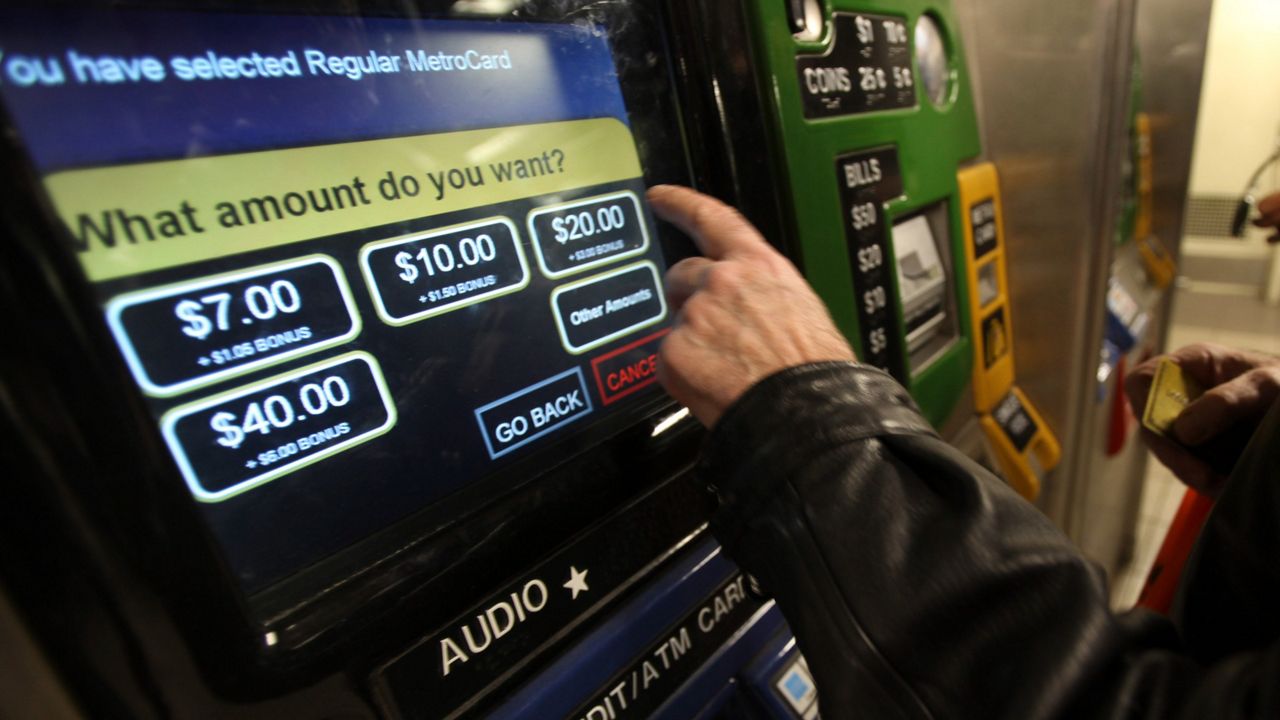
After Dec. 31, riders will no longer be able to reload or buy a MetroCard as New York City’s transit system continues its transition to OMNY tap-to-pay.
The fare has risen from $1.50 to $2.90 since the MetroCard’s debut, and while some riders may continue using remaining balances to pay the soon-to-be $3 fare next year, the option will not last much longer.
The MetroCard has become nearly as iconic as the subway token it replaced. For more than 30 years, it has served not only as a way to pay for transit but also as a collector’s item, with commemorative editions honoring musicians, television shows, heritage months and sports teams.
What You Need To Know
Riders will no longer be able to reload or buy a MetroCard after Dec. 31 as the MTA continues its transition to OMNY tap-to-pay
The MetroCard has been in use for more than 30 years and became a collectible item with hundreds of commemorative designs
Adoption of OMNY has reached about 94%, speeding up the phaseout compared with the decade-long transition from tokens
The MTA has not set a date for when MetroCards will no longer be accepted but says it could happen within months
“So, there have been about 400 commemorative metro cards issued since 1994,” said Jodi Shapiro, curator of the New York Transit Museum’s “Farewell, MetroCard” exhibit. “And then there a whole host of other ones that are just regular, like MTA safety, commemorating anniversaries for our transit system, things like that.”
Shapiro said that despite its eventual widespread adoption, the MetroCard felt unfamiliar when it launched in 1994, even though magnetic stripe cards were already in use in cities such as San Francisco and Paris.
“When MetroCard was introduced, swipe card technology was really not technology that lots of people had experience with,” Shapiro said. “Credit cards at that time were still, you know, the charge plates with the carbons.”
The transition took time, and even years later, some riders struggled to use the system. During the 2016 presidential campaign, Hillary Clinton had difficulty swiping her MetroCard.
The shift from subway tokens to the MetroCard took about a decade, driven by nostalgia for tokens and technical challenges. The transition to OMNY has moved much faster, though some riders remain reluctant to give up the familiar card.
“The only thing I’m worried about, like to check it. You know how you go to the thing, and it tells you the balance,” said rider Helena Crump. “That’s the only thing I’ll miss.”
“Creature of habit,” said Beth Horboychuk, who recently stopped using a MetroCard. “I also don’t understand the difference of this and the MetroCard.”
“I feel nostalgia for tokens I’m that old, but not for the MetroCard,” said another rider.
In 1997, MetroCard adoption was still below 20%. That year, the MTA introduced MetroCard Gold, which offered free transfers between buses and subways, and completed a systemwide installation of turnstiles that accepted the cards.
“In the very beginning, there were only a couple of stations that had these turnstiles,” Shapiro said. “So they were implemented in increments over the course of two or three years. And then the bus fare boxes were retrofitted to have these cards. And so, it took a while. And that’s why the token and metro card lived alongside of each other for about a decade.”
That overlap will not happen with OMNY. Adoption has already reached about 94%. MTA Chairman and CEO Janno Lieber said he understands the nostalgia but noted that most riders already use tap-to-pay technology in other parts of their lives.
“I grew up in the era of tokens, so yeah, everything about the subway gives me nostalgia,” Lieber said. “They don’t have to stand on line at a vending machine. I mean, that’s a that’s a game changer, it’s going to save them a few minutes.”
Lieber said there is no set date for when the MetroCard will no longer be accepted but believes it could be just a matter of months before it becomes history.