
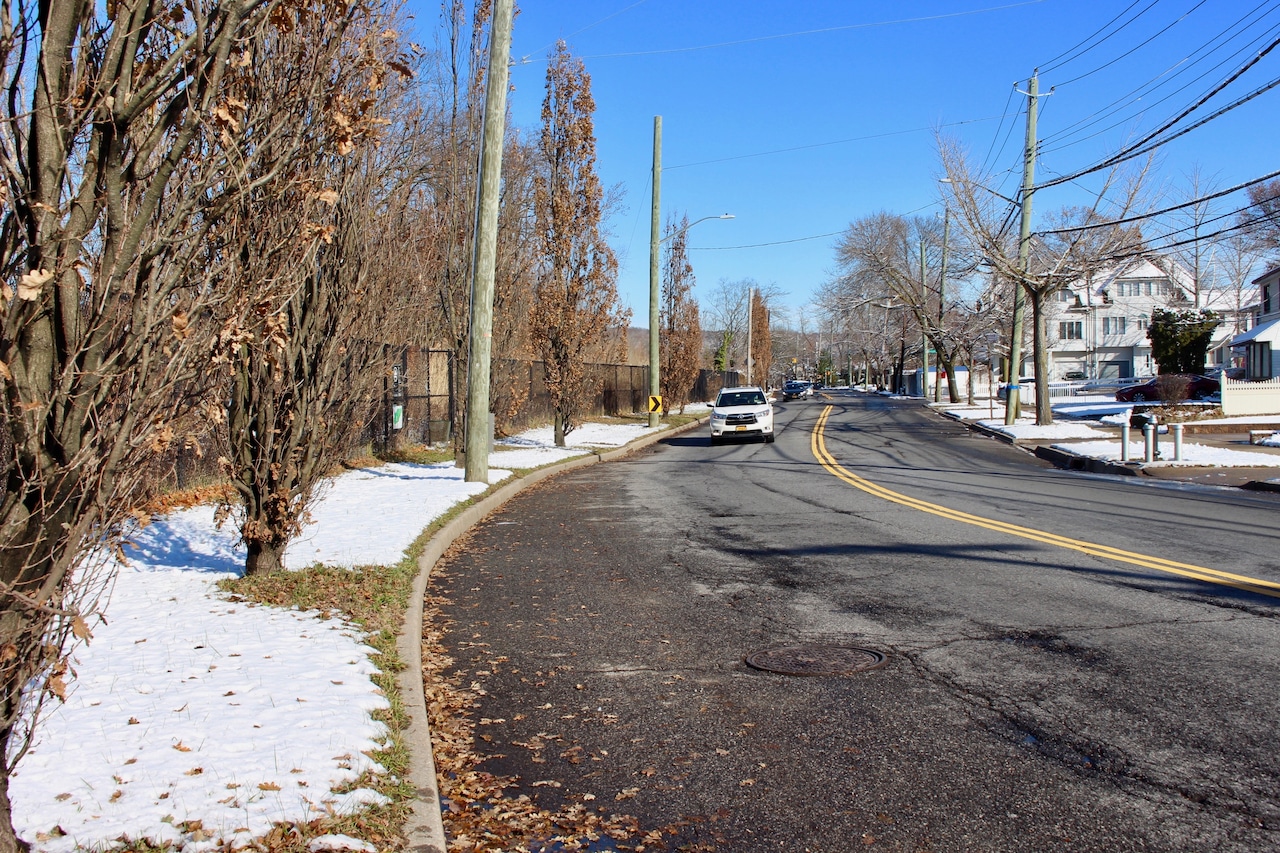
STATEN ISLAND, N.Y. — A major infrastructure project long in the making will soon get underway, according to New York City officials.
After nearly a decade of funding, planning and false starts, work on the Arthur Kill Road widening project, which will expand 1.5 miles of the thoroughfare from Clarke Avenue to Richmond Avenue, will soon begin.
In response to a recent inquiry from the Advance/SILive.com about a push for another road widening project on the borough’s South Shore, a spokesperson from the Department of Design and Construction provided an update on the long-planned current project.
According to the spokesperson, this week the contractor for the Arthur Kill Road widening work received a formal Notice to Proceed, which would allow the project to begin.
However, work might not be visible on Arthur Kill Road until the beginning of next year, the agency representative warned.
The project is scheduled for completion by summer 2029, according to the spokesperson.
The approximately $66 million contract for the project was awarded to a local contractor, DiFazio Industries of Mariners Harbor.
About the project
The Arthur Kill Road widening project was first funded in 2015 by then-Mayor Bill de Blasio, but several factors pushed back the start of the project.
One reason for the lengthy timeline is that the project’s proximity to sensitive wetlands, a process that usually takes two years to complete, the DDC previously told the Advance/SILive.com.
The project also requires cooperation and approval from several agencies at different levels of government, including the city Department of Environmental Protection and the Parks Department, as well as the state Department of Environmental Conservation.
The DDC must also work with the Department of Transportation to review the roadway designs in an effort to minimize the amount of private land that the city must acquire to complete the project.
In 2018, the Department of Environmental Protection added additional storm sewer and water main work to the project, from Richmond Avenue to Cortelyou Avenue. This required a partial redesign and delayed the entire process.
Additionally, the consultant responsible for designing the project halted all work from March to December 2020 due to the pandemic, further delaying the project.
In 2019, DDC presented initial design plans for the long-awaited project, indicating that due to the winding nature of the 1.5-mile stretch, the work would be broken up into eight sections, each tailored to address specific conditions and available space.
Overall, the project would expand the existing number of travel lanes in both directions on Arthur Kill. It would also add sidewalks for bikers and pedestrians to share, address roadway flooding, and replace nearly 100-year-old cast iron water mains.
Community concerns
In February, some locals pushed back on the project during a presentation at the Richmondtown and Clarke Avenue Civic Association at St. Patrick’s School in Richmond.
“That auditorium was full [that] night, and it was full of residents who were extremely concerned about the proposal,” said Carol Donovan, president of the Richmondtown and Clarke Avenue Civic Association.
“It was a universal response to this proposal that it’s not going to help us, and it’s going to, in many ways, create more traffic jams and create danger,” she continued.
As Donovan explained, those in attendance had several concerns with the proposed plan.
While an expansion of Arthur Kill Road might be welcome closer to Richmond Avenue and the shopping centers, some said they feel that widening the road in the residential zones could exacerbate existing issues.
Namely, that crossing Arthur Kill Road, especially near the Colonial Square development, would become more difficult.
Others said they believe that the project could create a bottleneck for traffic, specifically near where Arthur Kill Road meets Clarke Avenue, as the four-lane expansion would funnel into one lane in each direction beyond that intersection.
Historical concerns also came up during the meeting, including that digging near Brookfield Park could stir up long-dormant toxins from the site’s history as a dumping ground.