
STATEN ISLAND, N.Y. — Staten Island has recorded a historically low number of shooting incidents and murders during 2025, according to CompStat, NYPD’s crime tracking system.
This marks the Island’s second year with a drop in shootings.
As of Dec. 14, the most recent week for which data is available, shooting victims also declined 27%, dropping from 15 to 11 when compared to the year prior.
Murders during the same time period dropped 63%, from eight to three, in 2025, compared to 2024.
With weeks remaining, Staten Island is on pace to achieve its lowest murder rate since comprehensive records began in 1964.
“In that year, four murders were recorded, meaning the current figure would set a new historic low,“ Richmond County District Attorney Michael McMahon said.
A multi-agency partnership has united law enforcement at the city, state, and federal levels to drive down gun violence and homicides to a historical low.
Collaborative efforts have led to historic reductions, with shootings down 27% and murders down over 83% over a five-year period in the borough.
Citywide as of Dec. 14, shooting incidents were down 23% and the number of shooting victims dropped 21%, compared to the year prior.
Officials attribute this dramatic drop to the direct correlation between fewer shootings and fewer gun-related homicides.
Of the three homicides that took place in 2025, only one was gun-related, while the other two were stabbings involving individuals known to each other.
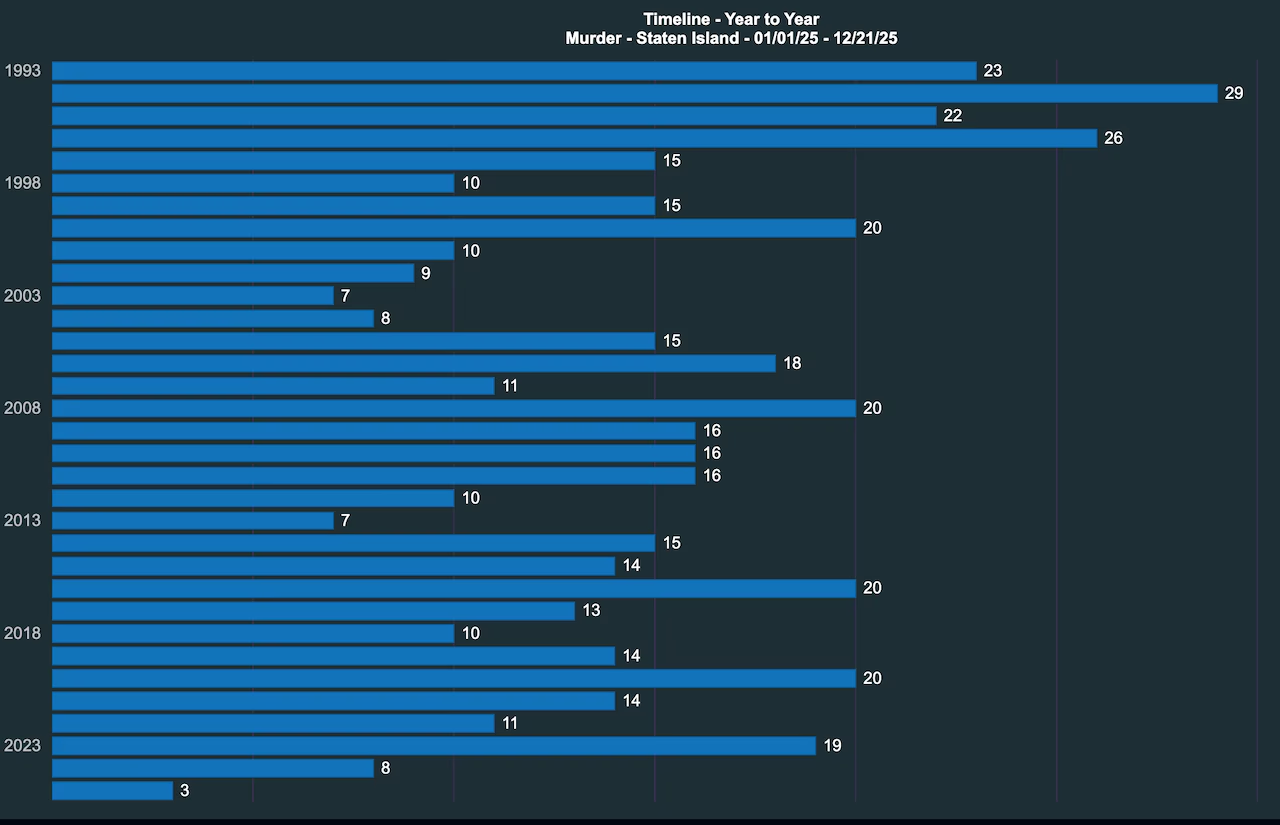 The dramatic 83% drop in murders over five years comes from a unique collaboration model that has law enforcement officials communicating 24/7.CompStatGun violence down
According to McMahon, a key driver of reduced gun violence is the Gun Violence Strategies Partnership (GVSP) that has helped to revolutionize the speed and efficiency of sharing intelligence on gun-related cases. The GVSP is a collaborative initiative that convenes every weekday morning both virtually and in person to discuss gun-related cases and intelligence. So far, over 1,000 daily meetings have been held, Staten Island Executive Assistant District Attorney Thomas C. Ridges noted.
This daily communication structure has revolutionized the speed of information sharing. What used to require dozens of separate phone calls, voicemails, and long waits for data retrieval can now be accomplished in a single hour-and-a-half meeting. Participants include every district attorney’s office, Special Narcotics, Homeland Security Investigations, federal and city probation, state parole, the Mayor’s Office of Criminal Justice, and state police from New York, New Jersey, Pennsylvania and Connecticut.
“What we do in a matter of an hour in the morning used to take 50 phone calls, waiting for someone to call you back. By the time I get all that information, he’s already been gone or arraigned,” Ridges, who has dedicated over 35 years to public service, said.
This 24/7 real-time collaboration allows officials to gain a comprehensive picture of a suspect’s history, including their probation or parole status and involvement in other cases, enabling swift and informed decisions before a suspect is even arraigned. This “precision policing” strategy ensures that critical information is never delayed.
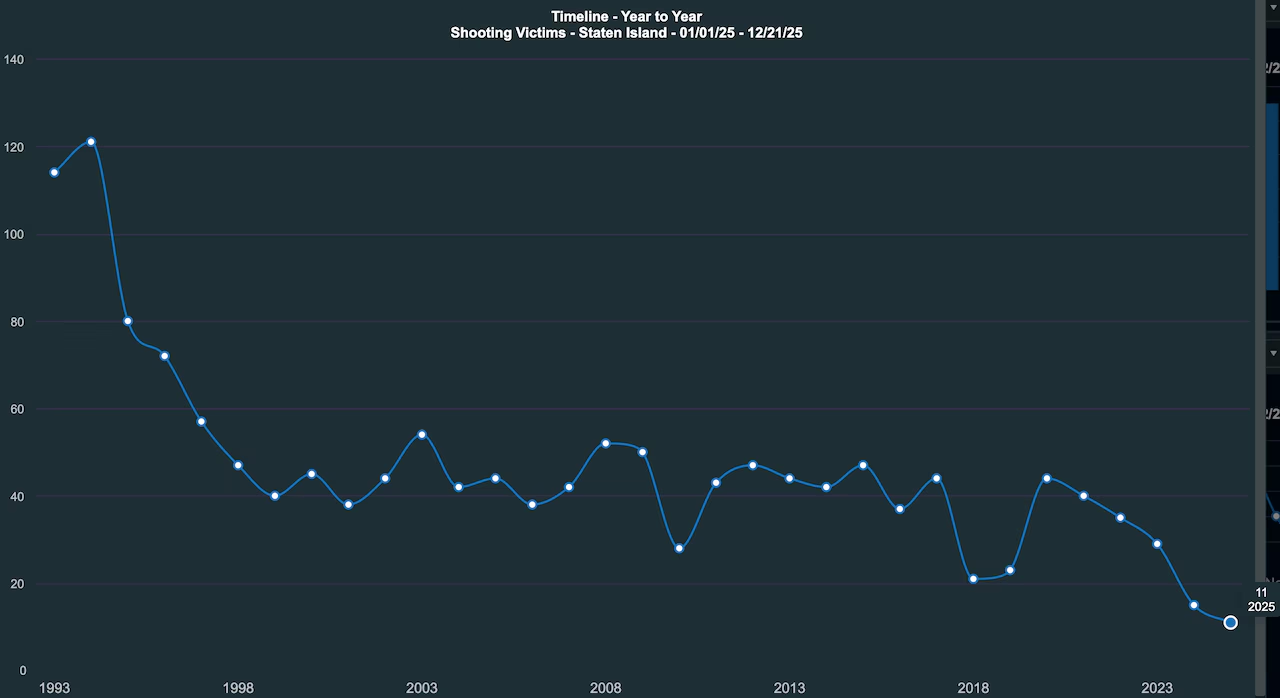 Staten Island’s innovative “precision policing” strategy has helped remove more than 900 guns from the streets and revolutionized how agencies share critical intelligence.CompStat
The “precision policing” model targets the most prolific gun violence offenders and is critical for tracking a firearm’s history. Thanks to this partnership Staten Island investigators are able to pinpoint an illegal firearm’s “time to crime” — the period from its initial purchase to its use in an illegal act and connections to other incidents through ballistic evidence even if the perpetrator is not yet identified.
The GVSP is organized and hosted under the federal umbrella of the federal High Intensity Drug Trafficking Area (HIDTA) program to specifically target gun violence. This intelligence helps build stronger cases and identify networks of gun trafficking. For example, law enforcement can learn if a recovered gun was part of a recent gun shop burglary or was used in non-fatal shootings in different jurisdictions.
HIDTA is a long-standing federal initiative that provides a framework and resources for coordinating law enforcement efforts across different regions to combat drug trafficking. The GVSP model has allowed Staten Island law enforcement to leverage HIDTA’s regional reach and established inter-agency relationships. This partnership has proven to be critical for tackling interstate gun trafficking.
By focusing resources on the “worst of the worst” offenders — the known trigger-pullers — law enforcement can act more effectively. This intelligence ensures that gun crimes are no longer anonymous events.
In addition to better interagency communication, Staten Island has implemented a zero tolerance “bail and jail” policy for individuals who possess or use a firearm.
“We’ll know everything there is to know about the gun that has been used and we know the history of the players that are involved,” McMahon said. “Here in Staten Island we have a very firm policy that if you use a gun, we’re going to ask for bail and you’re going to go to jail.”
The District Attorney’s office consistently asks for bail with the expectation that the defendant will be incarcerated until trial. This stringent approach sends a clear message that gun offenses will be prosecuted to the fullest extent of the law.
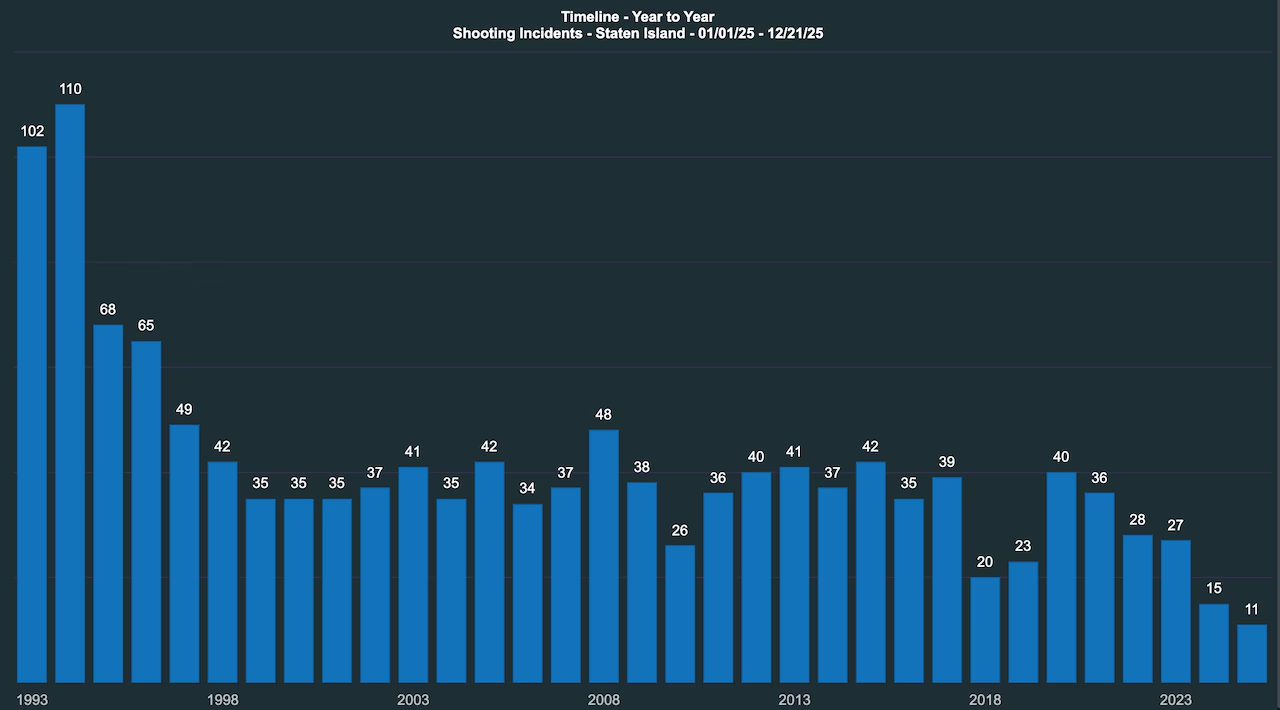 Staten Island’s innovative “precision policing” strategy has helped remove more than 900 guns from the streets and revolutionized how agencies share critical intelligence.CompStatDriving down gun crime
This local policy, in combination with the GVSP collaboration, is credited with helping to drive down gun crime on Staten Island even more dramatically than in the rest of the city. Officials highlight a unique local Staten Island communication model.
According to the district attorney, there is a 24/7 line of communication between the his office and the NYPD’s four commanding officers on Staten Island.
Local precinct commanders, who have intimate knowledge of the gangs, crews, and key players in their areas, communicate directly and immediately with prosecutors. This boots-on-the-ground intelligence is then fed into the larger GVSP network, but the initial, hyper-local collaboration is considered a critical component of the success in identifying and prosecuting offenders.
The dramatic reduction in gun violence on Staten Island is not attributed to a single action, but to a multi-faceted approach. It is the combination of the regional intelligence sharing of the GVSP, the hyper-local collaboration of the “Staten Island Model,” a dedicated firearms unit within the DA’s office, a strict “bail and jail” prosecutorial policy, and proactive preventative measures like gun buybacks.
Since coming into office, McMahon’s team has removed more than 900 guns from the streets through the “no questions asked” gun buyback program. Furthermore, the office has been a leader in the state in utilizing the Emergency Risk Protection Order, or “Red Flag Law.”
The team has filed about 60 ERPO applications to temporarily remove firearms from individuals deemed to be a
‘Raise the Age’
McMahon has called for reforms to New York’s “Raise the Age” law, arguing it needs to address youth gun violence. They are advocating for legislative changes that would allow the DA’s office to retain and prosecute these cases, ensuring accountability even if it doesn’t involve long-term incarceration.
Under the current law, cases involving teenagers ages 14 through 17 charged with simple possession of a loaded firearm are presumptively sent to Family Court, where they are handled by Corporation Counsel rather than the DA’s office.
A major flaw in the “Raise the Age” framework, according to McMahon, is the fact that Family Court judges are prevented from seeing a youth’s prior offenses, treating them as first-time offenders each time they offend.
Prosecutors argue that this system lacks meaningful consequences and fails to deter young people from carrying weapons. Older street gang members exploit this loophole by using juveniles as “purses,” to carry firearms for them in order to evade responsibility should they get caught.
This practice not only puts the youths in immense danger but also makes it more difficult for law enforcement to charge the more culpable adult offenders who orchestrate the crimes.
Under the law, a 14- or 15-year-old caught with a gun within 1,000 feet of a school can be prosecuted by the DA’s office, but this exception does not apply to those who are 16 and 17 in the exact same situation.
This creates a scenario in which two teenagers could be standing next to each other committing the same crime, but one faces more severe prosecution than the other solely based on a one-year age difference. Officials are pushing for a change within the legislature.
McMahon acknowledged that many young people are aware of the legal loopholes and know they will likely face minimal penalties.
When “Raise the Age” was passed, the legislature pledged approximately $800 million in funding for programming designed to help youths in the criminal justice system and provide them with diversionary pathways. However, officials report that this crucial funding has not been delivered.
They emphasize that prosecution alone cannot solve the problem of youth crime. Without the promised resources to implement effective educational, therapeutic, and support programs, at-risk youth are likely to continue reoffending. They are calling on the state to fund these essential services.
A surprising insight came from the DA’s Youth Advisory Council, a group of high school students who meet to discuss issues affecting them.
The students revealed that many kids carry knives or other weapons, not for aggression, but for protection, because they feel unsafe traveling to and from school. This “eye-opening” feedback prompted the DA’s office to partner with the Police Department and school officials to create “safe corridors.”
This initiative has increased police and school safety presence along routes to bus stops and the ferry, which has reportedly improved the situation. Preventative outreach includes school programs on anti-bullying and conflict resolution to address root causes of youth violence.
Domestic violence
Despite the successful reduction in gun homicides, domestic violence remains a major challenge, accounting for over half of all felony assaults on Staten Island.
This indicates that while gun violence from street crews may be down, intimate partner violence continues to drive serious crime.
“Borough Commander Melissa Eger comes from a domestic violence background. We’re doing everything we can in that space, but there’s still a lot of work to be done there,” McMahon said. “I think it shows that we’ve made progress, but it’s still an issue.”
Alongside domestic violence, McMahon said untreated mental health is another major factor contributing to crime.
The connection is illustrated by one of the year’s homicides, which was described by McMahon as a tragic outcome of severe mental illness.
Officials acknowledge that while they have implemented programs like Mental Health Treatment Court and Veterans Treatment Court, the broader societal problem of untreated mental health issues continues to fuel violence and other crimes.