
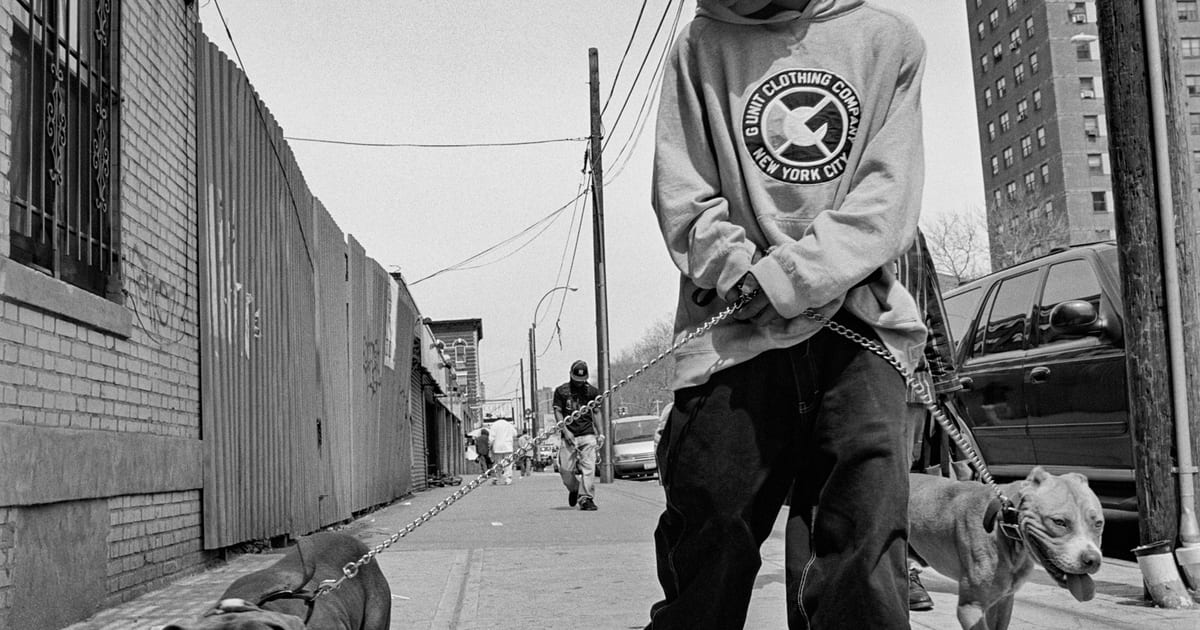
Thork began hanging out almost daily in Bed-Stuy photographing Jamal and his friends, preserving a slice of city life in the tradition of Jamel Shabazz, Arlene Gottfried, Nan Goldin, and Peter Hujar. “As a rule, I don’t photograph people for the sake of photographing them. I need to get to know them and familiarize myself with their environment,” he says. “They are more important than the image because without them and their approval, there is no image.”
At the heart of Thork’s work lies mutual respect born of the knowledge that trust must be earned. “A stranger with a camera is always looked upon with suspicion. People used to ask me if I was a cop when they saw me taking pictures,” he says. “When I started, some people told me that in the ’80s and ’90s, very well into the early 2000s, the police used to be on rooftops in different parts of Brooklyn taking pictures of people below. I can confirm this because I have witnessed this myself.”
The Brooklyn of these photographs, made between 2005 and 2018, no longer exists as it once did. Pointing to an image of two young men listening attentively to gentleman in a dark suit and wearing a hat, Thork says, “That scene used to be a typical one in Brooklyn where guys would gather on a street corner to discuss serious topics, sharing knowledge about esoteric ancient African religions, particularly ancient Egyptian religions. Small outdoor gatherings to have intellectual discussions are just not happening anymore. This is why that particular photograph is my favourite one out of the book.”