
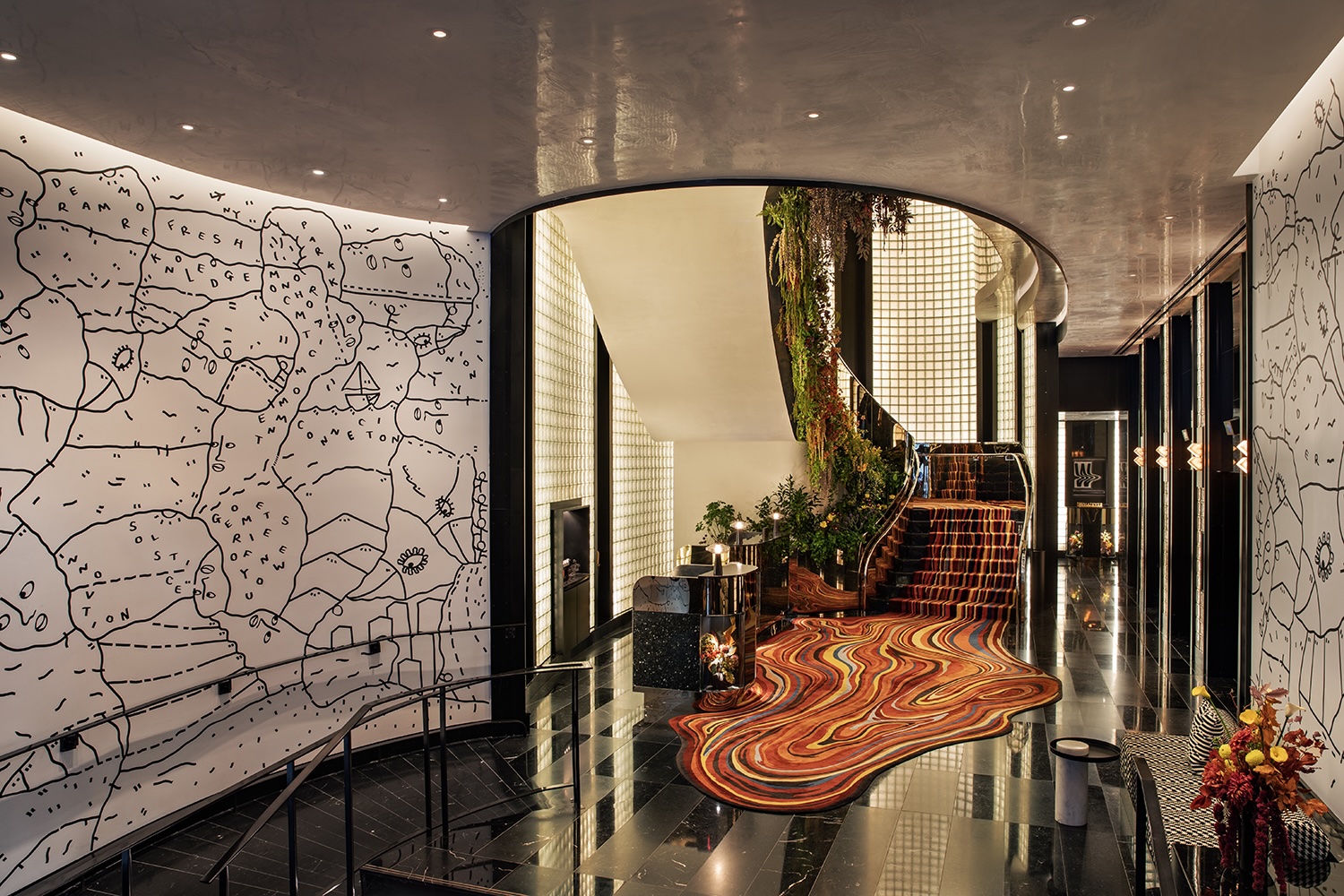
In 1998, W Hotels (whotels.com) made on New York’s Lexington Avenue — breaking the mold with its sociable “living room” (as opposed to a lobby), elevated food and beverage concepts, FIT gym, casually dressed staff and hip design.
“At a time when luxury hospitality often felt formal and conventional, W Hotels introduced a dynamic, unapologetic and culturally attuned energy that redefined the guest experience,” says George Fleck, W Hotels’ senior VP and global brand leader. “From its inception, the brand has been defined by boldness, creativity and connection.”
In 1999, W Hotels launched in L.A. with its Westwood property, now called W Los Angeles — West Beverly Hills. And in 2001, the brand opened its historic property in New York’s Union Square — in the Beaux Arts-style former Guardian Life Insurance Co. building completed in 1911, as well as W New York — Times Square. The trendy boutique lifestyle model quickly caught on.
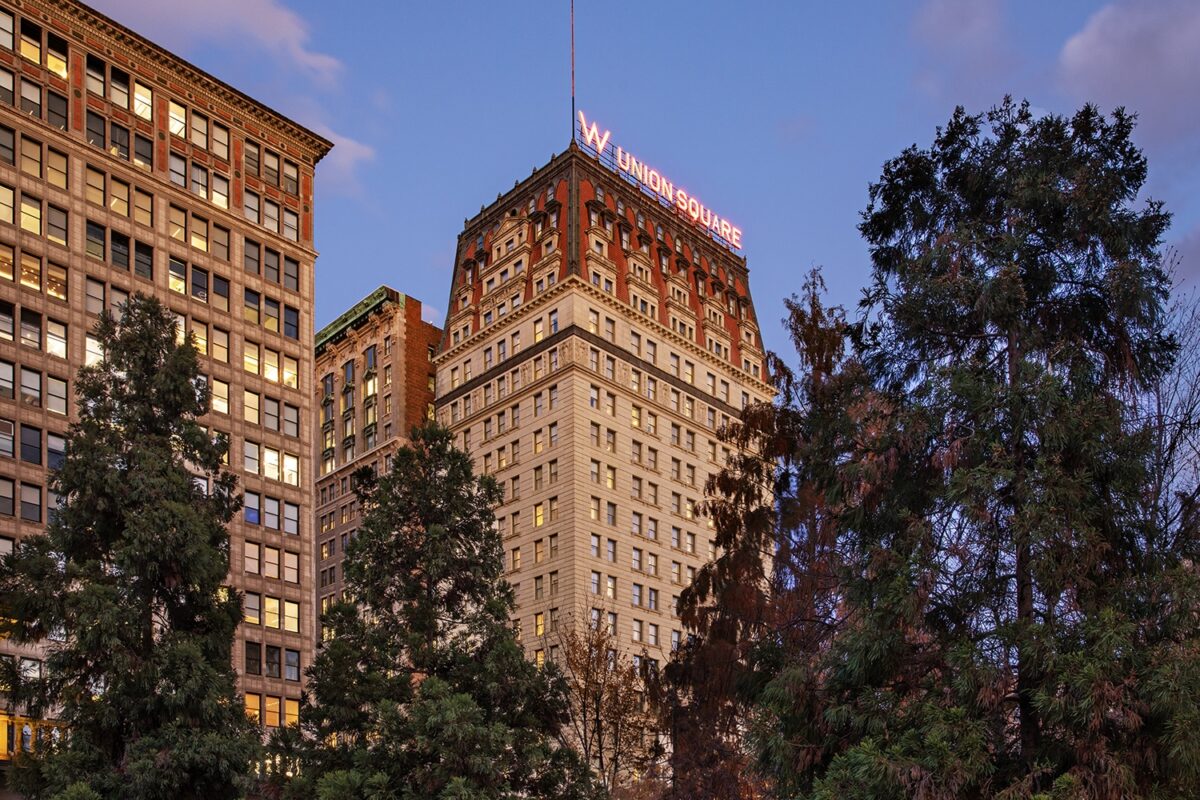 The Union Square property’s storied edificeCredit: W Hotels
Over the next decade, the brand expanded into areas including Latin America (Mexico City), Europe (Istanbul and Barcelona), Asia (Hong Kong) and the Middle East (Doha); and it opened its L.A. flagship, W Hollywood, in 2010. Since Marriott International acquired the Starwood Hotels & Resorts parent company in 2016, W Hotels (part of Marriott Bonvoy’s more than 30 hotel brands, and in the luxury category, alongside The Ritz-Carlton, St. Regis, JW Marriott, Edition and the Luxury Collection) has continued to grow. Now boasting more than 70 hotels globally, W Hotels’ recent openings include Sydney, Budapest, Rome, Prague, Florence, Sao Paulo and Las Vegas (in the former Delano hotel).
“Since our first property opened in New York City, W Hotels has evolved from a single pioneering lifestyle hospitality brand into a global movement,” Fleck says, noting how the brand has evolved to accommodate the next generation of travelers who value connection. Each hotel strives to convey the brand’s vibrant energy while reflecting the area’s surroundings and local culture — through design details, programming, brand collaborations, the “Whatever/ Whenever” concierge service and fun food and beverage concepts. Adds Fleck, “As luxury itself has evolved, so have we, moving from a design-led disruptor to a brand that balances creativity with meaningful, immersive experiences.”
As part of a multiyear evolution, other key North American properties are being renovated, including Austin, Dallas, Hoboken, Toronto, Nashville, Las Vegas, Minneapolis, Hollywood and New York. “W New York — Union Square and W Hollywood are two of the brand’s most iconic destinations,” Fleck explains, “and both represent a powerful opportunity to transform W Hotels for a new era.”
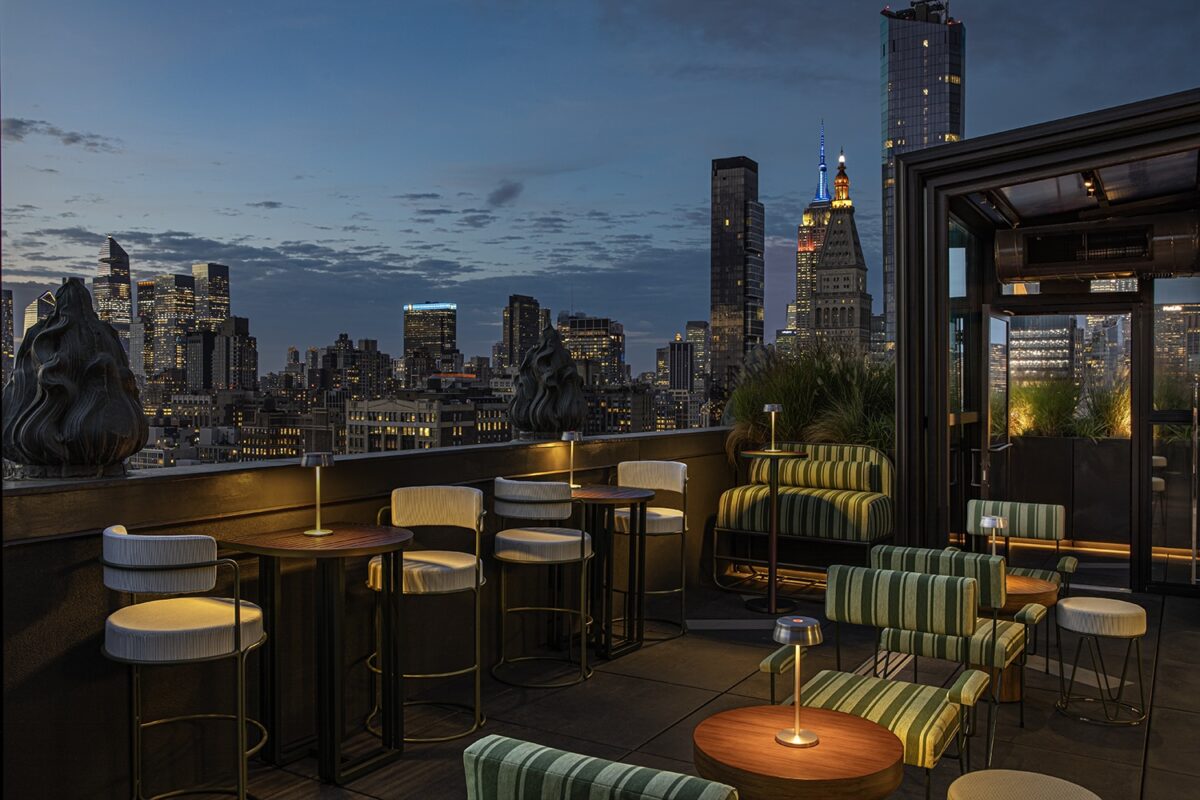 The rooftop of the newly revamped W New York — Union SquareCredit: W Hotels
Scroll to continue reading
W New York — Union Square is now the brand’s global flagship (and one of the two remaining New York properties, along with Times Square). In September, the Union Square property reopened after a $100 million reimagination led by Rockwell Group, which firm designed the original hotel and now highlighted the historic property’s architecture and the textures and spirit of the neighborhood.
“We went back to our roots, right where the brand was born, and infused the property with the vibrancy and edge that defines the city itself,” Fleck says. “It’s an homage to the W Hotels origin story, reimagined through a modern lens that speaks to today’s luxury traveler.”
Located on Park Avenue South, in the middle of the bustling shopping, transit and community hub, the sleek property boasts 256 guest rooms, designed in greens, oranges and grays that reflect the seasonal nature in Union Square Park. Rooms have botanical-themed carpeting, plush green couches, soft signature beds, smart TVs, side tables with chessboard patterns, subway-inspired lamps and bathrooms that boast Davines products and taxicab-yellow faucet handles. A 1,215-square-foot Penthouse suite features separate spaces and spectacular city views.
After entering to houndstooth welcome desks and marble floors, proceed up a striking staircase to the opulent Living Room. The blue-toned lounge and bar conjure the grandeur of Grand Central Station with soaring ceilings and white marble columns, and it hosts programming from live music to talks and art installations. Adjacent is a first-of-its-kind café, and the hotel also has more than 2,500 square feet of meeting and event space.
Downstairs, the hotel transformed its former subterranean bar into a full-floor FIT wellness destination — with high-tech equipment, a Peloton studio and a recovery zone with HydroMassage chairs.
In September, the W Hotels — Union Square opened Seahorse, a modern seafood brasserie from restaurateur John McDonald’s Mercer Street Hospitality (behind 20-year-old SoHo staple Lure Fishbar). Rockwell Group gave the space long occupied by Todd English’s Olives an aquatic flair with mermaid-green tile and yacht-like wood, and chef John Villa designed a menu with ample crudo and raw bar offerings and refined seafood. Pair dishes like Dover sole and spicy Maine lobster cavatelli with drinks such as the Seahorse Martini. An indoor-outdoor rooftop space designed by AvroKO, with concrete floors and skyline views, will be opening soon.
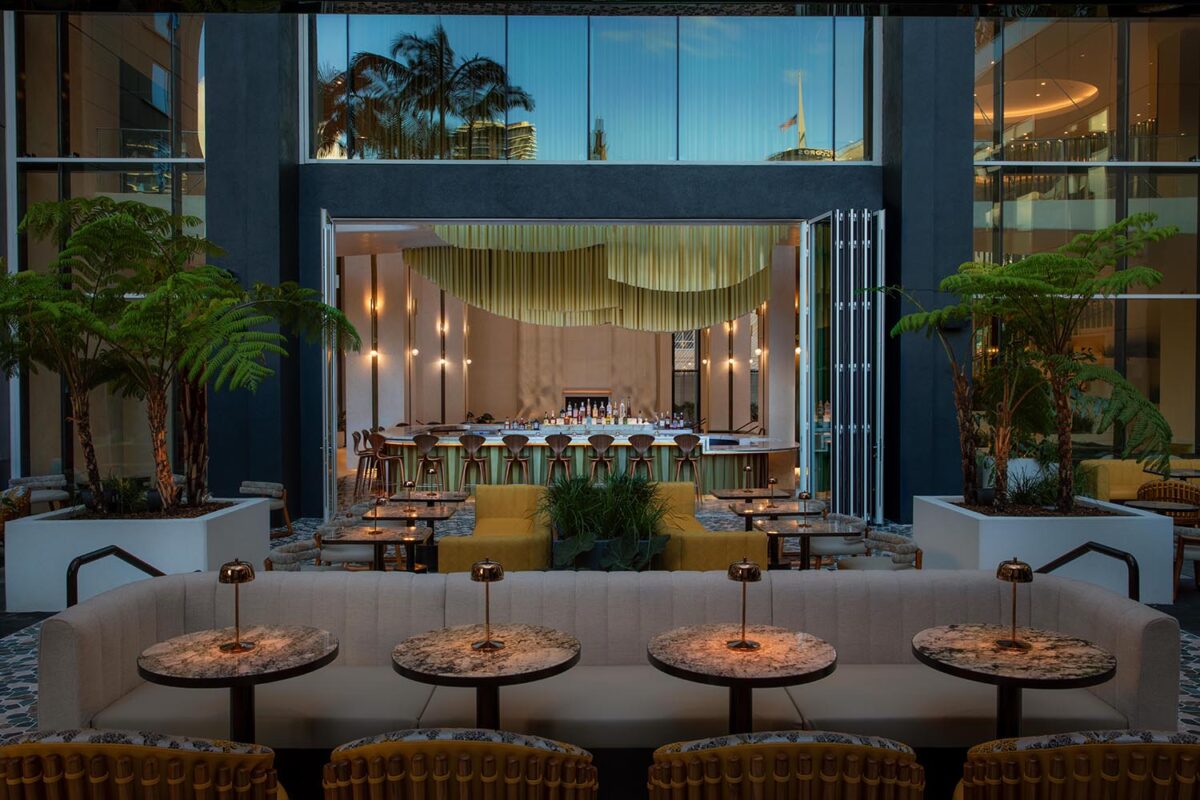 The W Hollywood unveiled a makeover in October 2024Credit: W Hotels
The brand also recently transformed its West Coast flagship, W Hollywood, to reflect what Fleck calls “the creative pulse of Los Angeles.” He notes, “The property embodies a more refined, detail-driven design and an elevated service culture that’s both approachable and magnetic — capturing the essence of the city’s cultural energy while offering moments of calm and connection.”
In reimagining the 300,000-square-foot hotel that debuted in October 2024 with views of the Hollywood Hills, Rockwell Group drew from the city’s history of film and music, its palm tree-lined streets and its golden cinematic lights.
Guests arrive to a Living Room lobby area reflecting the colors and textures of Southern California — with green velvet seats, a celestial installation and a bar that lies beneath hundreds of acrylic rods. A retractable glass wall opens to the Garden, filled with greenery, sun-colored seating and mosaic terrazzo floors. Come nighttime, the Living Room plays host to There, There — an intimate culinary pop-up serving Asian and Latin-inspired small plates and craft cocktails alongside entertainment.
The 319 guest rooms also channel sunny California through décor in blues, yellows and creams, plus Venetian plasterlike wallcoverings with metallic accents. Rooms boast curved couches, window seats and cinemastyle light fixtures. Among the suites, 12 feature separate living and dining rooms, wet bars and his-and-hers closets; the Oasis Suite has outdoor seating for 50; and the Mega Suite offers an outdoor living room and a library lounge with games.
The WET Deck pool area is stacked with two bars — the bright Sunrise and moody Sunset. Cabanas and trellises surround the pool, along with murals by artist James Peter Henry evoking a SoCal sunset. Past Sunset, Loft is a rooftop venue with striking views and a 3D spatial sound system by Tempo. And downstairs by the Living Room, the redesigned FIT gym, decorated in the blue and gold tones of a night sky has an open ceiling, Technogym machines and Peloton bikes. The Hollywood property also contains 11 meeting rooms and the Great Room event space.
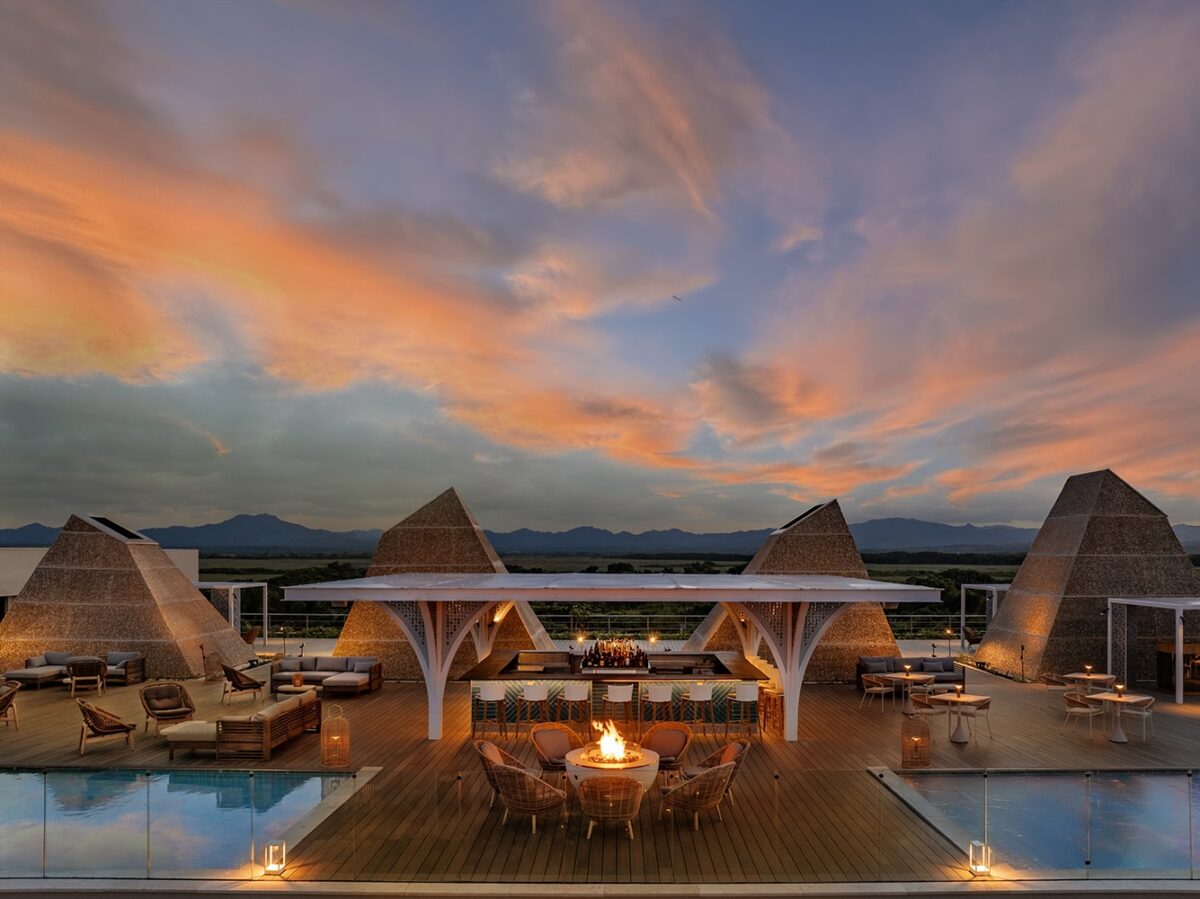 W Punta Cana is the brand’s first adult all-inclusive property.Credit: W Hotels
Another big development for W Hotels was this summer’s opening of the adults-only, all-inclusive W Punta Cana in the Dominican Republic. “W Hotels has always been about delivering a complete luxury lifestyle experience,” says Feck. “Our foray into the all-inclusive space gives the brand the opportunity to craft every aspect of the guest stay and journey, from immersive dining to wellness-driven experiences to entertainment, in a way that is intentional, elevated and distinctly us.”
W Punta Cana, Adult All-Inclusive boasts 340 guest rooms and suites, all starting at 700 square feet. Rooms include bathtubs and king-sized beds, and 46 suites have swim-up pools. The hotel’s design by Spanish firm Zanobia Arquitectura integrates the area’s colonial heritage and tobacco plantations as well as its cobblestone streets, animal life and lush jungles.
Guests can relax on the beachfront with a WET Deck, swim in the more than 260-foot infinity pool or grab a drink and bites from the swim-up bar at the Chill Pool. On the culinary front, the resort offers 12 different dining options, including the Trade Market of global street food, Scena with upscale Caribbean-inspired cuisine, the Pan Asian Noodle Bar and the Sensazioni bar and event theater. Drinking spots include Taproom microbrewery, the day-to-night Taman Beach Club, the Living Room bar and the 33 1/3 speakeasy, where vinyl records play.
For entertainment, Punta Cana guests can enjoy live music, DJ-led sound baths, dance parties and other immersive cultural events. They can also retreat to the Away Spa, which performs treatments inspired by local healing traditions and products, such as turmeric, arnica and moringa seed oil, in 10 treatment rooms. The spa also contains a steam room, Himalayan salt room, sauna and indoor pool, alongside a beauty salon and a 1,500-square-foot FIT gym. Sunrise yoga and other wellness programs are offered outdoors, and adventure seekers can take a private tour of the island, explore national parks or charter private boats for diving and snorkeling.
Following W Punta Cana, two more W Hotels all-inclusive properties are set to open, in Corasol Playa del Carmen (2028) and Costa Mujeres (2029). As part of the brand’s all-encompassing revamp, over the next few years, W Hotels will continue to open hotels in new destinations while reimagining existing properties. By 2028, 80% of the global portfolio will be transformed, and other anticipated international openings over the next few years include Sardinia, Naples and Riyadh.
“W Hotels has become synonymous with modern luxury — defined not solely by opulence, but by experience, atmosphere and cultural relevance,” Feck says. The brand’s goal moving forward? “Crafting spaces that bring people together, elevate the senses and foster authentic connection.”