
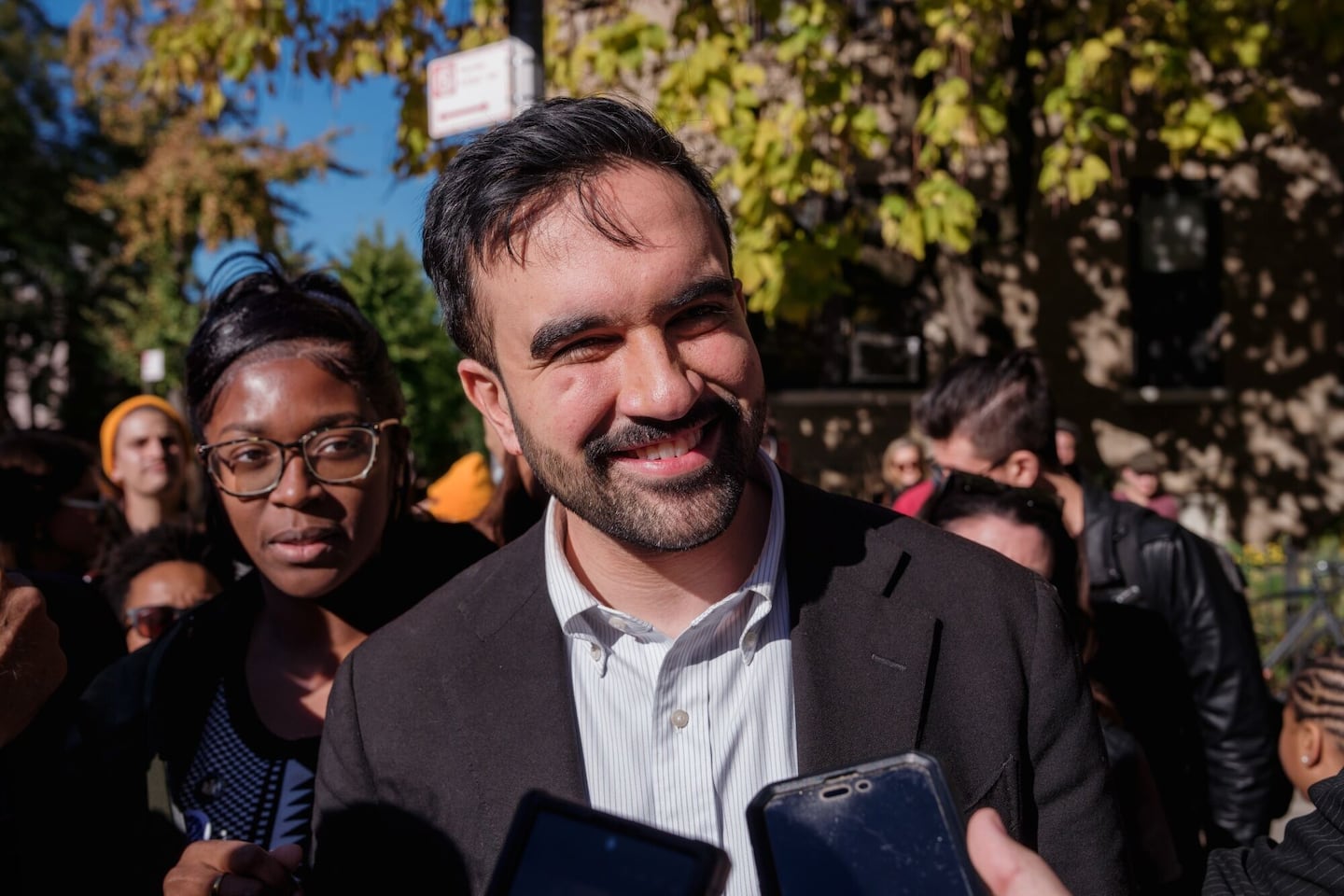
(Bloomberg) — Zohran Mamdani took office as New York City’s 112th mayor at the stroke of midnight, marking the culmination of his improbable, historic rise to power over the past year.
A 34-year-old democratic socialist born in Uganda, Mamdani becomes the city’s first mayor of South Asian descent, its first Muslim mayor and the youngest leader of the metropolis of nearly 8.5 million people in more than a century.
Mamdani took his official oath on a Quran, becoming the first New York mayor to do so, inside the ornate former City Hall subway station, which has been closed since the 1940s. New York state Attorney General Letitia James presided.
At 1 p.m., Mamdani is expected to speak before a large crowd at City Hall after he is ceremonially sworn in by US Senator Bernie Sanders of Vermont. US Representative Alexandria Ocasio-Cortez is scheduled to deliver opening remarks.
When he launched his mayoral run in late 2024, Mamdani, was a virtual unknown. The three-term state lawmaker from Queens was one of nearly a dozen Democrats, including former New York Governor Andrew Cuomo and city Comptroller Brad Lander, who challenged Mayor Eric Adams’ bid for a second term after his indictment on federal corruption charges.
Get Starting Point
A guide through the most important stories of the morning, delivered Monday through Friday.
But Mamdani’s campaign quickly gained traction in the June primary through his shrewd use of viral social media videos and a sophisticated grassroots fundraising operation that poured out across the five boroughs.
He campaigned on a pledge to address what he called an affordability crisis by making city bus service free, freezing rents in New York’s 1 million rent-stabilized apartments and implementing a free universal childcare program for kids ages 6 weeks to 5 years.
He shocked New York City’s business establishment when he won the primary by more than 12 points after nearly every poll showed Cuomo the likely winner. Mamdani defeated Cuomo again in the November general election, when the former governor ran on an independent ballot line. (Although the charges against Adams were later dropped by the Trump administration, the mayor declined to seek reelection after withdrawing from the Democratic primary.)
New York’s mayoral election was one of the most competitive races the biggest US city had seen in more than a decade — a fact reflected in high levels of voter interest and turnout. More than 2 million people voted, the most ballots cast since 1969, according to the Board of Elections. Mamdani won four of the five boroughs, with his strongest showing in Brooklyn.
Early Life
Zohran Kwame Mamdani was born in Kampala to Indian-American film director Mira Nair and the Indian-Ugandan scholar Mahmood Mamdani of Columbia University. After a stint in South Africa, the family moved to New York when Zohran was 7. He was raised near Columbia in Morningside Heights, and attended the Bronx High School of Science and Bowdoin College in Maine. He became a naturalized US citizen in 2018.
Mamdani will face immediate obstacles as he takes the helm of a city with a budget of about $116 billion, over 300,000 municipal employees, and more than 250 agencies, departments, boards and commissions.
His campaign estimated the price tag for his universal childcare program would reach $6 billion annually, which would be funded through the imposition of additional taxes on corporations and millionaires. But any new tax increases would require approval from Albany lawmakers and Governor Kathy Hochul, who has previously vowed not to raise taxes.
And Mamdani’s promise to freeze rents in the city’s rent-stabilized apartments faces significant hurdles after Adams belatedly named four members to the board that sets rents in those units. Those new members may be unlikely to vote in line with Mamdani’s wishes.
“Like any mayor, there are a lot of challenges that Zohran Mamdani is going to face,” said Joshua Freeman, professor emeritus of history at Queens College.
“There are also a lot of unpredictables that will affect his program, his vision, particularly the limited powers that New York City government has in a lot of important areas,” Freeman said, citing the mayor’s lack of control over most city taxes and funding.
Mamdani will technically become New York’s 112th mayor, although Adams was sworn in as New York’s 110th. A recently discovered oversight in city record-keeping showed historians failed to count as separate mayoralties two non-consecutive terms served by Matthias Nicolls in the 17th century.