
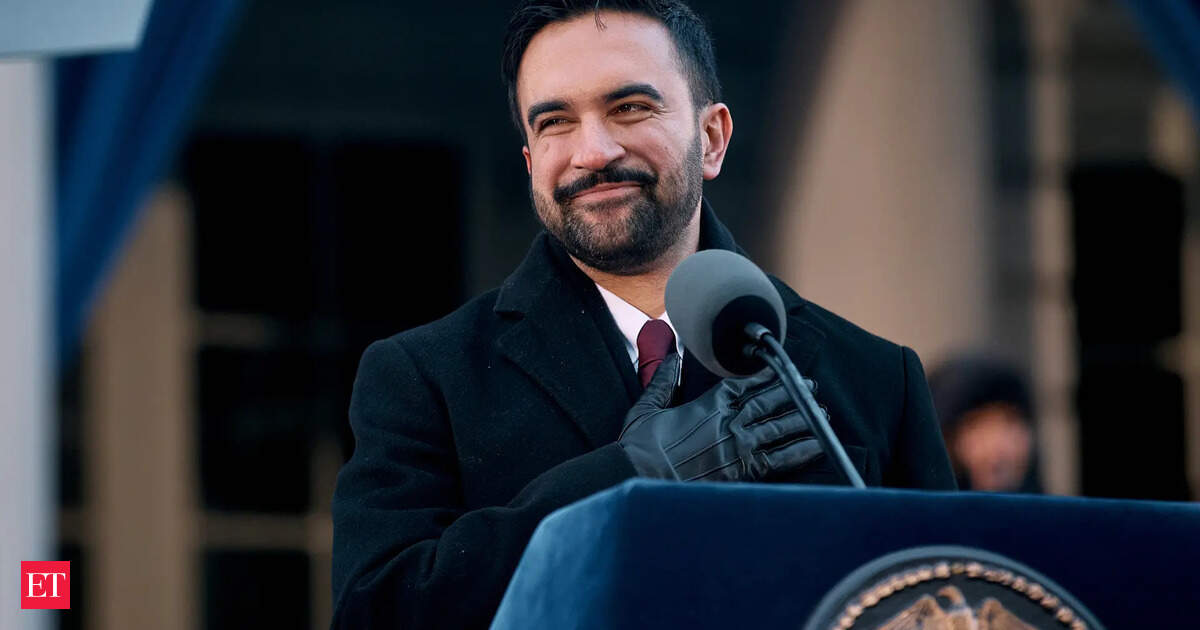
Political debate has intensified in Staten Island after the election of New York City Mayor Zohran Mamdani, whose progressive platform has increased ideological rifts across the city. His visit to the borough reignited enduring discussions in regard to representation, governance, and whether Staten Island’s future is best served within New York City or apart from it.
Mamdani, was sworn in on New Year’s Day, being the New York City’s youngest mayor in over a century as well as its first Muslim, South Asian, and African-born leader. His victory was driven by a Democratic socialist agenda that proposed sweeping changes, which includes increasing the minimum wage to $30 by 2030, raising the corporate tax rate to 11.5 percent, launching city-run grocery stores, bringing fare-free buses, and freezing rents on rent-stabilized apartments.
Those initiatives have been met with stiff resistance in Staten Island, a consistently Republican stronghold in an otherwise intensely liberal city. Many residents and elected authorities have voiced concerns that Mamdani’s platform clashes sharply with the borough’s political character, initiating renewed debates about breaking away from New York City’s five-borough system altogether. Borough President Vito Fossella told the Daily Mail that dissatisfaction among residents increased following Mamdani’s election, focusing on fundamental rifts in governing philosophy and fears about how citywide framework could impact Staten Island.
 Live Events“Personally, and I think the vast majority of Staten Islanders, do not embrace socialism as an effective form of government,” Fossella stated. “Historically, it’s proven to be destructive, economically and spiritually, and has led to a loss of freedom and even life.”
A Familiar Idea ResurfacesThe idea of Staten Island seceding is not new. In the early 1990s, residents voted by almost 65 percent in favor of a nonbinding referendum favoring independence. That attempt finally failed after state lawmakers blocked the move, pausing the process before it could progress. Reflecting on that time, Fossella cited the borough felt increasingly marginalized following the structural changes at City Hall.“Back then, we had lost our power in the city,” he mentioned, referencing the elimination of the Board of Estimate. “We were dumped on – literally and figuratively – with Fresh Kills Landfill taking 100 percent of the city’s garbage while we had only five percent of its population.”
While no official petition or referendum is now underway, Fossella confirmed that borough authorities funded a new feasibility study in 2023 to explore what independence could look like in todays context. “Right now, it’s a genuine discussion, not a negotiating tool,” he mentioned. “If secession is the best and ultimate solution for the people, who are my neighbors and friends, then that’s where we’ll go. But it’s not there yet.”
How Large and Viable Would an Independent Staten Island Be?With an approximate population of 493,000, Staten Island would rank among the largest cities in the United States if it became independent, exceeding cities like Miami and Cleveland.
“We’d still be a very large city relative to most in the United States,” Fossella stated. “And one of the largest counties in New York State.” Despite that scale, Fossella admitted that any effort to secede would encounter steep legal and political obstacles.
“It’s not totally under our control,” he cited. “The state legislature and other officials would have a say, and many forces oppose Staten Island secession.” He also dismissed claims that independence would automatically lead to higher taxes or reduced services.
“Nobody can say that with absolute certainty,” Fossella said. “Look at the migrant crisis. New York City spent $12 billion housing migrants in hotels. A city of Staten Island would never make that decision.”
What Policy Conflicts Are Driving the Dispute?Fossella also emphasized disagreements over homelessness framework, criticizing Mamdani’s view on encampments.
“The idea of not cleaning up homeless encampments is a terrible decision,” he stated. “It leads to drugs, crime, and quality-of-life issues.” Although he has yet to meet the mayor personally, Fossella mentions that he continued to be open to cooperation while remaining in the broader debate about Staten Island’s future.
“My goal is to work with anybody who wants to do well by the people of Staten Island,” he said. “But at the same time, we have a legitimate discussion going on about whether there’s a better path, and maybe secession is that path.”
How Has Mayor Mamdani Responded to Staten Island Concerns?Mamdani made his initial official presence on Staten Island on December 30 at Shaw-naé’s House in Stapleton, admitting his restricted electoral support in the borough while highlighting a commitment to local challenges.
“This is the moment to show Staten Islanders that their concerns will be front of mind in our administration and that we’re actually going to deliver on those concerns,” Mamdani stated. Reiterating the advantages of his policy agenda, he sought to assure residents that Staten Island would not be overlooked. “I think of Staten Island as a critical part of New York City,” he said. “You cannot tell the story of five boroughs without Staten Island.”
Later, during a visit to the borough’s oldest mosque, Masjid Un Noor, Mamdani framed Staten Island as politically important rather than peripheral. “While we speak of Staten Island as an obligation in our politics, it is in fact an opportunity in our politics,” he cited.
Political Pushback ContinuesState Assemblyman Sam Pirozzolo became one of Mamdani’s most vocal critics, recently reading his own Staten Island Independence Declaration to a crowd of approximately 60 people, highlighting the intensity of opposition in certain segments. Mamdani, meanwhile, has made attempts to appeal to voters who supported both Donald Trump for president and him for mayor, stating that economic anxiety, mainly the rising cost of living, drove those dual choices.
His focus on affordability, supporters states, was a major factor behind his electoral victories, even as it remains to fuel resistance in Staten Island.
FAQs:Q1. Why is Staten Island discussing secession again?
The conversation resurfaced following the political disagreements with the city’s new leadership. Residents state the ideological differences and long-standing challenges about representation.
Q2. Is Staten Island currently trying to secede?
No official petition or referendum is underway at this time. Debates remain exploratory rather than procedural.