
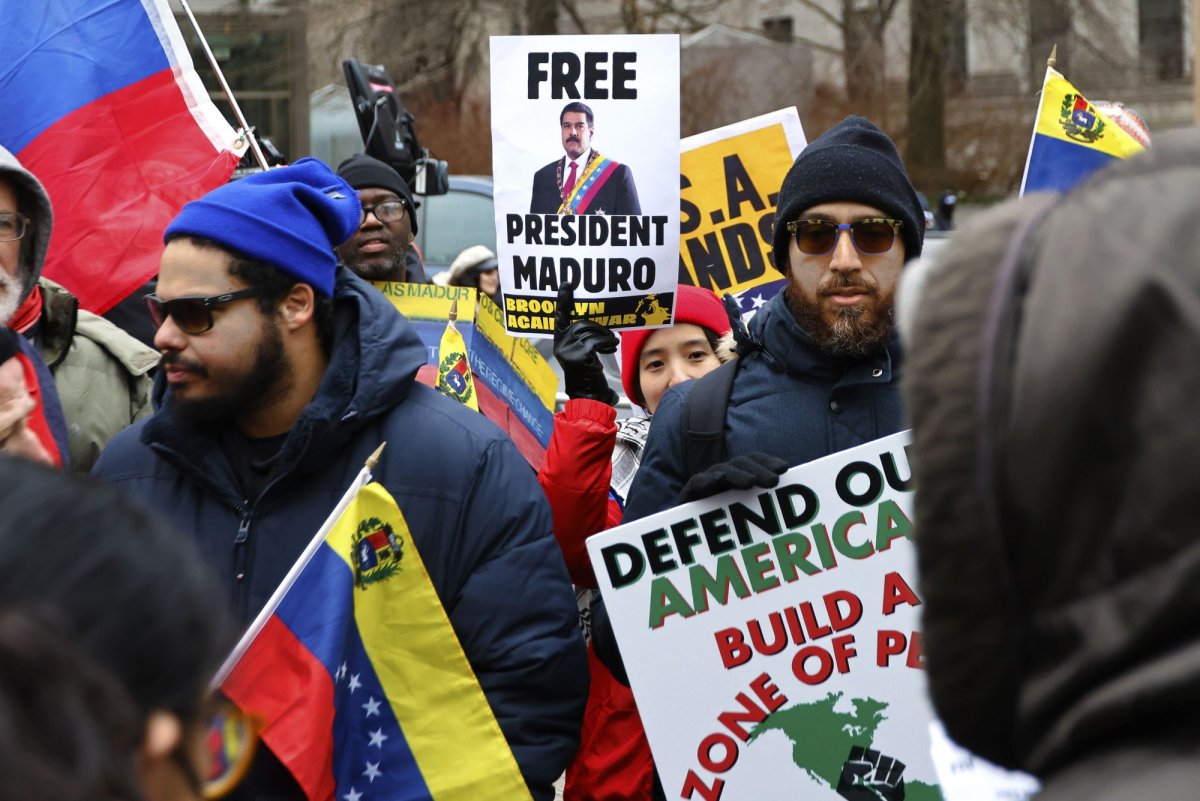
Jan. 5 (UPI) — Venezuelan President Nicolas Maduro and his wife, Cilia Flores, pleaded not guilty Monday in a Manhattan court.
“I’m innocent. I’m not guilty — I’m a decent man,” Maduro said through an interpreter, adding that he is “still president of my country.”
Their pleas were to federal drug trafficking and weapons charges before U.S. District Judge Alvin Hellerstein.
The couple were taken via helicopter from the Metropolitan Detention Center in Brooklyn to a Manhattan heliport, then taken by motorcade to the courthouse.
The court proceedings and criminal trial will likely take months. Defense lawyers said neither defendant is seeking bail but might do so in the future. Their next appearance was set for March 17.
Maduro’s attorney, Barry Pollack, said his client has health issues that require medical care, and Flores’ attorney, Mark E. Donnelly, said she sustained a fractured or severely bruised rib “during her abduction.”
Hellerstein said Maduro and Flores will get medical attention.
“Our client is in good spirits. We look forward to reviewing and challenging the evidence the government has,” lawyers for Flores said in a statement. “While we would love to present our side now, we will wait to do so in court at the appropriate time. The first lady is aware that there is a long road ahead and is prepared.”
Earlier Monday, President Donald Trump issued a warning to Venezuela’s new president, Delcy Rodriguez, to “do what’s right,” or face a similar or worse fate than Maduro, who was seized by U.S. Army Special Forces over the weekend.
“If she doesn’t do what’s right, she is going to pay a very big price, probably bigger than Maduro,” Trump told The Atlantic, adding that regime change remained on the table, which was preferable to the present state of affairs and the situation “can’t get any worse.”
Rodriguez, who was sworn in as president in Caracas on Monday morning with the support of the country’s military and the supreme court, said she is willing to cooperate with the United States after initially condemning the arrest of Maduro and Flores and demanding their release.
“We invite the U.S. government to collaborate with us on an agenda of cooperation orientated towards shared development within the framework of international law,” she told her cabinet at her first meeting in charge on Sunday.
Trump said U.S. Secretary of State Marco Rubio had spoken with Rodriguez and that she was “essentially willing to do what we think is necessary to make Venezuela great again.”
Amid conflicting messaging, it was unclear if that was Trump’s meaning when he said in his news conference Saturday announcing the military operation that the United States was “going to run the country until such time as we can do a safe, proper and judicious transition.”
“We’re going to be running it with a group, and we’re going to make sure it’s run properly,” Trump said.
Rubio clarified Sunday that Trump was talking about exerting control from outside the country to bring about major policy shifts.
He said sanctions were one of the tools at the administration’s disposal to ensure the cooperation of the acting leadership, saying in an American broadcast TV interview that a blockade on Venezuela’s oil exports, being enforced by the U.S. military, would remain in place.
“We continue with that quarantine and we expect to see that there will be changes not just in the way the oil industry is run for the benefit of the people, but also so that they stop the drug trafficking, so that we no longer have these gang problems, so that they kick the [Columbian insurgent groups] FARC and the ELN out, and that they no longer cozy up to Hezbollah and Iran in our own hemisphere,” Rubio said.
Maduro and Flores face a 25-page indictment accusing them of accumulating vast wealth from a narco-terrorism conspiracy.
They also face three related charges of cocaine importation conspiracy, possession of machine guns and destructive devices, and conspiracy to possess machine guns and destructive devices.