
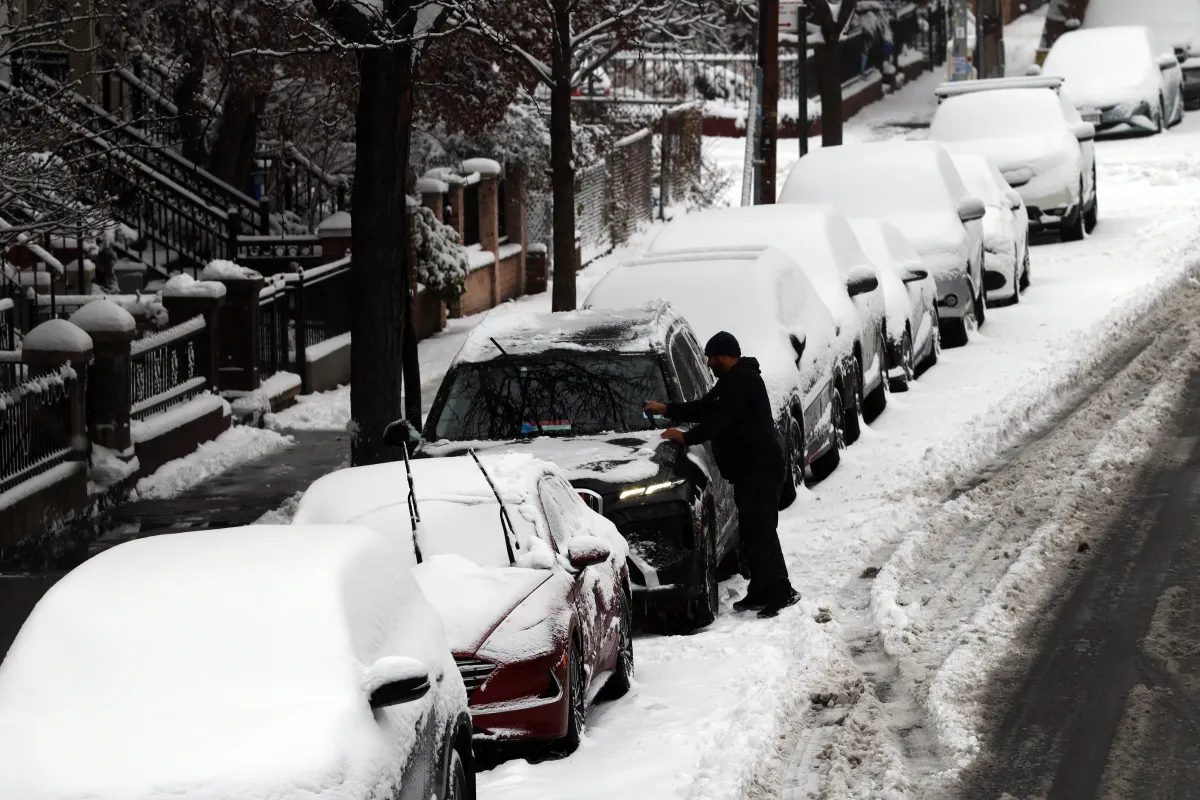
New York drivers face fines and points on their license for failing to clear snow off their vehicles under little-known traffic laws.
Why It Matters
While the state does not have a specific law requiring drivers to clear all snow from vehicles, operating a car with snow obstructing the windshield can result in severe penalties—including misdemeanor charges, steep fines and even jail time.
 What To Know
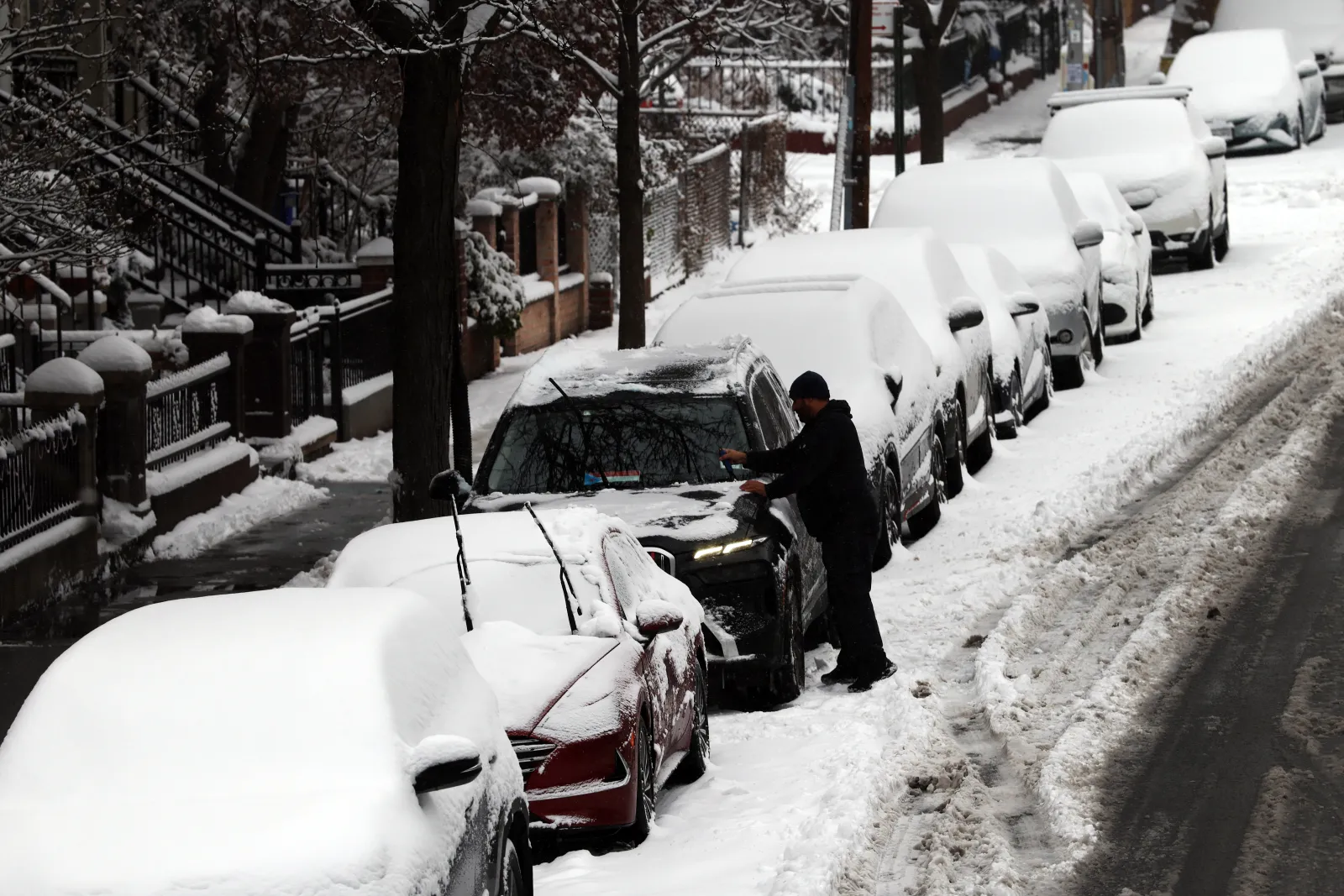
Drivers in New York are not legally obligated to remove snow from the entire exterior of their cars, but state law requires motorists to maintain clear views through their windshields and windows.
These regulations seek to reduce accidents caused by limited visibility and ensure safer road conditions for everyone.
According to the New York Vehicle and Traffic Law section 1212, reckless driving means operating a vehicle in a manner that “unreasonably interferes with the free and proper use of the public highway or any parking lot, or unreasonably endangers users of the public highway or any parking lot.”
That means if snow or ice is left on a vehicle and obstructs the driver’s view, police officers are authorized to pull the motorist over.
This could lead to a charge of reckless driving, a misdemeanor offense under New York law. Offenders face $100 to $300 fines for a first offense, up to $1,125 for repeat offenses, five license points and possible jail time (up to 30 days for the first offense).
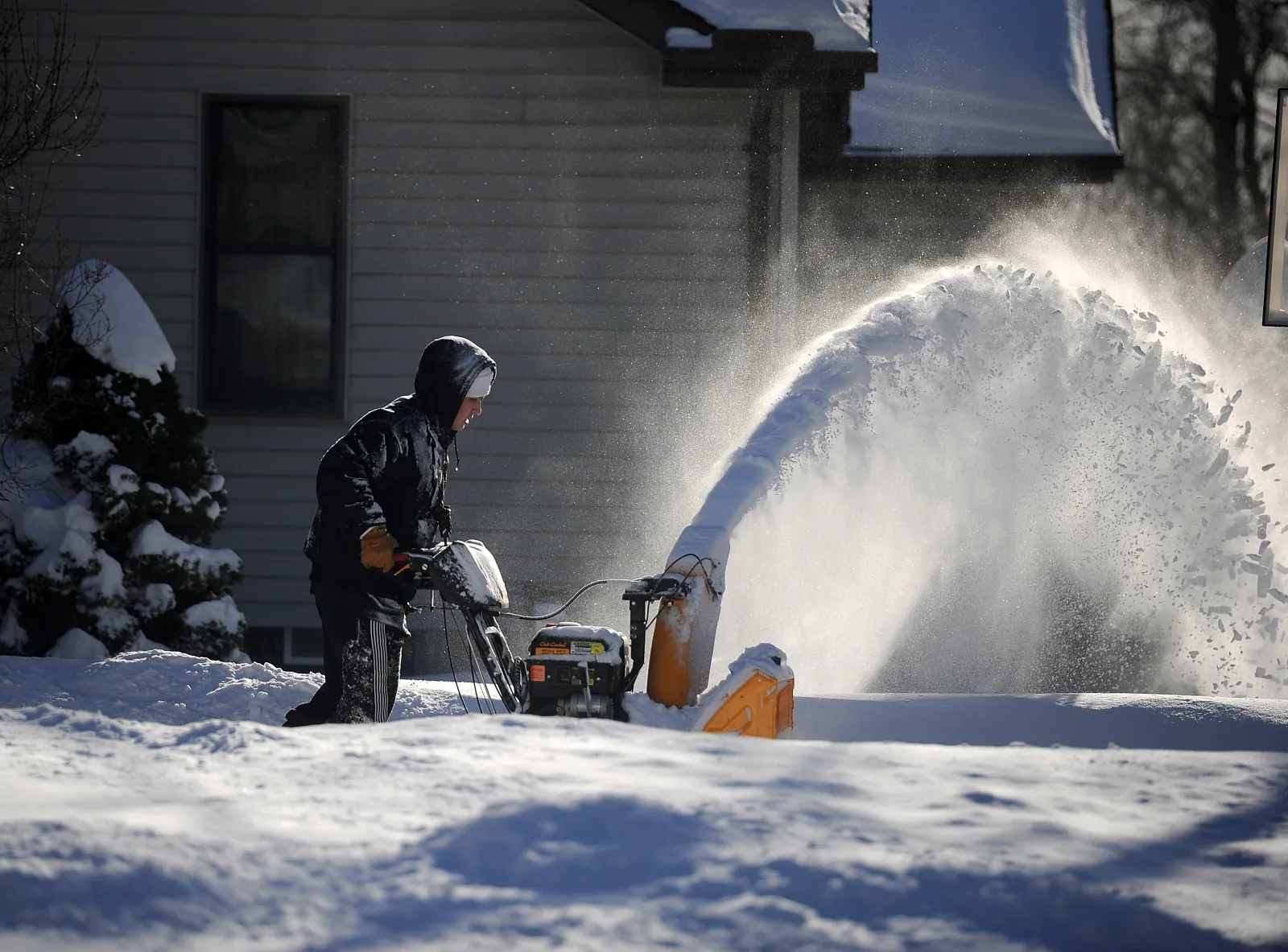
No specific law mandates the removal of snow from the roof, hood or trunk, but visibility remains a key legal requirement.
According to the New York Vehicle and Traffic Law section 375, (2) (a), if you’re driving any motor vehicle (except a motorcycle) on a public road, from 30 minutes after sunset to 30 minutes before sunrise, or whenever you’re using windshield wipers because of rain, snow, sleet or other bad weather, or if you can’t clearly see 1,000 feet ahead, you must have two working headlights in front—one on each side.
Cars made before January 1, 1952, require at least one red rear light visible from 500 feet, while cars made after that date must have two red rear lights visible from 1,000 feet. Cars also need a white light to make the rear license plate readable from 50 feet, which also applies to trailers.
According to the law, if your car is registered in New York and was made after October 1, 1964, it must have a working defroster to keep snow or ice from forming on the part of the windshield directly in front of the driver.
Unsafe driving with obscured vision is considered particularly hazardous in snowy conditions, as reduced sight lines raise the chances of crashes.
Police have the discretion to issue citations whenever a snow-covered windshield presents a safety risk, even if no accident has occurred.
Over the past few days, New York has been hit by back-to-back winter storms, bringing heavy snow, strong winds and dangerous travel conditions.
Upstate areas saw some of the most extreme impacts, with blizzard conditions and lake-effect snow dumping up to 4 feet in places like Oswego and Jefferson counties, while parts of western New York recorded snowfall rates of 3 to 5 inches per hour during peak bands.
Downstate, including New York City, totals were lighter—around 4 inches in Central Park—but ice and black ice warnings made roads hazardous, prompting travel advisories and emergency declarations.
What People Are Saying
Vehicle and Traffic Law section 375 said: “Every motor vehicle registered in this state and manufactured or assembled after October 1, 1964, shall be equipped with a defrosting device, in good working order, for the purpose of preventing the formation of snow or ice on the windshield directly in front of the operator.”
What Happens Next
With winter storms common in New York, authorities are expected to enforce these regulations stringently during severe weather. Police may increase patrols during snow events, looking for drivers whose windshields, side windows or rear windows are obscured.
Motorists who fail to properly clear their vehicles face not only legal penalties but also heightened accident risks.