
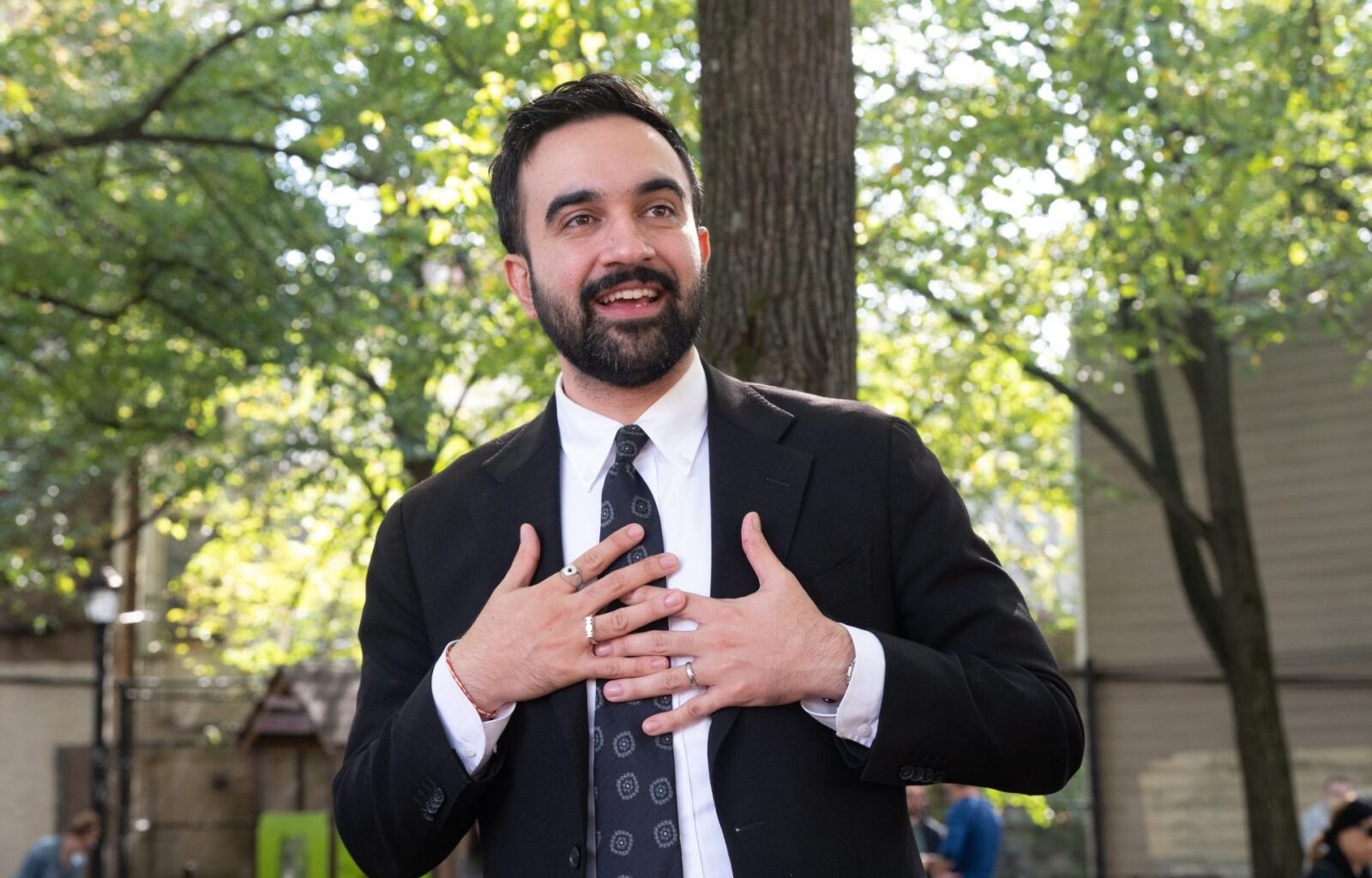
Zohran Mamdani’s inauguration and first days as New York City mayor have felt like more than a change of office — they have set a tone. Sworn in at midnight beneath City Hall and again at a larger public ceremony where Sen. Bernie Sanders administered the oath, Mamdani moved quickly to undo elements of the prior administration and to center tenants, climate action and community food access in his opening agenda.
What Mamdani has done so far:
On his first day Mamdani signed executive actions to revitalize the Mayor’s Office to Protect Tenants and launched two task forces intended to speed housing production: one to inventory city‑owned land suitable for homes and another to identify and cut permitting and procedural barriers that make housing more expensive and slower to build. He also visited a Brooklyn apartment building to spotlight tenant issues. The mayor characterized these moves as part of an urgent effort to protect renters and expand affordable housing supply.
Mamdani also began staffing quickly. Early personnel coverage lists veteran budget official Dean Fuleihan among top deputies and identifies a set of hires across housing, operations and early childhood; local reporting and personnel roundups also name Louise Yeung as a central figure to lead the city’s climate work. City observers see an empowered climate office as essential to converting campaign promises on electrification, resilience and Environmental justice into agency‑level programs.
Why housing policy is climate and health policy
Mamdani’s emphasis on housing is no accident. Research and public‑health experts increasingly treat housing stability and building quality as first‑line climate resilience measures: energy‑efficient, weatherized and electrified homes reduce exposure to extreme heat, indoor pollutants and flood impacts while lowering bills for low‑income families. Investing in retrofits and electrification can therefore deliver both equity and emissions reductions — a rationale echoed in NRDC and Union of Concerned Scientists analyses.
Food access, sustainability and public health
Mamdani’s platform also included experiments in city‑run grocery retail and stronger Support for local food access — measures aimed at reducing costs, improving nutrition and strengthening local supply chains in neighborhoods with limited healthy options. City‑level choices about procurement, urban agriculture and community food programs can lower emissions and improve diet‑related health outcomes when designed with equity priorities. This matters especially in neighborhoods where stable, nutritious food has been scarce — areas Mamdani flagged during his campaign.
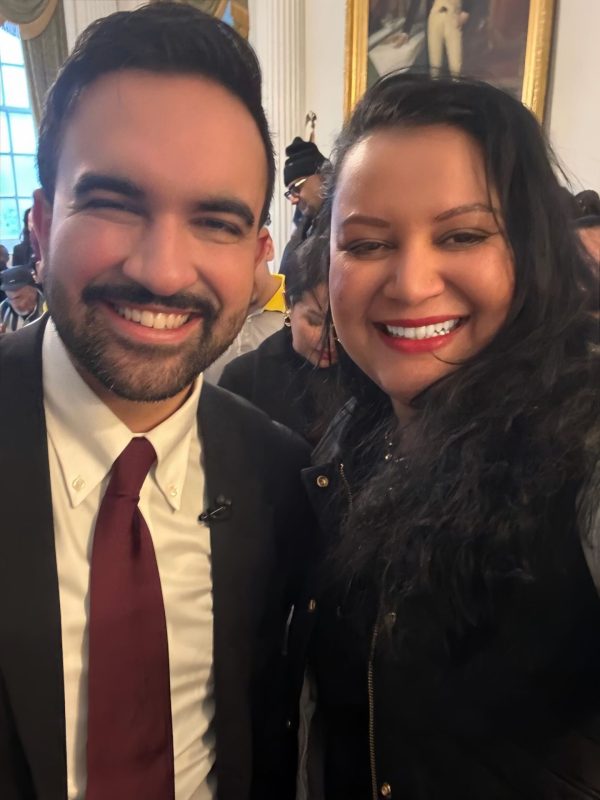 Mayor Zohran Mamdani & Preeta Sinha, founder of One Green Planet inside City Hall post-inauguration on Jan 1st, 2026
A personal note from the inauguration
Preeta Sinha, founder of One Green Planet, attended the inauguration and offered an eyewitness perspective on the day’s tone: “It felt like a revolution, not a pageant. There were no corporate VIPs or celebrity gatekeepers at the center of the program — instead the mayor invited the people he lives and works among. The luncheon and reception celebrated with food of our communities and chai was passed through the crowd; a vibrant Punjabi musical performance closed the inauguration and got people dancing. It felt like a true mayor for the people — for activists and neighbors rather than a show for elites.” — Preeta Sinha, founder, One Green Planet.
Policy levers and the tests ahead
Administrative actions and task forces can move quickly; delivering thousands of new homes, retrofitting large parts of the city’s building stock, and rolling out electrification at scale require capital, permitting reform and sustained interagency coordination. The factors to watch are clear: whether the housing task forces publish actionable pipelines and deadlines, whether the climate office releases a prioritized rollout for retrofits and electrification pilots, and whether the mayor’s first budget aligns funds to match promises. Federal incentives and grants will also matter for scaling equitable retrofits and community resilience projects.
Bottom line
Mamdani’s early orders, hires and the cultural tone of his inauguration suggest an administration determined to knit housing, climate justice, food access and public health into a single equity agenda. The rhetoric is promising; the coming months will show whether task forces, budgets and city operations follow with measurable action that prioritizes communities most exposed to climate and housing injustice.