
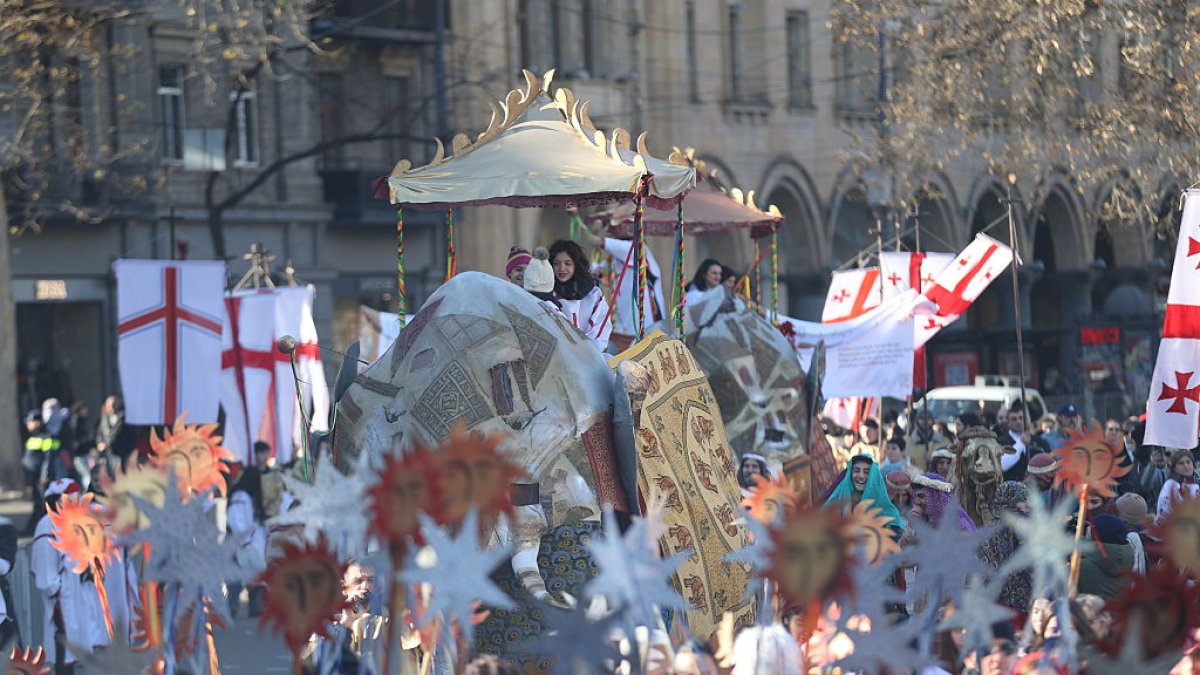
Did you know that over 260 million Christians worldwide are celebrating Christmas this Jan. 7?
Over 400 years ago, according to National Geographic, a decision was made by some Christians to celebrate the birth of Jesus on a different day.
Orthodox Christmas, also known as Old Christmas Day, is celebrated by roughly 12 percent of Christians, the majority in countries where most of the population is Orthodox Christian (e.g. Russia and Greece), National Geographic reports.
Orthodox Christmas is celebrated roughly 11 days behind Christmas Day, which falls on Dec. 25, because many Orthodox churches still follow the older Julian calendar, while the majority of the Christian world use the Gregorian calendar.
The Julian calendar, a solar calendar which Roman ruler Julius Caesar had adopted in 46 B.C.
The 11 days difference is to make up for the discrepancy when the Julian Calendar was switched to the Gregorian, which the majority of the Christian world adopted, according to National Geographic. But the Orthodox Church disagreed.
Because the Julian calendar continues to shift given it is based on the solar year, Orthodox Christmas will continue to be celebrated on Jan. 7 until until 2100 — when it will move to Jan. 8