
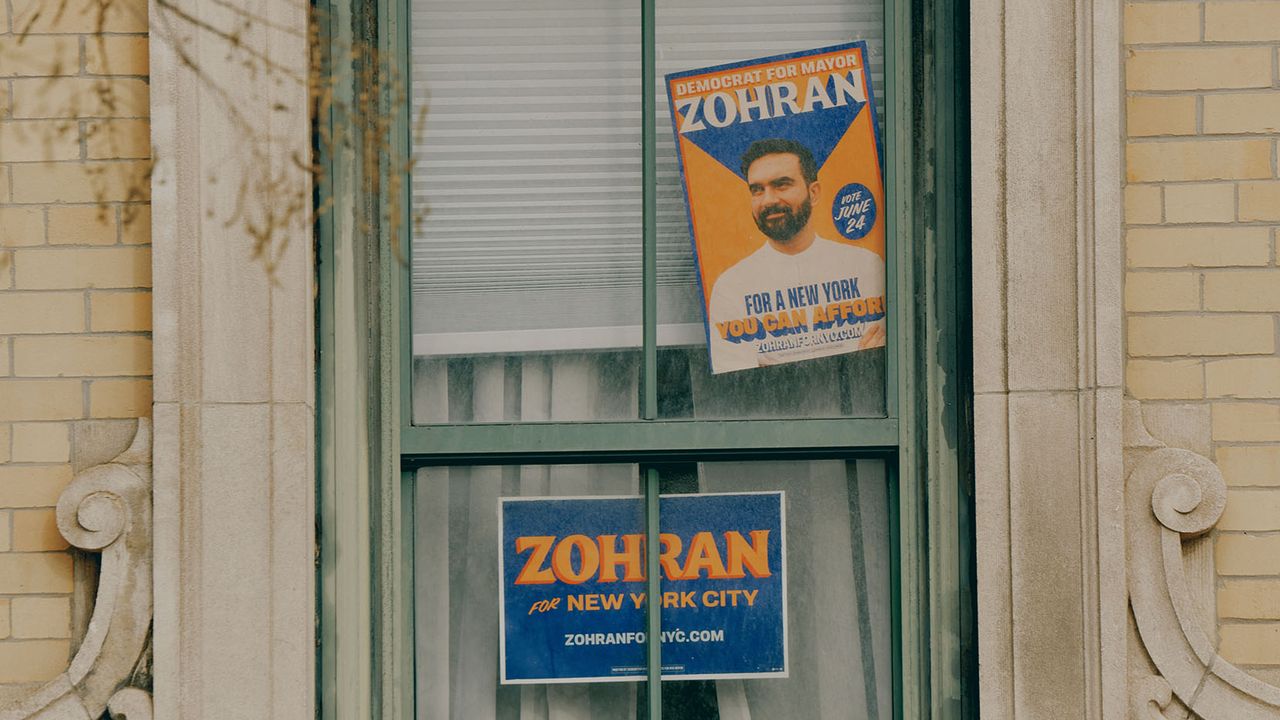
Lange has a taste for granular political geography: on the eve of the general election, he issued block-by-block predictions of the results. But Yorkville is an area he knows particularly well. “I lived here almost my whole life,” he told me. Although today he has decamped to the West Side, he grew up in several Upper East Side and Yorkville apartments; one, on Second Avenue, would shake when tunnels were being dynamited for the Second Avenue Q, a long-awaited subway extension. The line opened in 2017, bringing an influx of new activity to the area. Lange, who moved back to the neighborhood in 2021, after college, recalls being startled to see restaurants from Brooklyn and the East Village establishing new outposts in the neighborhood of his youth—and surprised, too, to see the crowds gathered at the Eighty-sixth Street entrance to Carl Schurz Park during the George Floyd protests in the summer of 2020. “I remember how much bigger it was than you’d think,” he said.
The affordable side streets at a remove from Central Park and the water make up the core of Mamdani’s support in his new neighborhood. At the diner, Lange pulled up a map of returns from the 2025 Democratic mayoral primary on his laptop. “You basically see the Cuomo wall along Central Park,” Lange said. “All of East End—which is, I would say, from a class and age perspective, more similar to Park than it is to Second—you see a lot of Cuomo support.” He indicated a row of blocks in between. “From Eighty-eighth, between First and Second, on up, it’s all Mamdani,” he said. “It’s very young; it’s very fifth-floor walkup.” He pointed out pockets of support elsewhere—such as a block just above John Jay Park, between York and the F.D.R. Drive, where Mamdani beat Cuomo by more than fifty percentage points in the primary. Lange toggled to look at the general-election results for the block. “Still resolutely Mamdani,” he said.
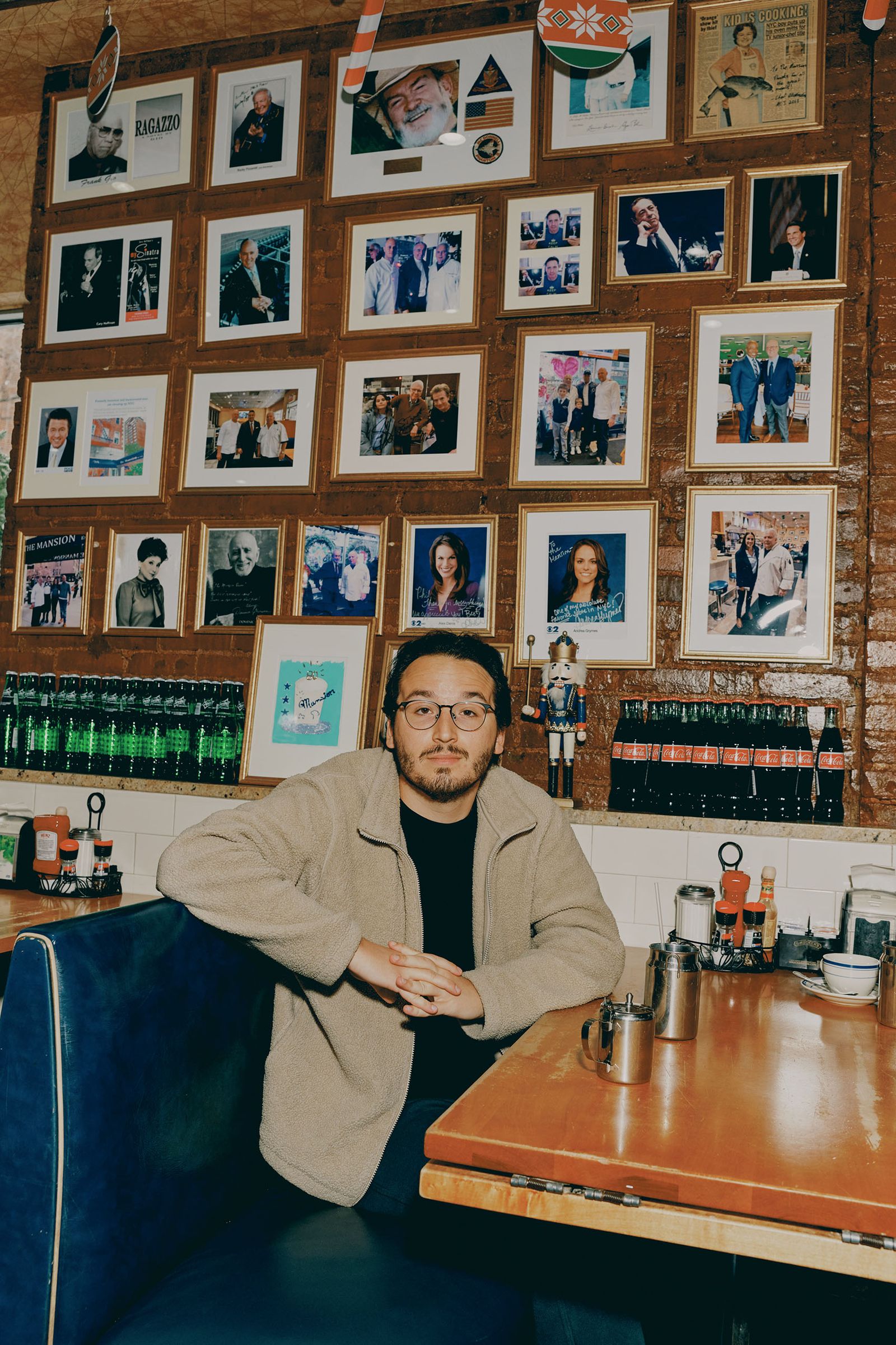
Michael Lange sits in a booth at the Mansion diner.
The week after Lange and I met, I went to visit that block, a stretch between Seventy-eighth and Seventy-ninth Streets on York Avenue. It had, I’d learned, a long history of defying expectations. A six-story complex of pale brick buildings bristling with fire escapes, it was said to be the largest low-income housing development in the world when it was built, in the early years of the twentieth century. The company that funded it, City and Suburban Homes, was run by a group of New York’s philanthropic élites, who hoped to provide an improved alternative to the era’s standard tenements. “There is light and air in abundance, steam heat in winter in the latest ones, fireproof stairs, and deadened partitions to help on the privacy that is at once the most needed and hardest to get in a tenement,” the Progressive Era muckraker Jacob Riis wrote in “The Battle with the Slum,” regarding City and Suburban’s buildings. The York development “was desirable not only because the rents were low but because the living conditions were so wonderful,” one longtime resident recalled in a 1988 history of the building, decades after first moving there, in the forties.
Today, the York Avenue Estate’s rent-stabilized studios tend to cost between twenty-two and twenty-six hundred dollars, and the one bedrooms between twenty-eight and thirty-one hundred dollars. These figures can no longer be called “low,” but, for the neighborhood, they also aren’t bad. Steve Goldenberg, who has been a superintendent there for more than thirty years, told me that many of the residents are medical personnel who work in the area’s hospitals. “Here you’ve got Sloan, you’ve got Cornell, you’ve got Lenox Hill,” he said. “During COVID, we recruited a lot of nurses and doctors.” A century ago, the building was home to nannies who cared for the neighborhood’s children and craftsmen whose handiwork ornamented its mansions. Today, it houses the kinds of professionals who help keep a NORC in working order.