
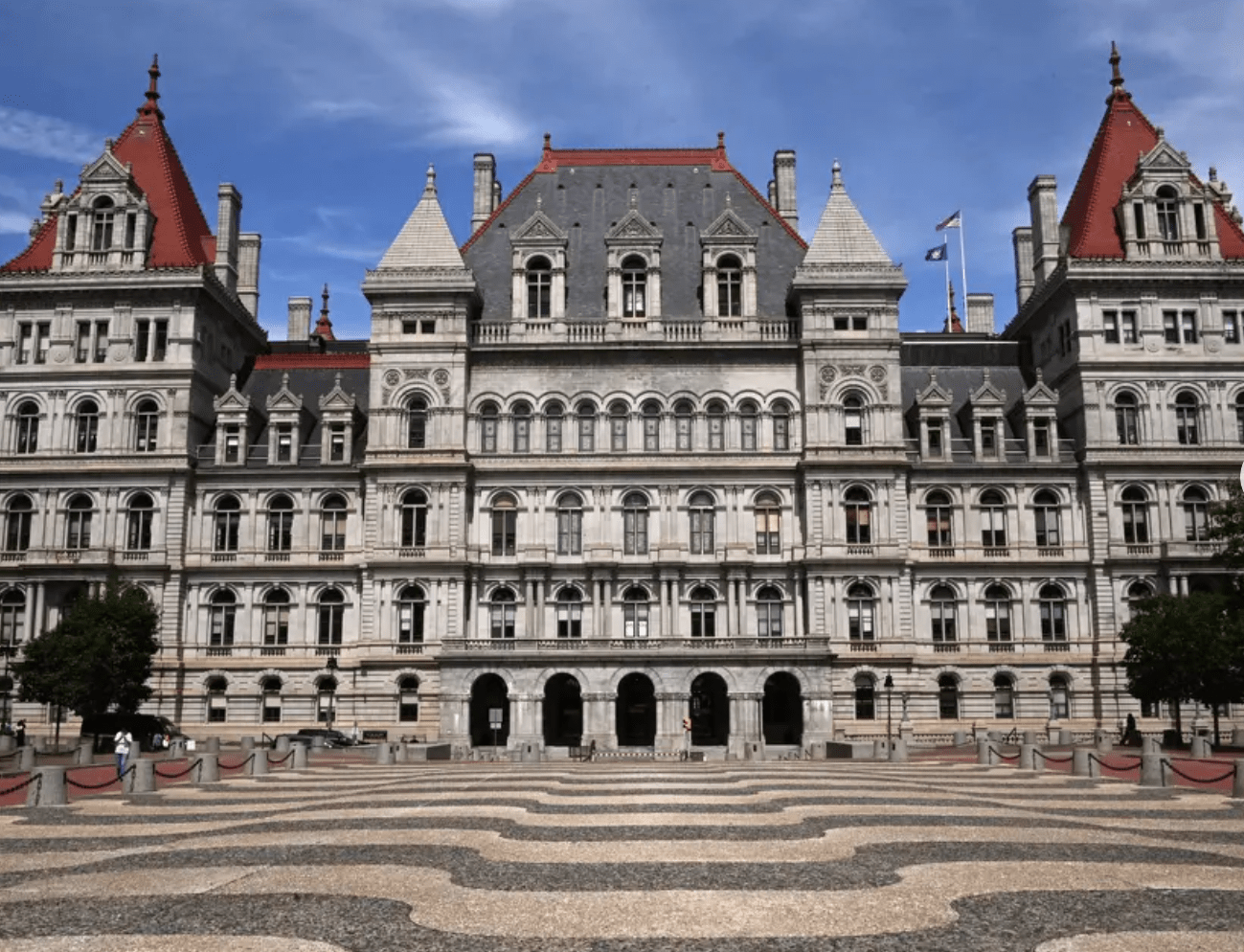
The state Legislature kicked off the 2026 legislative session on Tuesday, which runs through early June.
There are two major components to each year’s legislative session: the state budget, due at the end of March, and standalone policy priorities sought by Gov. Kathy Hochul and Democrats who hold a majority at the state Capitol.
Those two things don’t always mix and it’s not uncommon for Hochul and members of the state Senate and Assembly to disagree on major issues.
The list of items they could consider is endless but there’s only so much time, and appetite, to get things done before the legislative session comes to a close.
Here are five things you can expect will make the cut, regardless of the outcome.
1. Taxes and other revenue raisers
New York is anticipating a revenue gap in the upcoming state budget of $4.2 billion.
The state Division of Budget revised that gap in an update to the state’s finances in October that showed revenue from income taxes had far outpaced expectations in the first six months of the fiscal year.
Most of the revised gap—$3.4 billion—is the result of changes in federal spending on health care enacted in the “One Big Beautiful Bill” signed into law by President Donald J. Trump this summer.
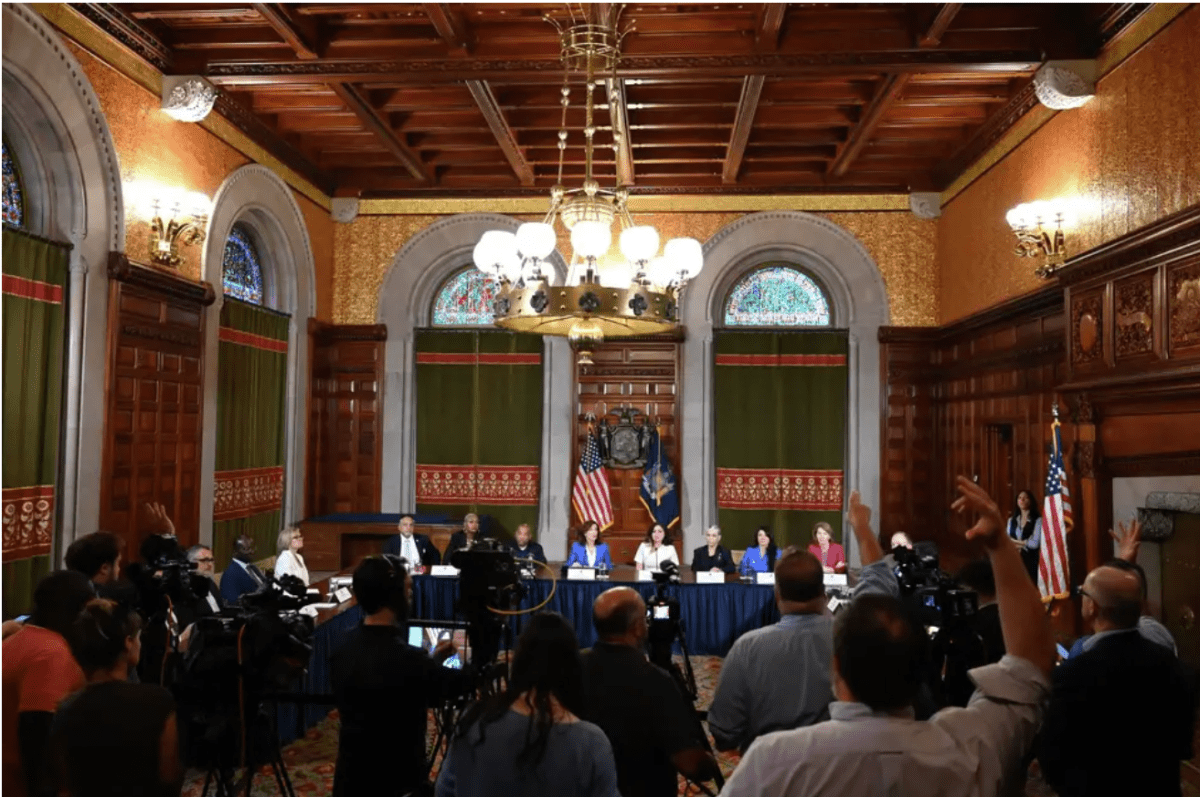
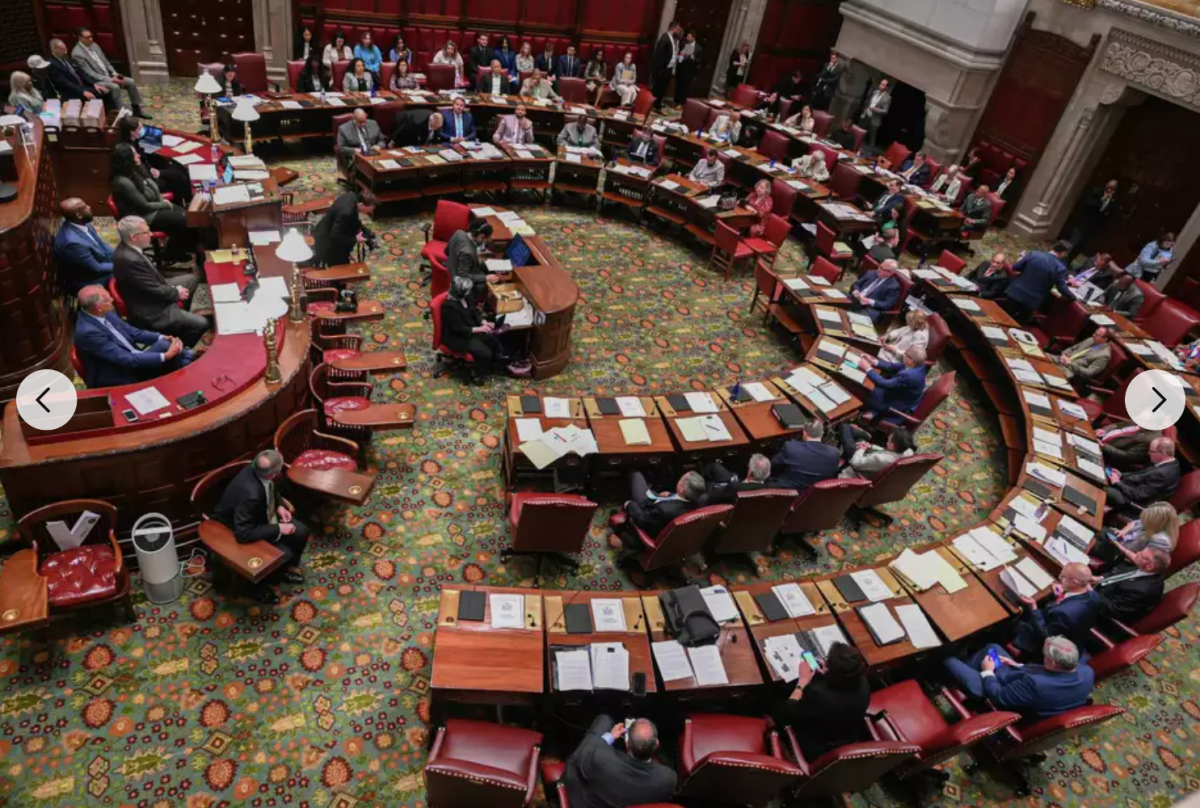 Lawmakers in the state Legislature, including the state Senate pictured here, plan to pitch their own policy priorities through early June. Photo by Lori Van Buren/Times Union
Nearly all of that comes from newly anticipated spending on health insurance for noncitizens, who will no longer be eligible for federally subsidized coverage due to the new law.
But New York is still required to provide health insurance for those noncitizens because of a ruling from the state’s top court. That decision obligates the state to fund an insurance option for them that’s comparable to Medicaid.
The state’s revised budget gap is largely due to that anticipated cost. The state has proposed a plan to use surplus federal health care funds to help cover it but that would require approval from the Trump administration.
Democrats in the state Legislature have proposed raising taxes on high-income earners in recent years to address the state’s fiscal concerns. Hochul has firmly opposed that plan but hasn’t dismissed other ideas, like a corporate tax hike.
“We’re not talking about new income taxes; I’ve been very clear on that,” Hochul said. “We’re very creative in state government. We’ll find a path to accomplish the goals we need to.”
The gap could narrow more if tax collections continue to outpace the state’s projections, creating a lesser need for new sources of revenue.
2. Hochul has plans for ‘efficiencies’
The other side of the coin is the state’s spending practices. Hochul’s budget director, Blake Washington, told state agencies in October they should not anticipate an increase in funding as part of the next state budget.
“Agency budget requests for (next year) should not exceed the total (current year) funding levels, excluding one-time investments,” Washington wrote in an annual letter sent to agencies.
“As always, the effectiveness of all agency functions, programs and services should be reviewed and all expenditures should be examined,” he wrote. “Unnecessary duplication or overlaps should be eliminated.”
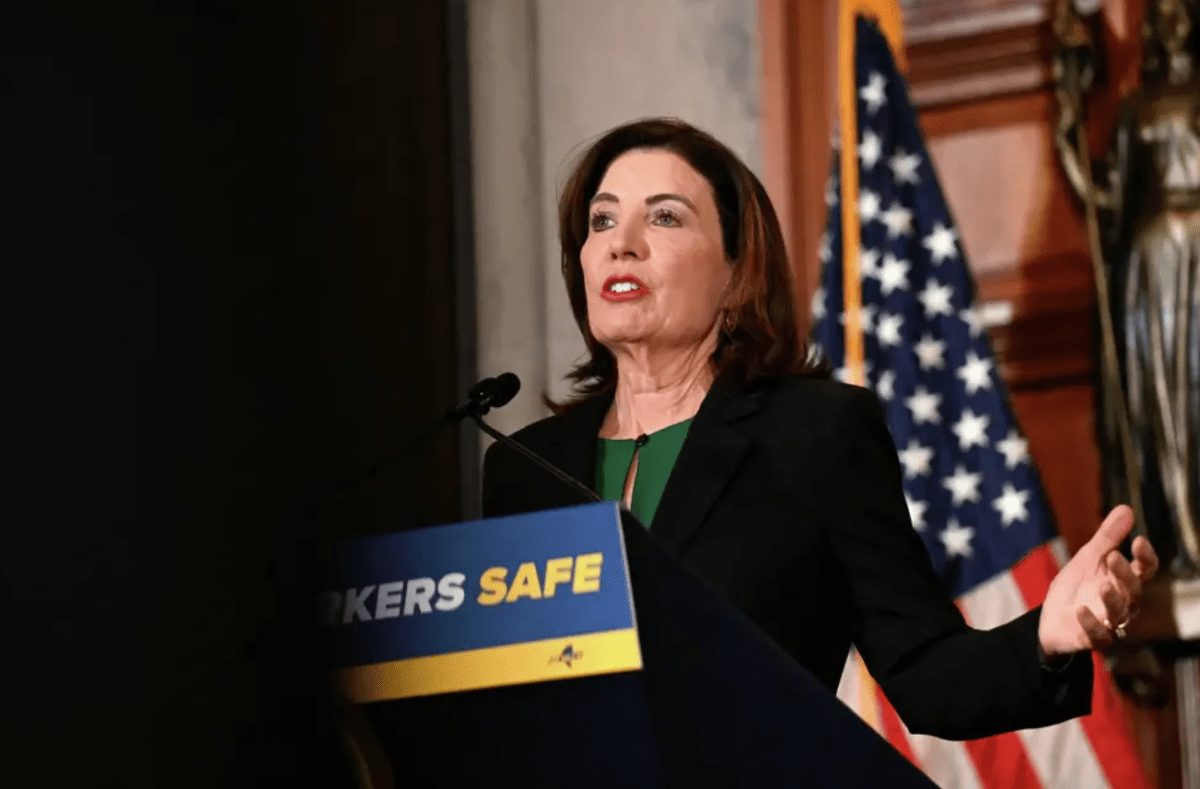 Gov. Kathy Hochul is expected to raise new options for state revenue after the “One Big Beautiful Bill” significantly changed the amount of health care funding for New York. Photo by Will Waldron/Times Union
If funding is left flat for agencies in the next state budget, they’ll likely have to find somewhere to cut spending. Union contracts often require raises for staff and inflation can drive up costs beyond what’s anticipated.
The Hochul administration began exploring ways to reduce spending immediately after the “One Big Beautiful Bill” was signed in July. The immediate impact was projected to be a $750 million shortfall in the current fiscal year.
But Hochul said in December that her team has already found a way to close that gap and will continue those efforts.
“No taxes were raised to do this,” Hochul said. “We found the path forward through efficiencies and I’ll be announcing some more initiatives we have to do even more of that. So, I’m committed to reducing the cost of government.”
That may not sit well with Democrats in the state Legislature, who are projecting at least $1 billion more in revenue for the next fiscal year than what’s estimated by Hochul’s office.
3. The cost of energy and how it’s produced
The cost of electricity and natural gas in New York has risen sharply over the last five years. That’s shown in data on the monthly average retail price of both commodities from the New York Energy Research and Development Authority.
That’s one part of a consumer’s utility bill. The other is the rate charged by the utility company to deliver that energy to your home.
The agency’s data on the average monthly bill charged by each of the state’s major utilities shows that the average cost charged by each company to deliver electricity and natural gas has risen steadily in the last five years with no expectation of leveling out.
The public’s patience for that pattern appeared to hit a breaking point this year when several of those companies requested double-digit delivery rate increases from the state.
The state Public Service Commission is responsible for reviewing those rate requests and determining if they should be granted. The process typically involves the state negotiating a lesser rate increase that’s then approved by the commission.
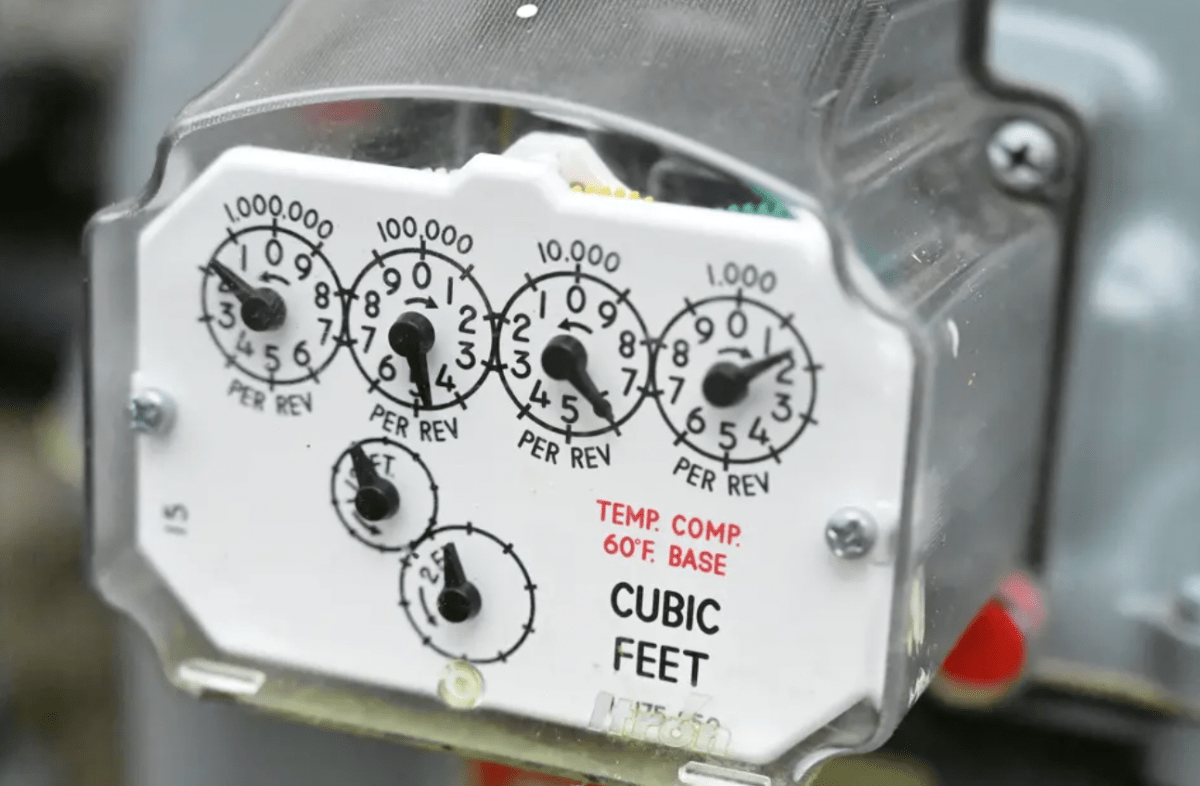 Gov. Kathy Hochul is trying to expand the state’s energy portfolio as a strategy to contain costs but Republicans and Democrats in the state Legislature are divided on what that should look like. Photo by Will Waldron/Times Union
Both National Grid and Central Hudson were authorized to raise their rates this summer by the commission, whose chair defended the decision.
“These factors limit how much we can cut down the rates and we need policymakers at every level of government to effectively help us address all these issues,” Chairman Rory Christian said in August after voting on the new rates.
That includes the commission’s statutory mandate to ensure the state’s supply of electricity and gas is reliable. The utility companies requested higher rates to replace aging infrastructure that they said could fail without the investment.
Hochul’s plan to address the rising cost of energy is linked to supply. The more energy that’s brought online in New York, the less expensive it will become, she said in December.
“I just keep pushing and pushing and pushing because I have to do that to protect our state and ratepayers,” Hochul said. “The more supply — I want to see rates start going down.”
That includes a new nuclear power plant somewhere in upstate New York but the state doesn’t expect that to come online for at least five years.
Two offshore wind projects were scheduled to become operational next year until the Trump administration halted their development last month. It’s unclear when, or if, those projects will resume.
Democrats in the state Legislature have proposed various ideas to address energy costs, including restructuring the Public Service Commission, but haven’t come together on legislation that would realize that goal.
Republicans have argued that the state should lift its ban on drilling for natural gas under the expansive Marcellus Shale west of the Catskills using high-volume hydraulic fracturing, often called “fracking.”
They say allowing that gas to be harvested would lower the cost of the commodity for consumers and gas-fired power plants. Democrats have firmly opposed that idea and want the state to invest deeper into renewable energy projects.
The state has projected that the cost of energy will dip if ratepayers transition their homes and transportation away from fossil fuels. But the recent 15-year energy plan produced by the state acknowledged that upfront costs for consumers make that difficult.
4. Redrawing New York’s districts in Congress
When Republicans in Texas began to move forward with a plan to redraw their state’s districts in Congress in favor of their party, Democrats in a handful of states sought to respond.
One of them was New York, where Hochul even hosted Democrats from the Texas state Legislature one day to highlight her opposition to their state’s redistricting plan. She said the conflict “is a war” and said New York should act.
But redistricting is different in New York. While it’s done through a state law in Texas, New York has an independent commission that redraws the state’s districts once each decade after the census.
That commission and its process are embedded in the state constitution. That means Hochul and the state Legislature can’t approve a law to redraw the state’s districts; they have to abide by the powers of the commission.
 New York’s redistricting process is also expected to be on the table after Texas redrew its districts in Congress last year. Photo by Will Waldron/Times Union
The only scenario in which New York is allowed to redraw its districts more than once in a decade is if that’s ordered by a court through litigation.
Hochul said that she wants to ditch the commission, which would require approval from voters to amend the state constitution. Assembly Speaker Carl E. Heastie said at the time that he also thinks the process needs to change.
“It’s just so convoluted and complicated and so I’m happy that (Hochul) wants to relook at it,” Heastie said. “I know our members would like to look at it.”
A bill that would amend the redistricting process in the state constitution has already been introduced by state Senate Deputy Majority Leader Michael Gianaris and Assemblyman Micah Lasher, both Democrats.
It would allow New York to redraw its districts more than once each decade — but only if another state does so first. The change would have to be approved by voters.
5. Immigration protections after raids across the state
Former New York City Comptroller Brad Lander was arrested by agents with U.S. Immigration and Customs Enforcement in June, prompting major backlash from Democrats.
Lander was released hours later after Hochul intervened. But a raid from the federal agency in October raised tensions between state officials and the federal government on immigration enforcement.
The raid on New York City’s Canal Street — a main thoroughfare in Manhattan — led to calls from several state officials for new laws that would protect immigrants from deportation, including the codification of an executive order prohibiting the use of state resources for that purpose.
New York Attorney General Letitia James created an online portal for residents to submit evidence of federal agents breaking state law. That move was supported by several state lawmakers.
 Lawmakers are also expected to discuss new protections for immigrants from deportation but it’s unclear what they want to do. Photo by Erin Hooley/AP
A handful of bills have already trickled in from state lawmakers who want to enact new protections for immigrant populations, including citizens.
One bill from Assemblyman Tony Simone and state Sen. Pat Fahy, for example, would create a centralized database to track the activity of federal immigration officers in New York. Another would restrict those officers from entering school properties.
Immigrant advocates pressured lawmakers to approve new laws during last year’s legislative session but that didn’t happen before lawmakers left Albany in June.
The last day of this year’s legislative session is scheduled to be June 4, an earlier end than usual to allow members time to campaign before the June primary elections.