
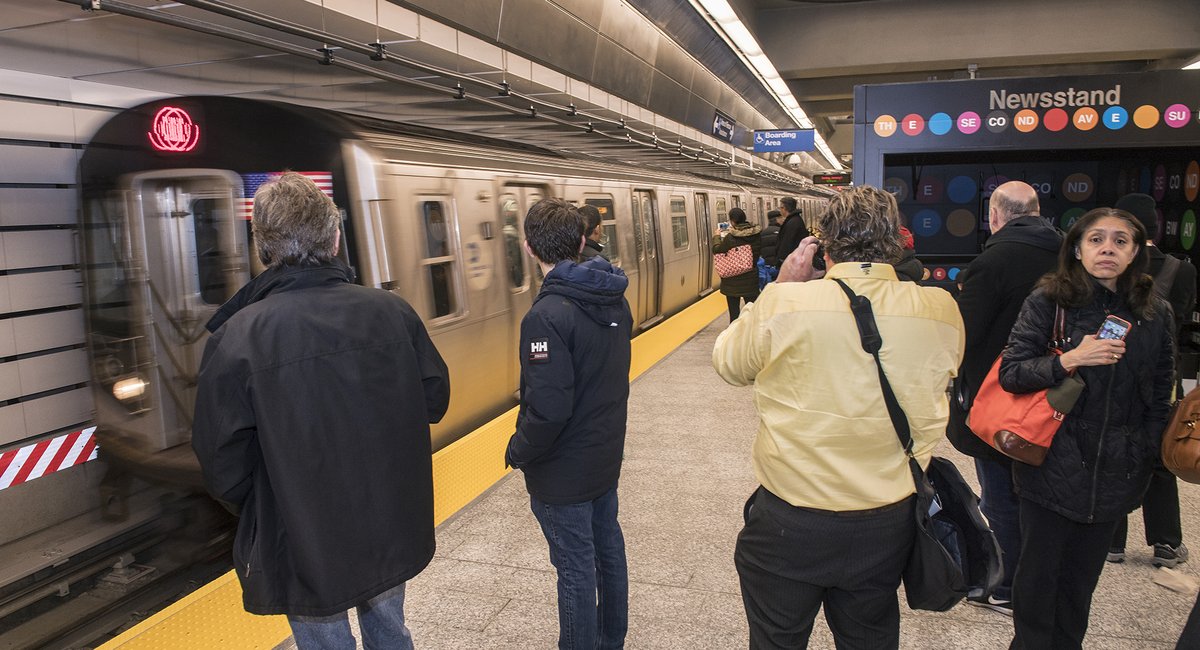
MTA officials plan to finally finish construction on the Upper East Side’s Second Avenue subway stations — nearly a decade after they first opened for service.
The transit agency quietly published a request for proposals the day after Christmas, seeking contractors that can complete a laundry list of unfinished work that includes installing guardrails, emergency exit lighting, safety railings and crucial mechanical, electrical and waterproofing measures. The fire alarms at the stations also need updating, the request shows.
The new work is an addendum to a storied transit construction project that was stalled for nearly a century, and became a symbol of government dysfunction in New York. Former Gov. Andrew Cuomo pushed the MTA to finish the new stations, but experts say their completion came at the expense of the rest of the subway system.
The latest batch of work comes as the MTA moves forward with a $7.7 billion extension of the Second Avenue subway into East Harlem, which will bring three new subway stations to the neighborhood. Previous plans would extend the line all the way down to lower Manhattan, but the MTA has in recent years put that idea on the backburner.
The first phase of the transit line added three new Q train stations to 72nd, 86th and 96th streets, as well as an expansion to the 63rd Street-Lexington Avenue station. All four stops still require additional construction, the request states.
MTA spokesperson Michael Cortez said the new batch of work — which is estimated to cost up to $50 million — is made up of “ongoing upgrades keep these largely non-public areas in a state of good repair.”
The stations opened in 2017 on New Year’s Day after years of delays. The project cost $4.5 billion, making it one of the world’s most expensive subway extensions on a per-mile basis.
Philip Plotch, a senior fellow at the Eno Center for Transportation who authored a book on the construction job titled “Last Subway,” argues then-Gov. Andrew Cuomo pressured the transit agency to divert resources from other projects in order to meet the 2017 deadline.
He said that led to deferred maintenance that sparked regular subway service meltdowns later that year in a period that became known as the “Summer of Hell.”
“He was able to get that subway opened on time, but he caused a problem for the rest of the system in order to do that,” Plotch said. ”When you’re doing it in a rush, it means you’re taking away resources from the existing system. And that’s what happened in early 2017 after the subway sector. After the Second Avenue subway opened up the rest of the system the degradation started to appear.”
Plotch, a former MTA planner who worked on the Second Avenue subway project, said the agency opened the station with 17,000 items of work still unfinished. Some were small, like toilet paper roll holders, but others were more important, like the fire suppression system. Plotch said he discovered the MTA had to ensure workers were standing around in the stations 24/7 because the sprinklers weren’t working properly.
At one point the sprinklers accidentally flooded escalators at one of the stations, causing damage, according to Plotch.
“ The idea that they’re still cleaning up problems from the end of construction is surprising,” Plotch said.
Cuomo spokesperson Rich Azzopardi dismissed the idea that the former governor rushed the opening of the new stations.
“This is the dumbest thing I ever heard,” Azzopardi said. “This project languished for 50 years and those stations only opened because of Governor Cuomo — period. If these silly bureaucrats had it their way, they’d still be digging a tunnel to nowhere one shovel at a time, adding billions of dollars to a payday for the contractor industrial complex that would never end with nothing to show for it.”
The MTA in early 2023 also opened its new Grand Central Madison station — which was also plagued by decades of delays and budget overruns — while it was still under construction. The station’s retail locations all remain empty except for a bar, which has no kitchen because the MTA didn’t install gas hookups. The agency in 2024 sought contractors to complete “miscellaneous” work in the station.