
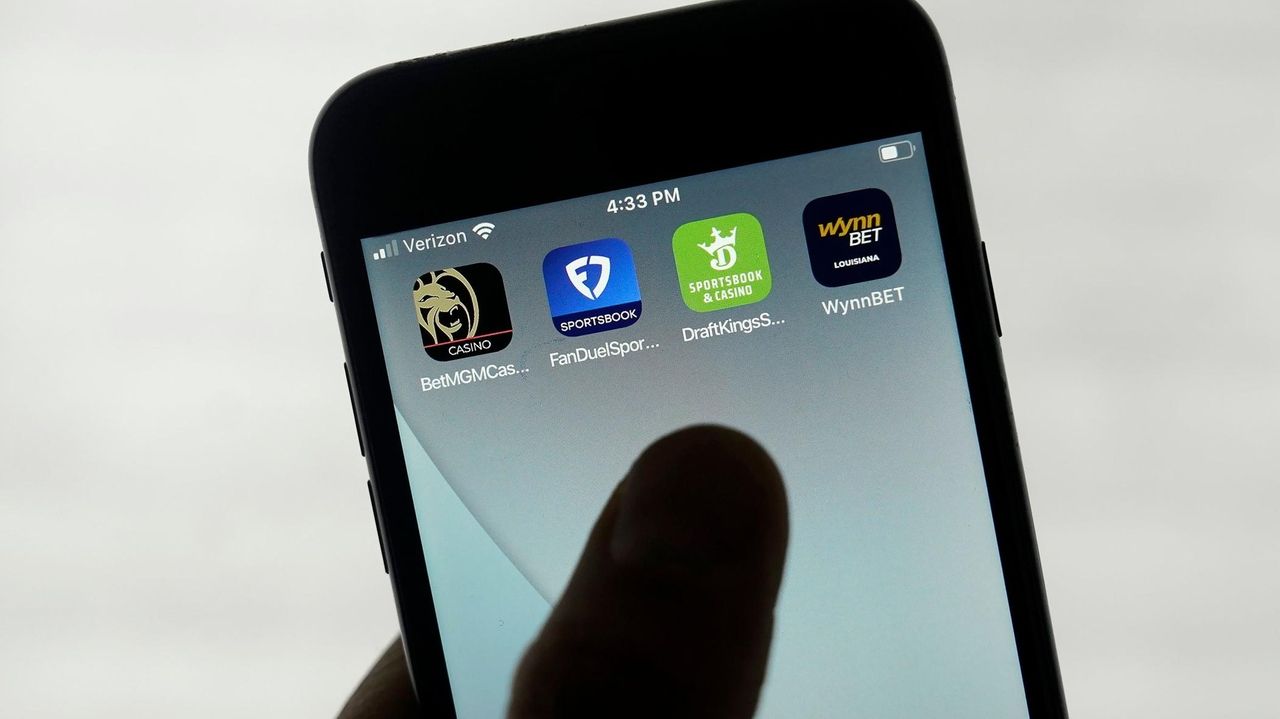
New York shattered all previous nationwide records for online sports betting in 2025, with bettors wagering more than $26 billion and gross revenue exceeding $2.5 billion, state figures show.
The booming industry, which has seen its revenue nearly double since the state legalized mobile sports wagering in 2021, also generated a record amount of tax revenue for the state last year, data from the New York State Gaming Commission shows.
But critics said the proliferation of online sports wagering, which accelerates in the fall and winter during the ongoing NFL season, has fostered “life-altering” gambling addictions that represent the region’s next major mental health crisis.
Booming online business
New York reached $26.27 billion in mobile sports betting last year — a nearly 15% increase from the $22.87 billion wagered in 2024 — a new record for any state in the nation, data shows.
Meanwhile, gross gaming revenue from online betting hit a record high of $2.54 billion in 2025, an almost 24% spike from $2.05 billion one year prior, records show.
In fact, November and December of 2025 were the two most profitable months in online sports betting history in New York State, figures show.
The state has seen its coffers grow as the industry has exploded in popularity, resulting in more than $1.32 billion in new tax revenue last year, a nearly 26% increase from the previous record of $1.05 billion in 2024, Gaming Commission data shows.
Since start of 2022, more than $84 billion has been bet through licensed mobile sports wagering operators such as FanDuel and DraftKings, generating $7.6 billion in total gross revenue — almost $4 billion of which has been kept by the state, primarily to fund education aid, records show.
A small fraction of the mobile sports wagering tax revenue is appropriated to fund problem gambling education and treatment or for sports programs for underserved youths, officials said.
“We’ve really taken this activity, pulled it out of the shadows, and put a spotlight on it,” said Joe Maloney, president of the Sports Betting Alliance, an advocacy group for many of the nation’s largest major sportsbooks. “And so we’ve been continuing to migrate bettors out of the illegal market and into the legal marketplace. And that’s in part because of an increasing amount of trust in the regulated online space.”
A spokesman for the State Gaming Commission declined to comment.
‘Life-altering and dangerous’
Carine Morrison, the Long Island team leader at the Albany-based New York Council on Problem Gambling, said the Gaming Commission numbers are not surprising, given the easy accessibility of mobile platforms and the strong fan bases for teams across the state.
“We … have concerns about who is losing money,” Morrison said. “Research consistently shows that individuals ages 18-24, and those with incomes under $30,000, are at greater risk of developing a gambling problem. Additionally, evidence suggests that the majority of gambling revenue comes from a very small percentage of people who gamble.”
Jeffrey Reynolds, president and CEO of Family & Children’s Association in Garden City, which provides gambling addiction services, said they’re treating an increasing number of young men for addictions stemming from online sports wagering.
“It’s clear that more people are gambling more money and while online sports betting is entertainment for some, it’s life-altering and dangerous for people who develop gambling problems,” said Reynolds, who is calling for up to 2% of gaming revenue to be set-aside for problem gambling services. “At FCA we are seeing more and more young men in our treatment centers who have racked up big debts as they chase losses and respond to bonus offers and other enticements from sports betting companies.”
While it’s unclear if mobile sports wagering has peaked yet in New York — the industry could be affected as the state moves forward with three new downstate brick-and-mortar casinos — experts said one additional factor could cause even more bettors to flock to the online market: the fate of the Big Apple’s two lackluster local football teams.
If the Jets and Giants, who finished the season a combined 7-27, were to — somehow — find sustained success, Maloney said the mobile sports wagering industry in New York could reach unprecedented heights.
“If you’re a taxpayer and a steward of the state’s finances and you want to continue to see larger and larger disbursements coming from legal, regulated gaming,” he said, “cheering for the hometown team certainly helps.”

Robert Brodsky is a breaking news reporter who has worked at Newsday since 2011. He is a Queens College and American University alum.