
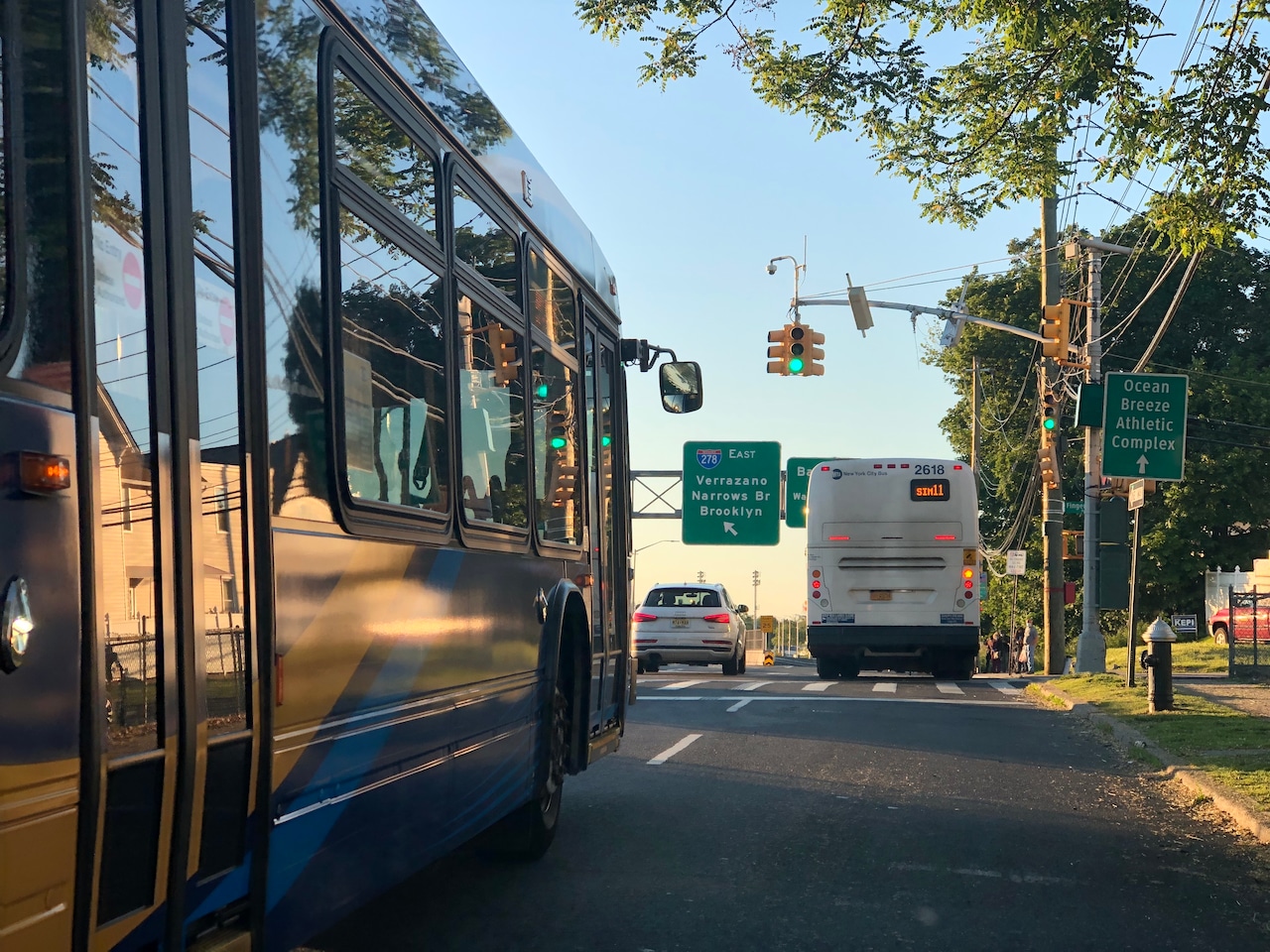
STATEN ISLAND, N.Y — New York City will redesign a portion of Madison Avenue to speed up several bus lines, including express routes from Staten Island.
At a press conference in Midtown Manhattan on Sunday, the Department of Transportation and other city officials announced they would proceed with a project to redesign the busy Manhattan road, adding bus lanes from 23rd Street to 42nd Street.
The new design would extend the bus lanes that already feature on Madison Avenue from 42nd Street to 60th Street.
By doing so, the city officials said they hope to increase bus speeds in Midtown, which they explained can reach as low as 4.5 MPH.
Several major routes converge on Madison Avenue, including the SIM4C, SIM6, SIM23 and SIM33C. Transportation officials said the corridor serves around 92,000 local and express bus riders daily.
“Madison Avenue is one of the most important bus corridors in the city, yet tens of thousands of riders are crawling along at walking speed,” said Mike Flynn, the new Department of Transportation commissioner under Mayor Zohran Mamdani.
“It’s time to deliver this project and give buses the dedicated space they need so working New Yorkers can get where they’re going faster.”
The redesign will create two dedicated bus lanes between 23rd and 42nd streets while keeping one lane for through traffic and another that will allow parking except during rush hour.
Officials at the press conference said the project should be completed this year.
The Madison Avenue redesign was originally planned for 2025 under then-Mayor Eric Adams’ administration, but was paused before any work began.
“The Mamdani Administration is serious about keeping this city moving. Installing new bus lanes on Southern Madison Avenue will speed up commutes for nearly 100,000 riders a day. That saves New Yorkers time, money, and headaches,” said Deputy Mayor for Operations Julia Kerson.
The redesign was also pitched as a way to support the Metropolitan Transportation Authority’s congestion pricing program by making it easier to commute to the core of Manhattan.
Congestion pricing involves using electronic tolling to charge vehicles $9 for entering Manhattan’s Congestion Relief Zone to reduce traffic and raise money for public transportation upgrades.
Improved express bus speeds have long been touted as a success of the toll plan and according to the MTA‘s data website, average weekday, peak-hour speeds on Staten Island’s express routes were faster earlier in 2025.
Toward the end of 2025, however, Staten Island express bus speeds more closely mirrored metrics from the year prior.
In 2024, average express bus speeds were 18.7 MPH in August, 16.4 MPH in September, 16.7 MPH in October, and 16.4 MPH in November.
The average speeds over the same time period in 2025 were 18.4 MPH in August, 16.5 MPH in September, 16.6 MPH in October, and 16.3 MPH in November.