
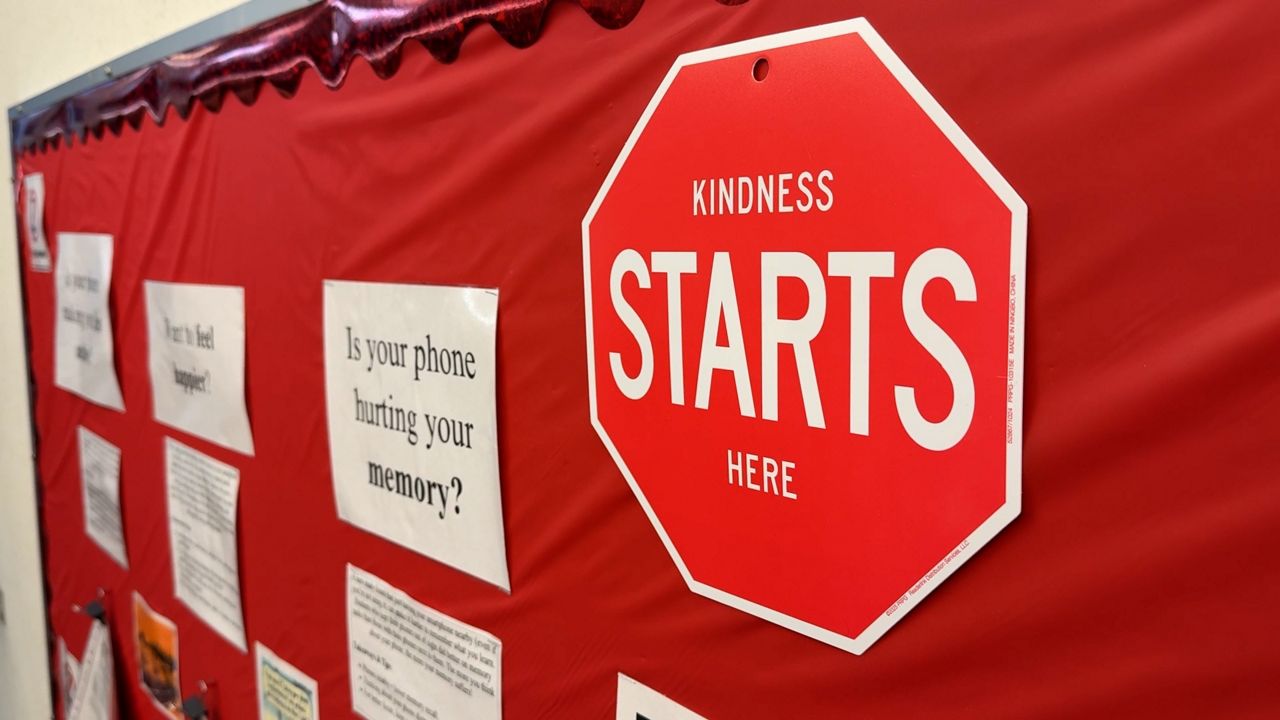
Stopping students from experiencing the perils of social media has been a big focus for New York, especially when it comes to mental health.
“There’s always family, there’s always environmental [pressures]. There’s always, you know, academic pressure,” said Harjyot Kaur, a senior at Niagara Falls High School. “Sometimes you’re kind of having that identity loss where you’re unable to know what’s best for me.”
Outside pressures like social media aren’t doing anyone any favors.
“I remember being so obsessed with using my phone to the point where I couldn’t stop constantly doomscrolling on TikTok, on Instagram, on Snapchat,” Kaur said.
When the cellphone ban went into effect last year, students like Kaur welcomed the break.
“Kids aren’t so obsessed with seeing who liked their story and who liked their post because that kind of stuff makes you feel like you’re not worth enough,” she said.
It’s a difference Gov. Kathy Hochul says she’s seeing too.
“Instead of cellphones, they’re bringing board games to lunch and recess, learning how to play bingo,” said Hochul. “Kids are just having a good time again.”
Which is why in her State of the State address, she’s proposing expanding social media restrictions and putting more resources into mental health training, specifically peer-to-peer teen mental health first aid.
A pilot program trained 5,000 students already. More are on the way.
“A friend can help another friend in a powerful, profound way,” said Hochul.
It’s building on that common ground they already have with each other.
“We’re all high school kids and, you know, if I feel a certain type of way about something, I can make a guess on what someone else would feel,” Kaur added.
Kaur got her own training through a trauma-informed group at school.
“We start with a rose, bud, thorn. We talk about what in our life is a rose, what’s positive in our life. The bud is something that’s constantly improving […] and then thorn is just something that’s been, you know, it’s not been the best,” Kaur explained.
She’s making sure the negatives don’t overtake the positives, for herself or others.
“Noticing someone’s stressing over an assignment, something that seems so simple to you could be something so hard for them,” she said.
That’s the whole point behind expanding this kind of training.
“Who are young people going to listen to more than anybody? Each other,” said Hochul. “You could be that person that saves them from committing self-harm, hurting themselves, or just dropping out of society and just becoming a recluse like many students do.”
Students like Kaur are ready.
“To learn about others, we got to learn about ourselves first,” she said. “Making that connection is what the trauma-informed care team taught me.”