
an apartment in Manhattan, New York. A visitor from Korea is somewhat surprised to see the kitchen shelf. The apartment was filled with shelves with two 12-roll batches bought from Costco, and 24 bottles of water were stacked next to the refrigerator.
“Are these all paper towels?” When do you use it up?” asked the owner, “This one? I use it up in a month.” In Korea, you spend months with a roll of thin paper towels that you use to splash oil on, but in the U.S., why do you have to prepare two batches of 12 rolls?
‘The Value of Time’ Is Different…Americans Calculating My Expensive Time
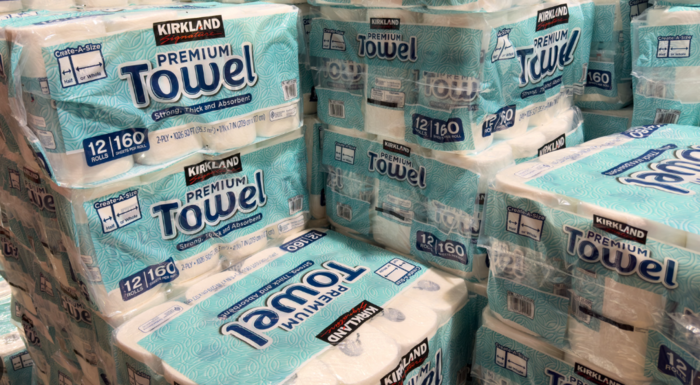 사진 확대 Costco Kitchen Towel.
In fact, the answer is simple. Paper towels in the United States are disposable dishcloths. The texture is stiff and thick, so everyone uses it as a dishcloth substitute.
When a child spills milk, when food is spilled, when cleaning the countertop, when cleaning hands, just tear it off and wipe it off. American household toilets are also equipped with paper towels for guests. In Korea, it is a landscape that can only be seen in hotels and department stores.
Instead of spending my time skipping the dishcloth, I think I save that time and do something else.
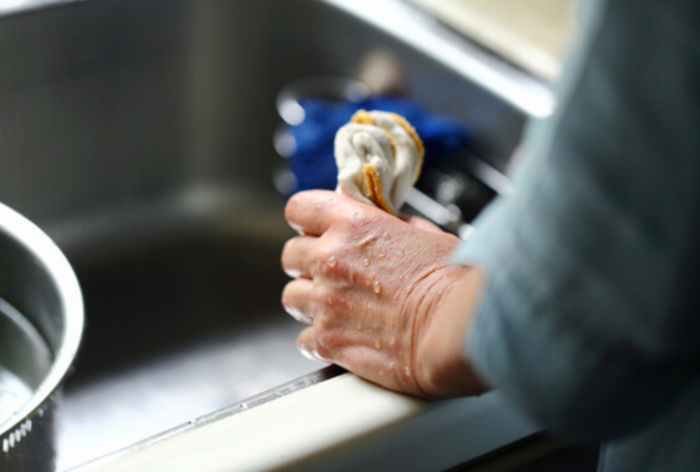 사진 확대
사진 확대
The average hourly wage in the U.S. is about $37 as of December 2025, according to the U.S. Bureau of Labor Statistics. For middle-class Manhattan office workers, the hourly wage is well over $50.
Five minutes to wash, squeeze and dry the dishcloth. It’s 10 minutes twice a day, and 5 hours a month. It’s $250 per hour. Two batches of Costco paper towels cost 50 dollars.
Of course, these calculations are not always explicitly done.
But American society as a whole works on the premise that “my time is the most precious.” Everything that is put into labor in the United States is expensive. After all, they have a strong tendency to save even their own labor.
Tom’s answer, a software engineer in Brooklyn, runs through this attitude.
“I don’t want to spend any time folding laundry, boiling dishcloths, and cleaning them on weekends. At that time, I want to go to the park with my kids, read a book, or just relax. What money can buy is what money can buy.”
In fact, Americans consume about 24 kilograms of paper towels per person per year. It is the highest figure in the world. Overall, the U.S. is 13 billion pounds (about 5.9 million tons) a year, with American households using 1.52 rolls every two weeks on average. We spend 120 to 180 dollars on paper towels alone per year.
Water bottles beat the water purifier…removal of the preparation process
This logic is not limited to paper towels. In the early 2000s, when Coway dominated the market with the water purifier rental business in Korea, the general response was, “Buy bottled water, does it make sense?” However, more than 90% of Korean households now use water purifiers.
The U.S. is the opposite. The bottled water market has grown from about $6 billion in 2000 to about $11 billion, including retail, in 2024. When you think of a water purifier, the fact that you have to change the filter every six months, clean it when it gets wet, and wash the water bottle constantly has prevented growth.
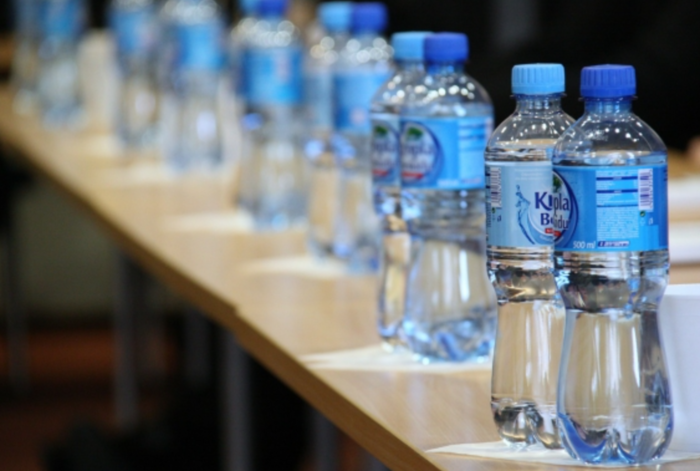 사진 확대
사진 확대
elimination of preparation. That’s the whole point. It has eliminated all processes of washing water bottles, checking the condition of filters, and caring about smell or water stains.
Even employees in U.S. offices keep their personal bottled water at their desks even though the company provides water purifiers. The reason is that 30 seconds of walking to the water purifier is a waste, and the concentration is cut off.
Disposable cups and 36 roll sets of large-capacity tissues are the same logic. Omit the dishwashing process and reduce the frequency of shopping. In non-urban areas, it often takes more than 30 minutes by car to Costco.
The innovation strategy of American companies is exactly in line with the lifestyle of Americans who want to eliminate the preparation process.
Google search engines focus on reducing the number of clicks that reach the user’s desired information. If it’s not solved with one click, it moves on to a competitive product.
The explosive growth of delivery apps in the 2010s is in the same vein. I’ve eliminated all the process of finding restaurants, calling, ordering menus, and going to pick up.
 사진 확대
사진 확대
Netflix eliminated the hassle of going to video rental stores, renting DVDs, and returning them. Dollar Shave Club checked “Is the blade running out?” and removed the trouble of going to buy every time.
Amazon Prime eliminated the hassle of matching the minimum order amount or calculating the shipping fee every time for free shipping. The key is to reduce ‘the hassle of repeating purchase decisions’.
Here’s what a venture capitalist in Silicon Valley says. “We invest in companies that reduce ‘friction’. Count how many steps users must go through to achieve their goals. If you can cut that step in half, it’s worth the investment.”
The War Against Trouble, a Culture That Has Lasted Over 70 Years
A couple in Brooklyn uses a cleaning agency service every weekend. It’s up to 150 dollars at a time. It’s expensive, but I think it’s better than four hours of cleaning on Saturdays. I think it’s much more valuable to go to the museum with the kids or spend family time at that time.
From the perspective of Koreans, it may seem like overspending. But the cultural background is different.
After World War II, mass production and mass consumption in the United States became a middle-class culture. The main message of ads in the 1950s was “Save your time!” TV dinners, disposable diapers, and paper cups have all become common at this time. It’s a culture that’s been around for more than 70 years.
 사진 확대
사진 확대
Of course, environmental issues are still homework. It takes 17 trees and 20,000 gallons of water to produce 1 ton of paper towels. About 130 billion gallons of water are used to produce paper towels annually in the United States alone. In Portland and San Francisco, the “slow life” movement is spreading.
But the overall flow is still towards efficiency. ChatGPT reduces writing time, eliminates the trouble of self-driving cars, and smart homes automate housework management. As technology advances, more processes are omitted.
To understand American society, we must first look at the war against this hassle. Paper towels piled on kitchen shelves in Manhattan apartments. It’s not just a disposable product that you wipe and throw away, but it contains a philosophy of efficiency that has lasted for 70 years.
The real America that you have to live in the U.S. The story of American money experienced and interpreted by New York correspondent Hong Seong-yong. “Why is monthly rent in the U.S. so expensive, how do you buy a used car, and why can’t you do anything without a credit?”
It summarizes everything you’ve experienced in the U.S. deeply from the perspective of Koreans.