
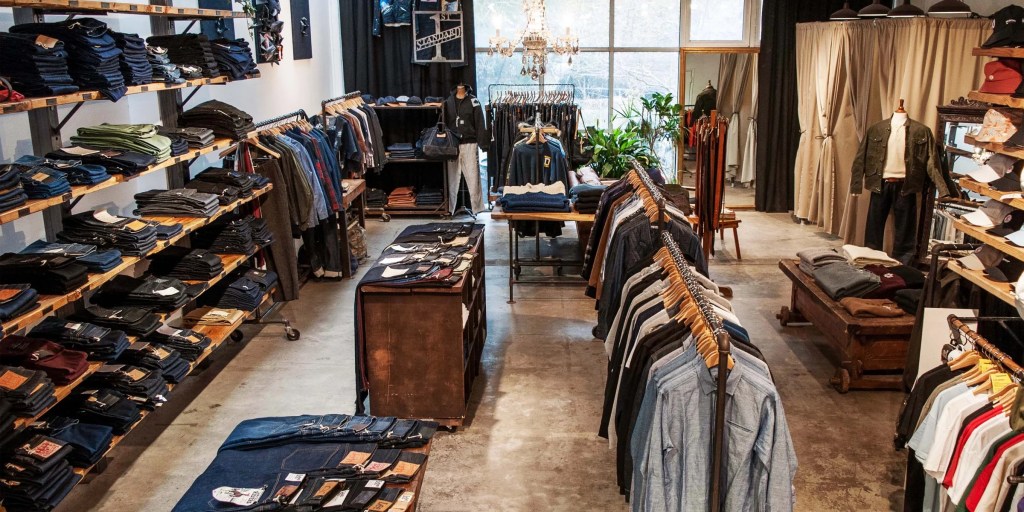
Soon, Williamsburg will bid farewell to one of the retailers that helped define the neighborhood’s gritty-yet-cool identity in the 2010s.
Brooklyn Denim Co., located at 338 Wythe Ave, will close its doors this month after 17 years of selling, repairing and tailoring premium heritage jeans and more. While owner Frank Pizzurro plans to continue producing Brooklyn Denim Co. jeans and transition the U.S.-made brand to an online-only model, the store is currently clearing out merchandise at deep discounts through Sunday, Jan. 18.
Additionally, the store’s popular repair service will remain at the same location under a new name, The Mending Station.
Before relocating in 2018 to its current location, Brooklyn Denim Co. opened in 2010 on Wythe and Third Street, offering heritage denim brands and “Made in USA” jeans amongst former warehouses and factories. Though the neighborhood was beginning to tip from being a scrappy and indie to becoming the buzzy, hipster haven for 20- and 30-somethings it eventually became a caricature of, Pizzurro said there was still a strong sense of individuality.
Prior to establishing the business, he recalls “pulling back forth” between Los Angeles and Brooklyn. New York’s pride for individuality eventually won out.
“The two differences for me were in L.A., everybody always wanted to have what everybody else had and wanted to copy everybody else. They had to have that brand, even if it didn’t fit them right,” Pizzurro told SJ Denim. “In New York, everybody wanted to be an individual and special. And now New York is getting a little more like how L.A. was. It’s very trendy, and because of social media and TikTok, you see lines at donut and coffee shops just come out nowhere. I think the same is happening with clothing brands. It makes for short lived businesses, but it takes dollars out of the market.”
Other factors—such as the constant scaffolding that shrouded both locations, some inventory challenges, the slowdown in tourism after covid and the rebirth of Soho’s retail scene—also weighed on Pizzurro’s decision to close the shop.
Williamsburg is not getting the level of tourists it had prior to the pandemic. As people gradually returned to New York, Pizzurro said they went back to Manhattan and now Soho is the prominent shopping destination. Locals have also tightened their wallets as housing has more than doubled since the store opened. “Rents here are $7,000 to $10,000 a month, so basically, what happens is people become house poor. They live in a great neighborhood, but they don’t have a lot of disposable income,” he said. Rising rents have also forced out many of the independent shops that once made Williamsburg a shopping destination, replacing them with chain stores and luxury labels.
Pizzurro notes that these challenges extend far beyond a heritage denim retailer. Over his more than 50-year career in fashion retail at companies like AG, Lucky Brand, Diesel and Dolce & Gabbana, he has watched the industry shift from being product-driven to marketing-driven, with large companies commanding attention through splashy marketing and social media strategies—often at the expense of originality, in favor of increasingly homogenized fashion.
Retail veterans like Pizzurro lament a time when style institutions such as Barneys in the 1990s served as platforms for discovery—when designers strove to stand apart rather than blend in. But even the greats can fall. He recalls that in its final five to six years, Barneys’ selection became repetitive, with collections growing increasingly similar to one another.
Social media has only compounded the problem, flooding consumers with a constant stream of images that dull the impact of new and innovative fashion or brands with a unique story.
“We’ve become desensitized. When you do go to a store, there’s nothing new because you’ve already seen it—even if you don’t remember seeing it, you’ve seen it flash by you on the internet. You’ve seen it in a picture somewhere on your social media feed, and so it starts to all look the same,” Pizzurro said.
While most consumers in the U.S. do not “need another pair of anything,” Pizzurro said traditional fashion retail was once a source for excitement—a dopamine hit that is becoming increasingly difficult to feel online. “Shopping has always been psychological, you know. It’s something that we can’t really put our fingers on, but I think it’s something that really affects the consumer today,” he said.