
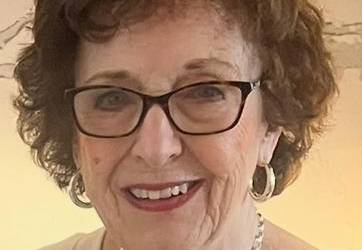
Lorraine Diehl, co-author of “The Automat: The History, Recipes and Allure of Horn & Hardart’s Masterpiece,” spent over two years writing the book.
“Every time we called someone to interview, the first thing they wanted to do was share their memories of the Automat, to the point where we were weary to pick up the phone because we’d have, ‘My favorite dish was macaroni and cheese’ and ‘On Thanksgiving, my parents brought us in and we always had hot cocoa,’” recalled Diehl, who lives on the Upper East Side with her husband of 56 years, former longtime ABC correspondent, Bill Diehl.
A brainchild of entrepreneurs Joseph Horn and Frank Hardart, the Automat chain was launched in Philadelphia in 1888, and came to Manhattan in 1912, opening on 46th and Broadway. By 1932, there were 42 in New York, with the last one, on 42nd and 3rd, sadly closing in 1991.
Diehl, a Manhattan native, who was born and raised on West 30th St., right off of Ninth Avenue, has her own fond memories of dining at the Automat, also called Horn & Hardart, with her grandmother after the movies.
“I can still smell that coffee when you walk in,” gushed Diehl, who partnered with Marianne Hardart, Frank’s great-granddaughter, for the 2002 book, reissued in July, which celebrates the Automat’s rich history with interviews and even original recipes.
Now, Diehl, who has written four non-fiction books centered around New York City, is penning a psychological thriller based on the building she grew up in. “In it, I revisit my childhood Manhattan brownstone where long-buried secrets are reaching out to claim the living,” she said.
How did the idea for “The Automat” come about?
I loved the Automat so much and knew a lot of other people who did. There’s this wonderful collection of research down at the New York Public Library, and it made me even more excited about how this place was exceptional. So I kept pitching it and pitching it, I did my proposal and all that, and nobody was picking it up. This guy Steve Stollman would call to let me know if someone was interested in the book, and the reason he knew was because he had a panel of Automat windows in his storefront down in Tribeca. So people would go past it, and they’d be very intrigued and several were interested in writing their own books on it. So he calls me one day and he says, “I’ve got some bad news. There’s someone who called me about the window and her name is Marianne Hardart, and she’s the great-granddaughter of Frank Hardart. So I said, “It’s her story. It’s her family. I’m not going to push it anymore.” I called her and I said, “You can have my notes,” and she said, “That’s very kind of you, but there’s only one problem. I can’t write. I’m not a writer.”
How did you find people to interview?
One of the heads of the Automat had done a whole comprehensive file on everything to do with the Automat. And he left all of his stuff at the main branch of the New York Public Library on 42nd Street and Fifth Avenue. So we went down into that crypt there. There were old newspapers, everything you needed.
What are your earliest memories of the Automat?
My grandmother lived on 42nd Street, and she would never leave Times Square. On Saturday, we used to go up to Eighth Avenue, and I’d meet her under the clock of the Franklin Bank, which was this wonderful, beautiful building that they’ve torn down, on the southeast corner of 42nd Street. She’d take me to the movies on 42nd Street, just east of Eighth Avenue, where we’d see Charlie Chaplin, the Three Stooges. After that, right next door was the Automat. We did this in the summer, and there was a big sign above it that said “Air Cooled,” which meant you could go in there and cool off.
What did you order there?
I always had the same thing. I went up to the steam table and I had Salisbury steak with baked potatoes and mashed potatoes. And then for dessert, I’d have one of their little mounds of vanilla ice cream, and I always thought it was dirty cause it had these little flecks in it, which was just the vanilla bean.
In the book, you said they kept the price of the coffee at a nickel for 38 years.
Yes, and then when they had to change it, it was kind of a trauma for people.
Tell us how the coffee was served there.
Joe Hardart took a trip to Italy, and in Florence, he saw these spouts, and the water would be spouting out of the dolphins. So he had that kind of concept made where you push this big brass handle and put in a nickel in the slot and the coffee pours out of this dolphin into your cup. There was just a scent, between the coffee and all that brass, it just gave you a feeling of, “Oh, I need to have at least one of these, maybe more.”
I like the quote you have in the book, “New York in those days had only two types: Park Avenue and the workers. But they all came to the Automat.”
Exactly. That’s where the democracy comes in, because people from Europe, from high society would come to the Automat. Gloria Vanderbilt was quoted in the book, “Next to El Morocco [celebrity nightclub that was on East 54th Street], I like the Automat best.” Tony Curtis, when he was a kid and was shining shoes, if he got ahead of the day, he’d treat himself to a piece of pumpkin pie and a hot chocolate. Jerome Robbins, Dick Clark, when he was starting the concept for “American Bandstand,” he was on a very strict budget. So every day, he’d go into the Automat in Philadelphia and get a chicken pot pie and hot chocolate and that was his lunch.
How did you get the recipes? What were the favorite menu items among the people you spoke to?
Marianne did that. She had them all tested. They all loved macaroni and cheese and the baked beans. A lot of them liked the different pies, everyone had a favorite, like the coconut cream pie. And they all talked about the cinnamon buns and the hot chocolate.
Out of all the stories you heard from your interviews, what is one that stands out?
I called this institution in Philadelphia, and said, “I’m writing a book on the Automat.” And the guy paused, and said, “My wife and I, we met at the Automat.” As I’m trying to get information from him, he said, “I kissed her and they frowned at that.” [Laughs]
I read that a man in his 30s is trying to bring the Automat back.
His name is David Arena. He said, “In 2023, we embarked on a journey to revive Horn & Hardart. We began by reintroducing all of our coffee and reconnecting with our dedicated community of Automat enthusiasts.” From what Marianne told me, he’d like to finance one Automat. If you buy the book now online, he sends it with an old postcard.
For more information and to purchase a book, please visit: www.hornandhardart.com