
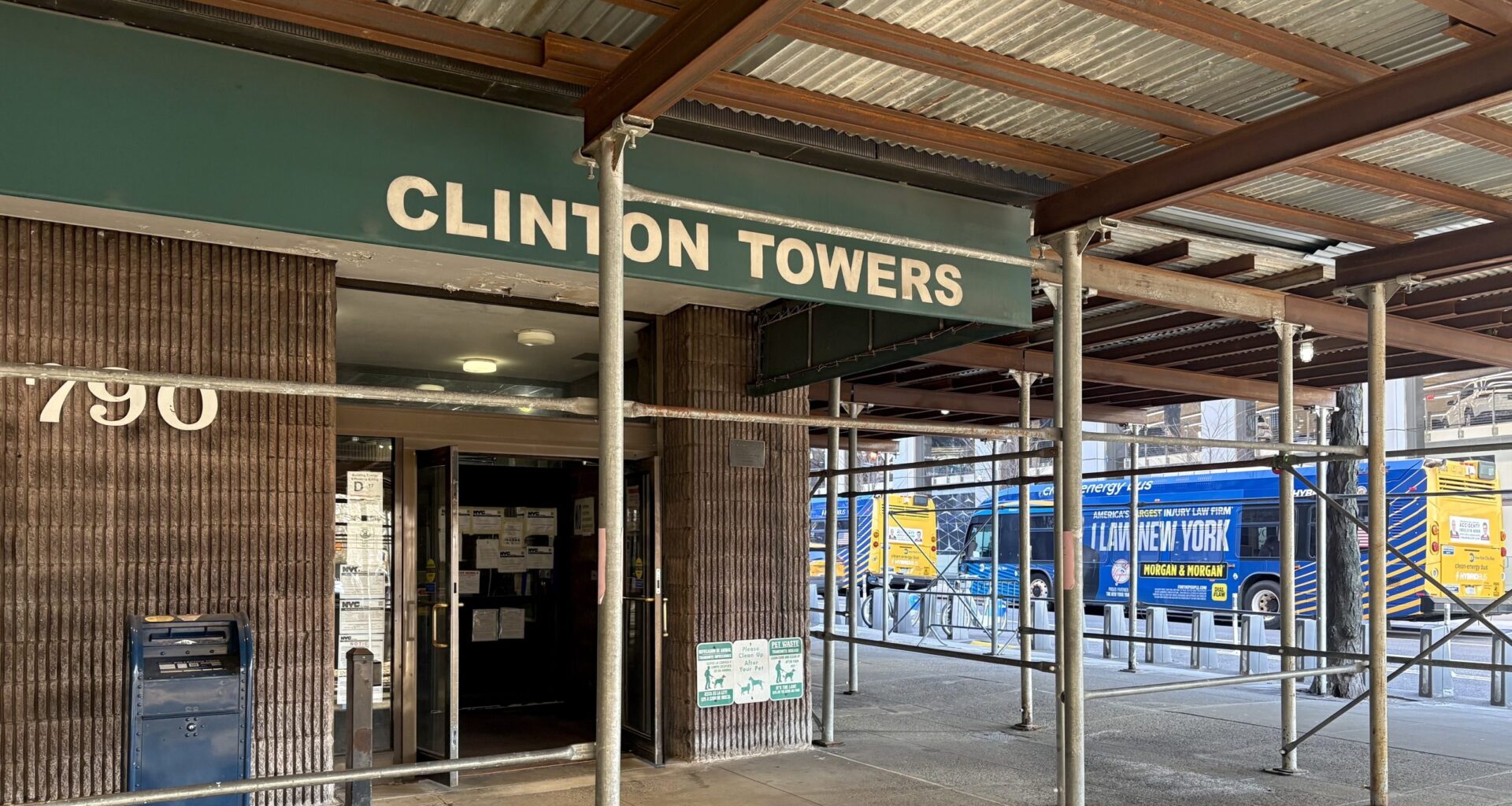
A new audit from New York State Comptroller Thomas DiNapoli is putting fresh scrutiny on Clinton Towers, the huge Mitchell-Lama development on 11th Avenue (bw W54/55th St) that has long served as a lifeline for middle-income New Yorkers trying to stay in Hell’s Kitchen.
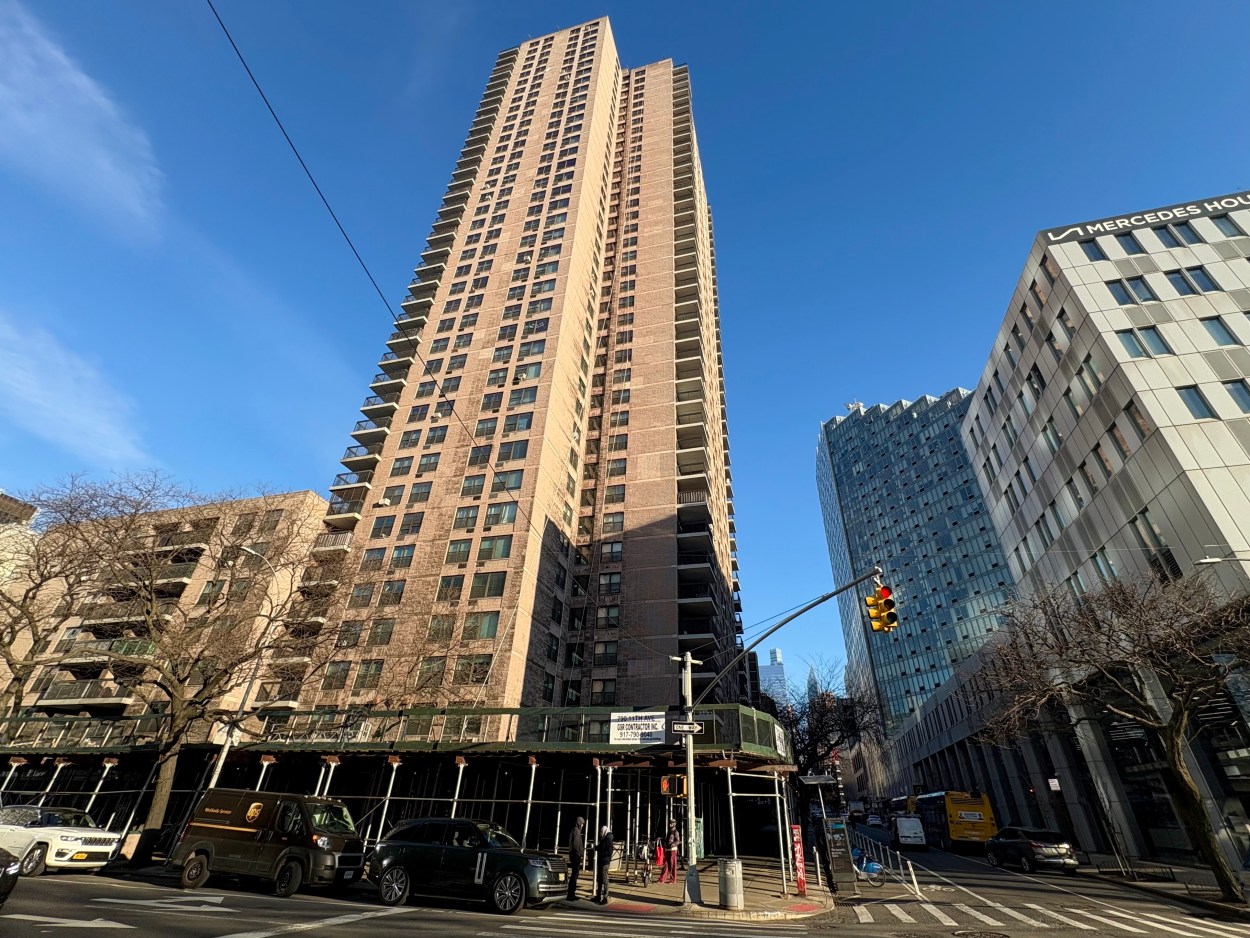 Clinton Towers is a Mitchell-Lama development on 11th Avenue (bw W54/55th St) that has long served as a lifeline for middle-income New Yorkers. Photo: Catie Savage
The report, released this month, examined physical conditions and financial oversight at three Mitchell-Lama developments citywide — and found multiple issues at Clinton Towers that auditors say should have been caught earlier, including a rodent problem in a daycare center, long-stalled common-area renovations, apartments left vacant for months, and spending that auditors described as unrelated to normal building operations.
Mitchell-Lama is one of New York’s most enduring affordable housing tools, created in 1955 to support middle-income rental and cooperative apartments with government incentives in exchange for affordability rules. (It even had a brief pop-culture moment last year after Hell’s Kitchen-born actor Timothée Chalamet gave it a viral shout-out while promoting a movie.)
DiNapoli’s auditors made several site visits to Clinton Towers between August 2024 and January 2025 and documented conditions they described as hazardous. During a December 2024 visit to commercial space in the building, they reported unsafe conditions in a daycare while children were present — including ceiling discoloration that appeared linked to a leak, and mouse droppings on classroom floors, in a book closet and on traps placed under radiators. The report notes that daycare employees described an ongoing infestation and warns that rodents pose serious health and safety risks in a childcare setting.
Clinton’s managing agent told auditors that commercial tenants are responsible for extermination and sanitation under their leases, but the audit stresses that once management is aware of a safety concern, it should act to identify the cause and ensure it is addressed. HPD officials told auditors that after the issue was identified, management brought in a contractor to seal access points and pressed the daycare tenant to increase extermination services and said conditions improved after the work.
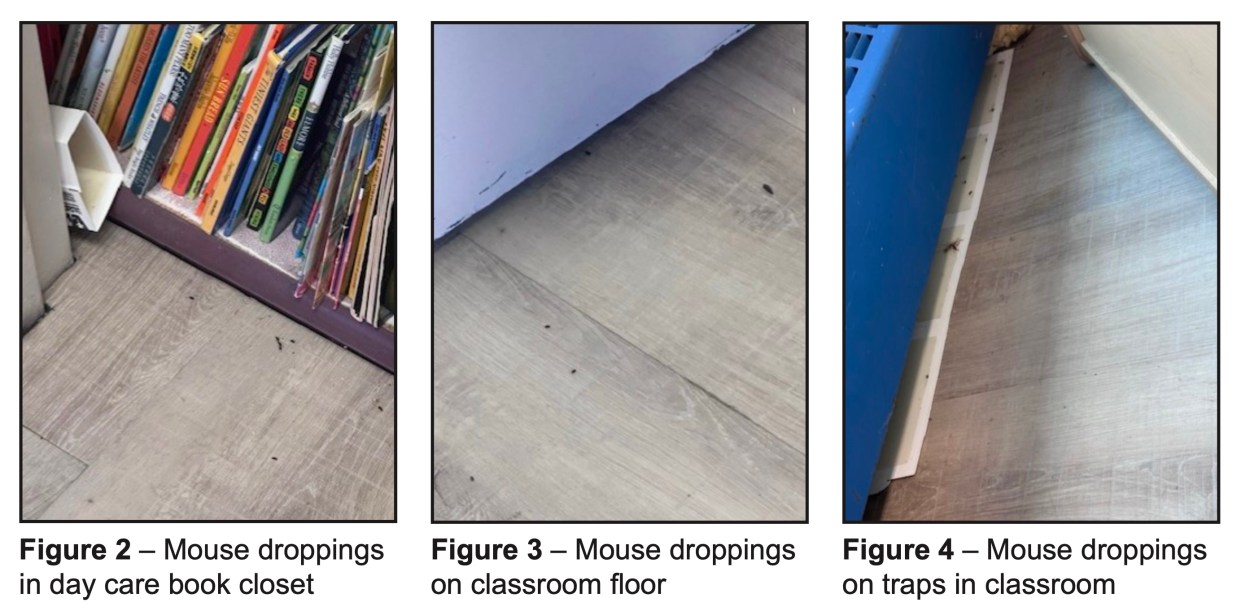 Images from the report showing mouse droppings in the daycare facility at the building. Photos: New York State Comptroller’s Office
Auditors also flagged deteriorated and closed common areas. On an August 2024 visit, they reported missing ceiling tiles throughout the entire ground-floor lobby level, and said management told them the work was halted because the contractor had not been paid.
By December, auditors found the courtyard and a community room closed, with construction supplies scattered throughout the space. The managing agent told auditors the courtyard had not been accessible for at least 10 years because management suspected it was being used for drug-related activity.
Inside apartments, auditors said they observed hazardous conditions in two of 40 sampled units, including possible mold on a bathroom ceiling in one unit. The audit also raises concerns about compliance with required annual unit inspections, saying auditors could not obtain the inspection reports for the audit period from Clinton’s managing agent.
The report also points to issues that can directly affect building finances — and, ultimately, residents. HPD guidelines require an explanation and plan when an apartment remains vacant for more than 120 days, but auditors reported that as of December 2024, Clinton had eight vacant units and five had been empty for 120 days or more.
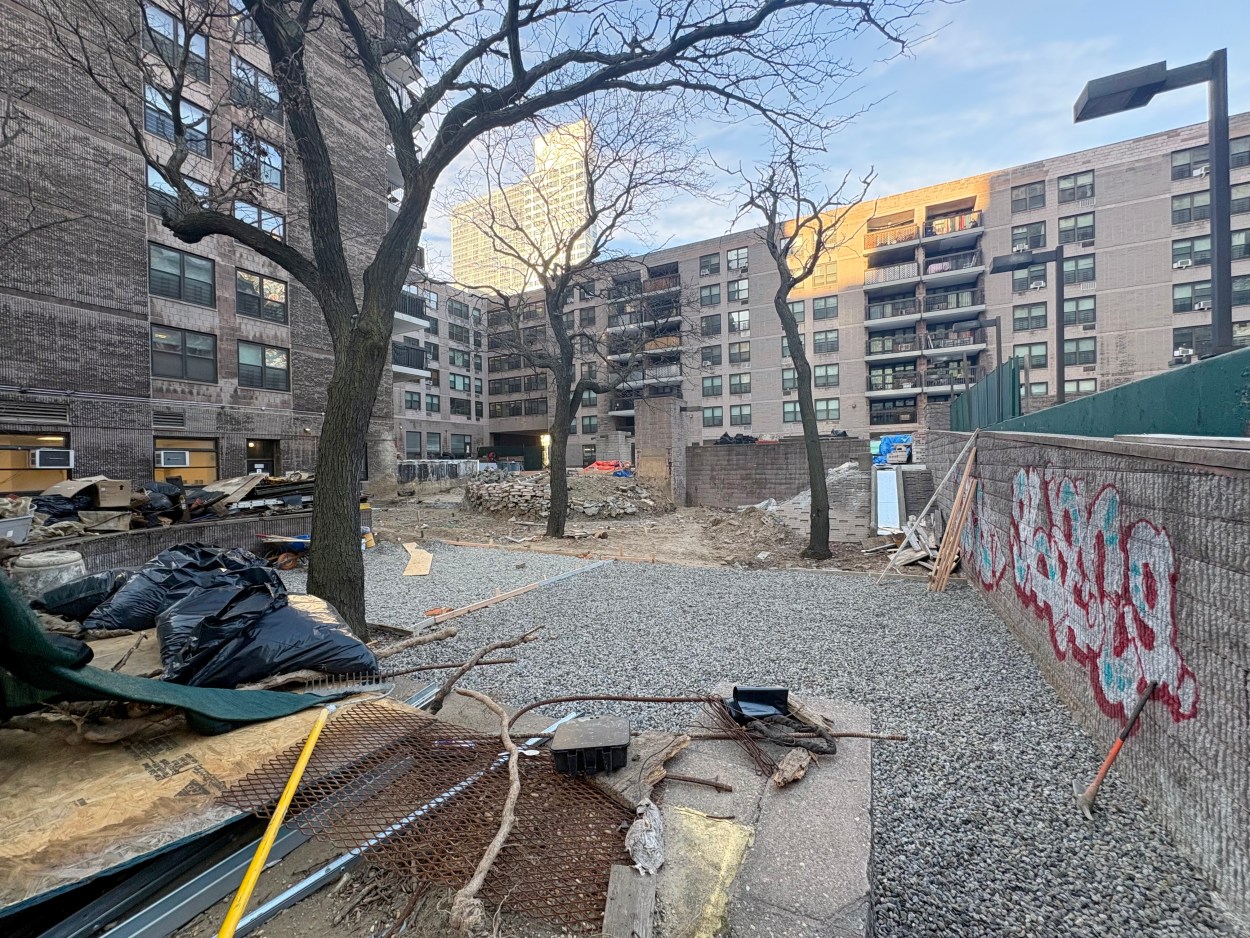 The managing agent told auditors the courtyard had not been accessible for at least 10 years and is now filled with construction debris. Photo: Catie Savage
Auditors estimated that the long vacancies represented $62,636 in unrealized rent — money that would normally help fund operations and repairs. The audit also cited significant rent arrears, reporting that auditors identified $992,380 in arrears at Clinton, including $670,110 that was more than 90 days overdue.
On the spending side, auditors reviewed Clinton’s general ledger transactions over a five-year period and flagged 112 transactions totaling $49,845 they said were unrelated to normal operations. That included $39,449 in bonus payments to staff, $4,500 in holiday gratuities to the superintendent, and $3,440 for holiday parties, decorations and gifts.
Auditors said the spending was especially concerning because Clinton Towers has been operating at a loss for multiple years and reported about $4.1 million in outstanding payments as of June 30, 2025.
Assemblymember Linda Rosenthal, who represents the Upper West Side and parts of Hell’s Kitchen and chairs the Assembly Committee on Housing, said the audit confirms what many tenants already know.
 Assemblymember Linda Rosenthal represents the Upper West Side and parts of Hell’s Kitchen, and chairs the Assembly Committee on Housing. Photo: Phil O’Brien
“Comptroller Tom DiNapoli’s January 2026 audit of three Mitchell-Lama housing developments highlights the consequences of mismanagement, lack of oversight and failure to preserve our affordable housing stock,” Rosenthal said in a statement.
“The Mitchell-Lama program… has long been a bastion of affordability for New Yorkers, including my very own constituents at Clinton Towers.” She added that without stronger oversight, “these buildings will continue to fall into a state of disrepair.”
Rosenthal said she will push for reforms this session, including her legislation requiring more frequent physical inspections and financial audits of Mitchell-Lama buildings, and said the state must invest in preserving these developments as rents climb across the city.
W42ST reached out to Clinton Towers management for comment, but did not hear back by the time of publication.