

STATEN ISLAND, N.Y. — Staten Island native Nicole O’Donnell, 51, came down with flu-like symptoms one weekend in 2015. Instead of improving, her symptoms worsened, including numbness, tingling and severe fatigue.
When her body failed to recover, O’Donnell sought medical care. After blood work and a Western blot test, her doctor told her she had likely contracted Lyme disease, a complex bacterial infection, earlier without knowing it.
“He [the doctor] was able to tell me that the reason why my body was not recovering was because at some point I had Lyme and I didn’t know it, so it was untreated,” O’Donnell, a Pleasant Plains resident said. “It could lay dormant in your body, and then that priming event set it off.”
O’Donnell recently released her first memoir, “Resilient Hope,” on Jan. 11, sharing her life and journey with Lyme disease.
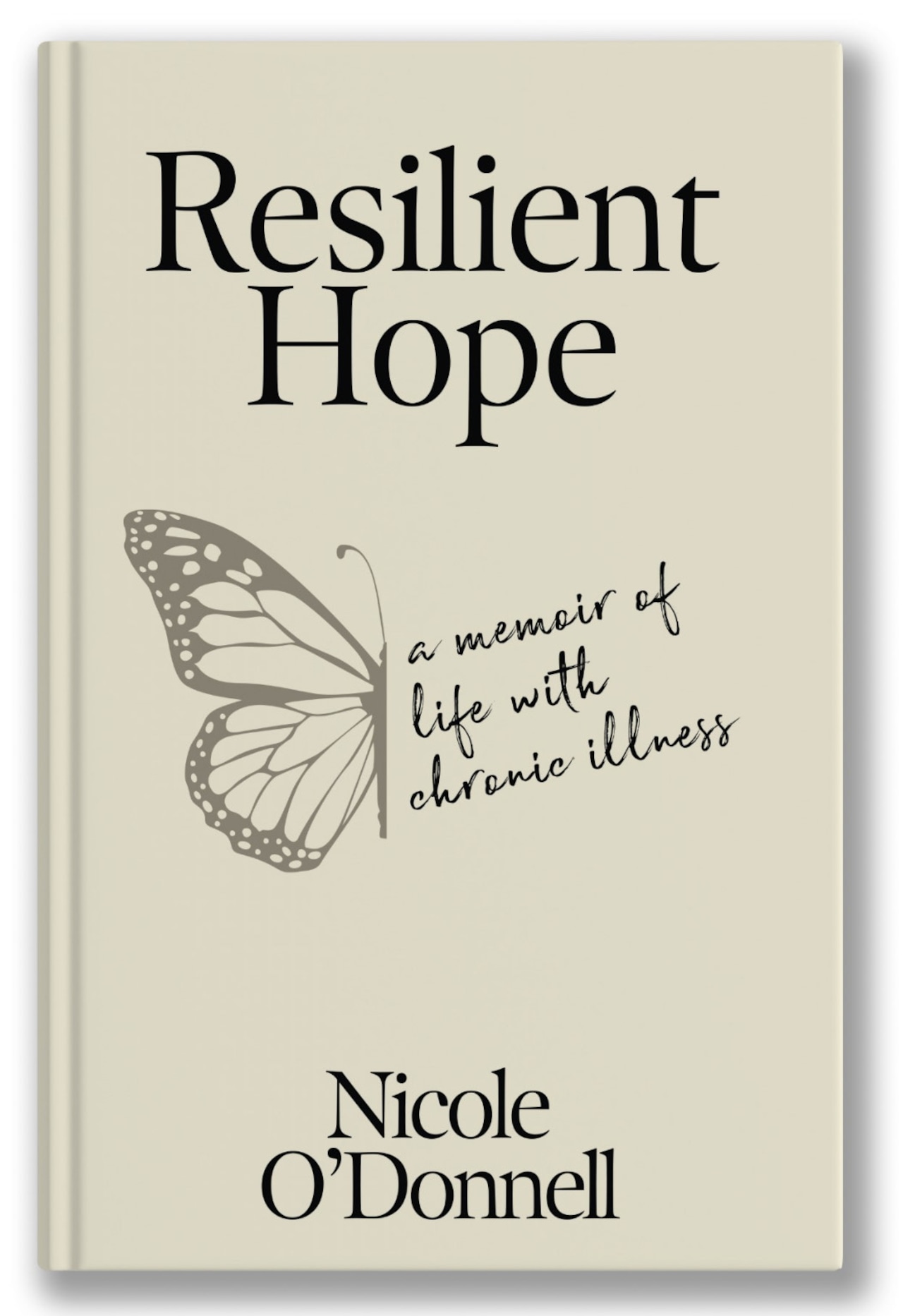 The cover of Nicole O’Donnell’s memoir “Resilient Hope” that explores the physical, emotional and financial complexities of long-term illness, including the journey of 12 others who also have chronic illness and face day to day challenges.Courtesy of Nicole O’Donnell
The book draws not only on O’Donnell’s experience with Lyme disease, but also on the journeys of 12 others navigating the physical, emotional and financial complexities of long-term illness.
Life-changing experience
Lyme disease is caused by Borrelia bacteria and is transmitted through the bite of an infected tick. Early detection can often lead to simpler treatment, but symptoms can persist or worsen when the disease goes untreated.
“If you get bit by a tick, develop a bull’s-eye rash and test positive early, that’s kind of the best-case scenario,” she said. “You’re put on antibiotics for about two weeks, and usually it goes away.”
But that was not the case for O’Donnell.
After receiving her diagnosis, O’Donnell realized her life would never be the same. However, she was determined to fight the debilitating disease. She was treated with antibiotics and was able to push through, even while experiencing recurring episodes of symptoms.
Once adventurous and energetic, O’Donnell became more anxious and fearful, constantly worried about tipping the balance of her health.
“It completely changed me. It’s like you are a different person,” she said. Before her diagnosis, she had even gone skydiving for her 40th birthday; afterward, she found herself avoiding risks and focusing on protecting her body.
Her husband, Tony, ran their business while she stayed home with their two children and remained involved in the Parent Teacher Association (PTA) at their school. “It was more manageable in the sense that during that time, when I wasn’t feeling good, I was able to just take a step back, slow down, and sleep when I had to sleep,” she said.
When COVID-19 hit
In 2020, O’Donnell contracted COVID-19, which sent her body into a “tailspin,” bringing symptoms unlike anything she had experienced before.
“I mean, I was bedridden — severe anxiety, heart palpitations, numbness, tingling, severe fatigue. That kind of put me in a place of feeling horrible because I couldn’t do anything I was used to,” she said.
The illness also affected her family life. O’Donnell said she often felt like she could not be the mother or wife she wanted to be, held back by fatigue and other debilitating symptoms.
“My house was just in, like, turmoil in a sense because I was just having all these crazy symptoms, and although they see me sick, it’s like they don’t know what to do either,” she said.
Due to her illness, O’Donnell described how her body changed completely. She noted that it became like a “toxin bucket” making her susceptible to other illnesses and infections.
“What happens with Lyme is that it’s never just Lyme. Other things come up like different infections, and then mold becomes an issue because your body is overflowing and just becomes sensitive to everything,” she said. “So, things that normally wouldn’t affect other family members in your household affect you.”
O’Donnell also carries the MTHFR gene (methylenetetrahydrofolate reductase), which helps the body process folate (vitamin B9) and convert homocysteine into a usable form for important cellular functions. However, she said this makes it more challenging for her body to detox things.
“Unfortunately, a lot of us who have Lyme find out we do have that gene. So that makes it even more difficult,” she noted.
In search of healing, O’Donnell said she went down an unconventional path, including traveling to Switzerland for hyperthermia and plasmapheresis experimental treatments.
Now, O’Donnell focuses on finding ways to heal her body through detox and lifestyle changes, including a stricter diet, exercise and emotional survival strategies.
She said she worked with empowerment coaches and therapists to help regulate her nervous system, incorporating techniques, like meditation, breath work and brain retraining to release emotions she had “stuffed down.”
Although she said she is not fully back to feeling like her regular self, O’Donnell said she is “definitely better than” she was. “It’s a constant work in progress every day, and I’m grateful for that,” she said.
She still experiences symptomatic episodes, but has learned how to manage them without panic. “It’s learning to balance that and not go into panic,” she said, noting that many people with Lyme suffer from post-traumatic stress. “As soon as we’re not feeling good, we feel like we’re going to go to that terrible place.”
O’Donnell said she was once afraid to travel, drive herself places or even push herself physically. But mindfulness practices helped her shift her mindset — focusing on “what if it doesn’t happen” rather than “what if it happens.”
Writing the memoir
In the early stages of her illness, O’Donnell said she felt judged by family members who did not understand what she was going through. At one point, she believed they thought she was acting “crazy” or being “erratic,” leaving her feeling deeply misunderstood.
“Unless you experience it, people truly cannot get it,” she said. “You feel like you’re going crazy and you feel alone in it.”
That sense of isolation led her to create “Resilient Hope” in hopes of building a community for others facing chronic illness, relating to the symptoms and episodes that come with it.
Through the book, O’Donnell connected with people who not only understood her illness, but who she could openly talk to and vent with.
While “Resilient Hope” began as a way to connect, she also wrote the book to spread awareness about Lyme disease and to advocate for change.
O’Donnell wanted to highlight the medical and financial obstacles many patients face, which often leave them in debt or unable to access treatment. “Hopefully we can be a part of a change,” she said.
When writing the book, O’Donnell said she struggled with opening up about her life, but pushed through the discomfort. “I had moments where I was like, ‘I don’t want to do this,’” but ultimately continued with the project.
O’Donnell said she chose to weave her story with other individuals living with chronic illness because connecting with others fighting similar battles “truly…changed everything” for her.
Lyme disease, she noted, is complex and unpredictable, and sharing other people’s experiences could help readers feel validated. “I felt like it was important to share other people’s stories…in hopes that it will just help one other person not feel alone and like, ‘OK, I’m experiencing that too, I’m not going crazy,’” she said.
Beyond building community, O’Donnell hopes the memoir helps readers understand Lyme disease and the toll it takes on individuals and their families.
“I hope it somehow gets into the hands of the right people to really make a change in the medical community because something has to change with treatment,” she said.
“Resilient Hope” is published by Story Chorus and is available exclusively on Amazon.