
CLEVELAND, Ohio — The Cleveland Orchestra travels to the Big Apple this week for a two-night stint at the famed Carnegie Hall. The world-renowned ensemble will perform Verdi’s Requiem on Tuesday, followed by a program featuring Mozart’s “Jupiter” Symphony and Shostakovich’s Symphony No. 11 on Wednesday.
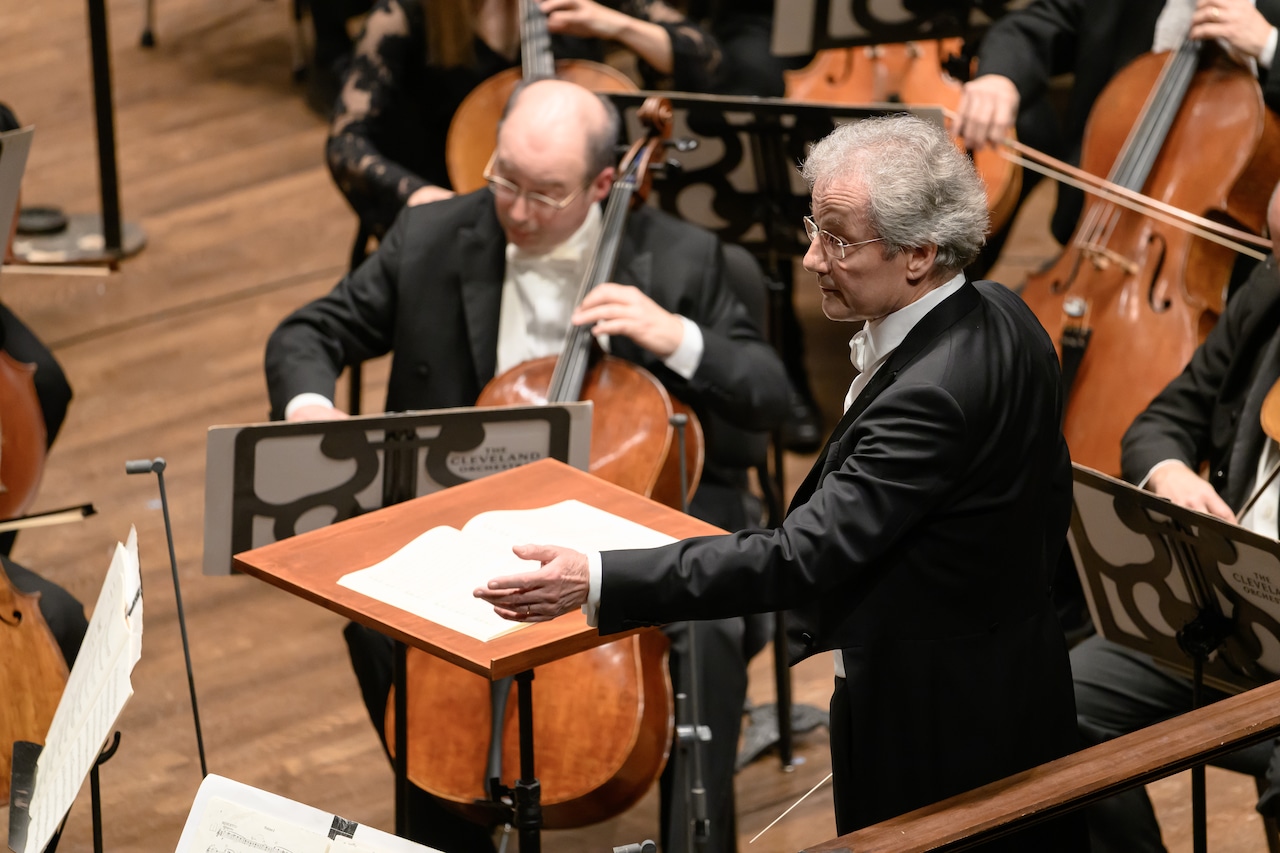
Earlier this month, The New York Times was granted rare, on-the-record access to the orchestra’s rehearsal process at Severance Music Center. Critic David Allen spent three days observing how music director Franz Welser-Möst and the musicians prepare a program from first read-through to first performance.
Here’s what he discovered:
Preparation is the baseline, not the goal
Welser-Möst has led the orchestra for more than two decades, and that continuity shows. Rehearsals move quickly, governed by union schedules and a literal clock onstage. “With all due respect, I doubt if any other orchestra comes as well prepared as this one,” Welser-Möst told the Times. “You start on a different level.” Orchestra members arrive having already done their homework; rehearsal time is about refinement, not repair.
Listening matters
During the first rehearsal of the Shostakovich, Welser-Möst let the orchestra play for 20 minutes without a word, beating time quietly and encouraging musicians to listen to one another. He has long said he wants the ensemble to function like chamber musicians on a large scale, and the approach appears ingrained. Principal trumpet Michael Sachs, who joined in 1988, said early mentors, some hired during George Szell’s tenure, taught him that Cleveland Orchestra rehearsals should feel like performances elsewhere.
Respect is a two-way street
Welser-Möst is exacting, down to tiny intonation issues and specific bar numbers. He’s firmly in charge, but careful about how he uses that authority. He often apologizes when stopping the music and frames criticism with phrases like, “Maybe it’s my fault.” He addresses musicians by instrument, not name, keeping feedback professional rather than personal. “I think you can only demand respect if you show respect,” he said. “Power is only lent to you. Don’t abuse it.”
Different music demands different leadership
The rehearsals revealed stark contrasts between the two works. Shostakovich’s Symphony No. 11, which depicts political oppression, required restraint and severity. Welser-Möst asked musicians to play it more straight and to rein in their natural expressiveness. “It’s ice, not melting ice,” he explained. Mozart, by contrast, prompted an entirely different energy. Welser-Möst talked Enlightenment theory and lightly suggested that they listen to the finale of “Le Nozze di Figaro” at home. “You can’t tell them, ‘Play it like opera,’” he said. “You have to act out a little.”
Rehearsal only gets you so far
Even after four rehearsals, Welser-Möst stressed that performances remain unpredictable. “Even if you had 35 rehearsals, there’s still this element of surprise,” he told the Times, pointing to the sort of magic that happens once an audience fills the hall. That’s why the work is never really finished. “Perfection does not exist,” he said, “and still we drive toward perfection.”
The Cleveland Orchestra performs at Carnegie Hall Jan. 20-21. Tickets start at $52 and are available at carnegiehall.org. The orchestra then travels to South Florida for a mini-tour Jan. 23-Feb. 1 before returning to Severance Feb. 5-7, when violinist Augustin Hadelich joins for Mendelssohn’s Violin Concerto.