
STATEN ISLAND, N.Y. — Staten Island residents with rain gutters connected directly to the New York City sewer system may be forced to fork over thousands of dollars in fines if they do not take action to disconnect the downspouts.
Among the residents concerned over enforcement is Patrick Mooney, a resident of Fremont Avenue in Grant City, who recently received a letter from the Department of Environmental Protection alerting the community that they will be inspecting homes to ensure all downspouts are disconnected from the sewer system.
Mooney feels that the burden should not be placed on residents to find out if their gutter is connected to the sewer and potentially pay a contractor to disconnect it. As such, he brought the matter to the attention of local officials.
In addressing the issue, City Council Minority Leader David Carr, Assemblymember Michael Tannousis and state Sen. Andrew Lanza, all Republicans, co-signed a letter to Department of Environmental Protection Commissioner Rohit Aggarwala on Jan. 12.
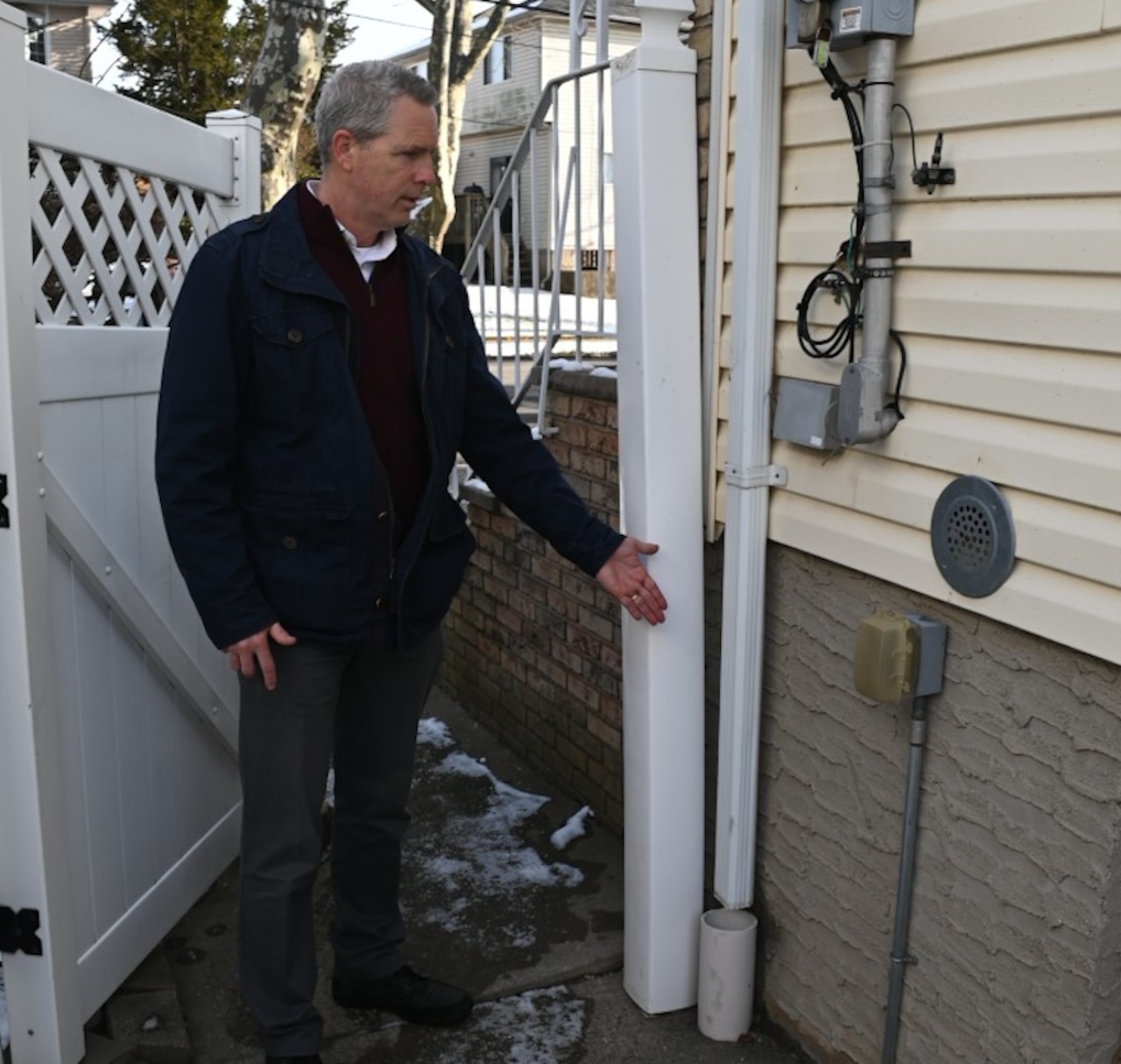 If Mooney is to disconnect his downspout, he will either have to go under his sidewalk or direct water onto his walkway, which he says is “not practical.”(Dennis Rees for the Advance/SILive.com)
“While we appreciate DEP’s interest in better understanding the causes of flooding in the borough, the Island-wide application of this enforcement is both hasty and overreaching in its scope,” the letter read in part. “To base the application of enforcement for the entire borough on the results of the study of a single neighborhood has led to the prohibitive costs of correcting these downspout connections negatively affecting and further alienating middle class homeowners already struggling to make ends meet in neighborhoods where the effects of these downspout hookups towards flooding are negligible.”
Carr was informed that a study was conducted by the Department of Environmental Protection along the East Shore of Staten Island in the area of Midland Beach in an effort to monitor the effects of these downspouts on the sewer system.
As reported earlier this month, in a letter obtained by the Advance/SILive.com, the DEP said that “such connections are illegal… because they send large amounts of rainwater into sewers that are only designed to handle wastewater from homes and businesses.”
“When too much rainwater enters the system, it can overwhelm the pipes, leading to basement back-ups and street flooding,” the letter explained, noting that enforcement of the matter will begin soon.
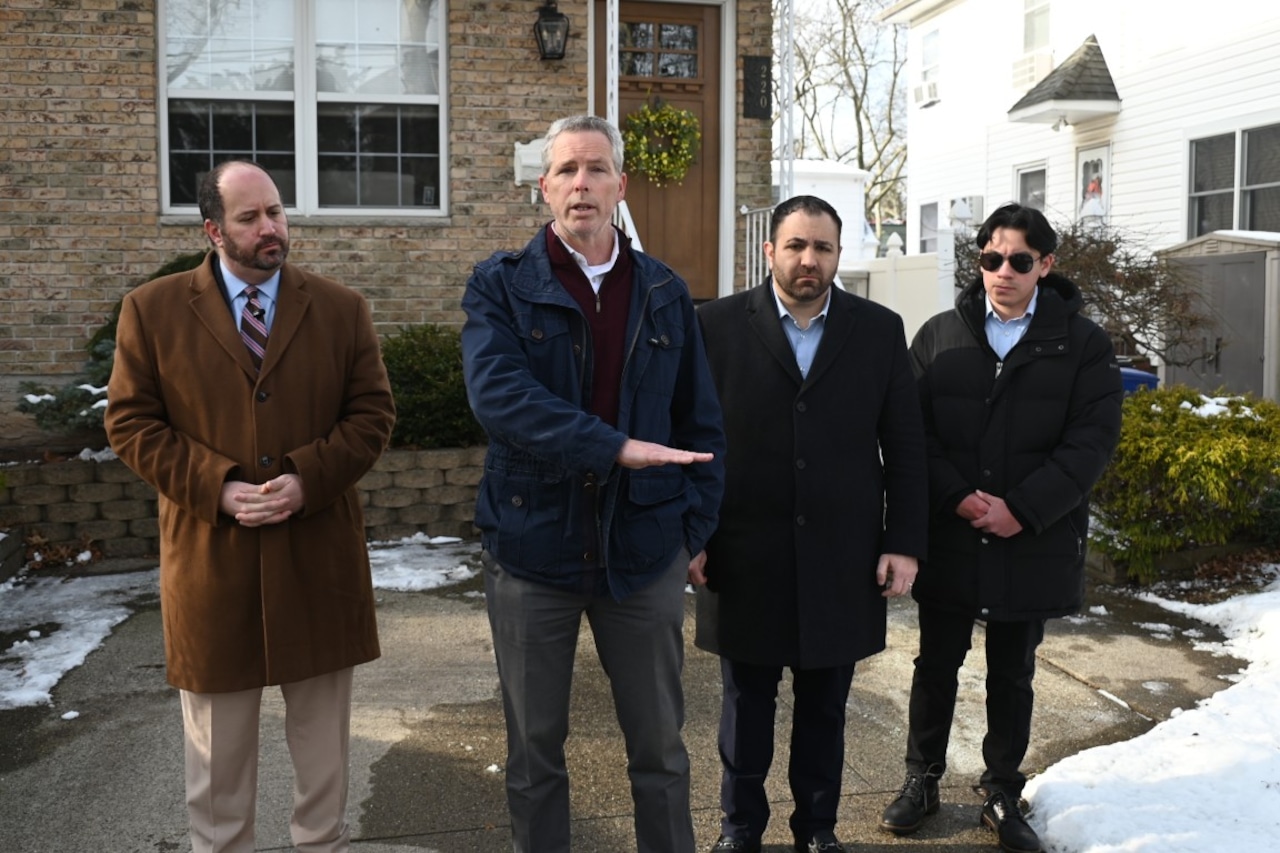
In further driving home the sentiment of the letter, both Carr and Tannousis joined Mooney outside his residence Thursday morning to urge city officials to reconsider their enforcement.
“Now many homeowners who have these downspouts may not have actually installed them themselves, they may have been installed by the builder at the time of the construction, they may have been installed by a prior owner and now they’re being asked to foot the bill for something that they never actually did themselves,” said Carr.
It’s Carr’s hope that the city will cease this enforcement action so that homeowners are not going to be “crippled” by costs needed to come into compliance.
“They’re arguing that this is something that has been on the books for a long time, but the reality is that they have left enforcement alone for decades,” he added. “There are many homes throughout this borough that have these downspout systems and they should work with the homeowners collaboratively to try and address this over the long term.”
Mooney, who has lived at this residence for about 30 years, told the Advance/SILive.com that the downspout was already installed when he first purchased his home.
“If that was code, the Building Department should have checked with the builder and made sure before they signed off on the certificate of occupancy,” Mooney said.
If Mooney is to disconnect his downspout, he will either have to go under his sidewalk or direct water onto his walkway, which he says is “not practical.”
“It’s a big issue for homeowners here,” he added. “A lot of homeowners are having affordability issues and a lot of my neighbors are starting to think about moving south.”
According to a report by PIX11, those who fail to disconnect their downspouts from the sewer may be fined $3,000 for their first offense, $6,000 for a second offense and $8,000 for a third.
This is a developing news story and additional information will be added.