
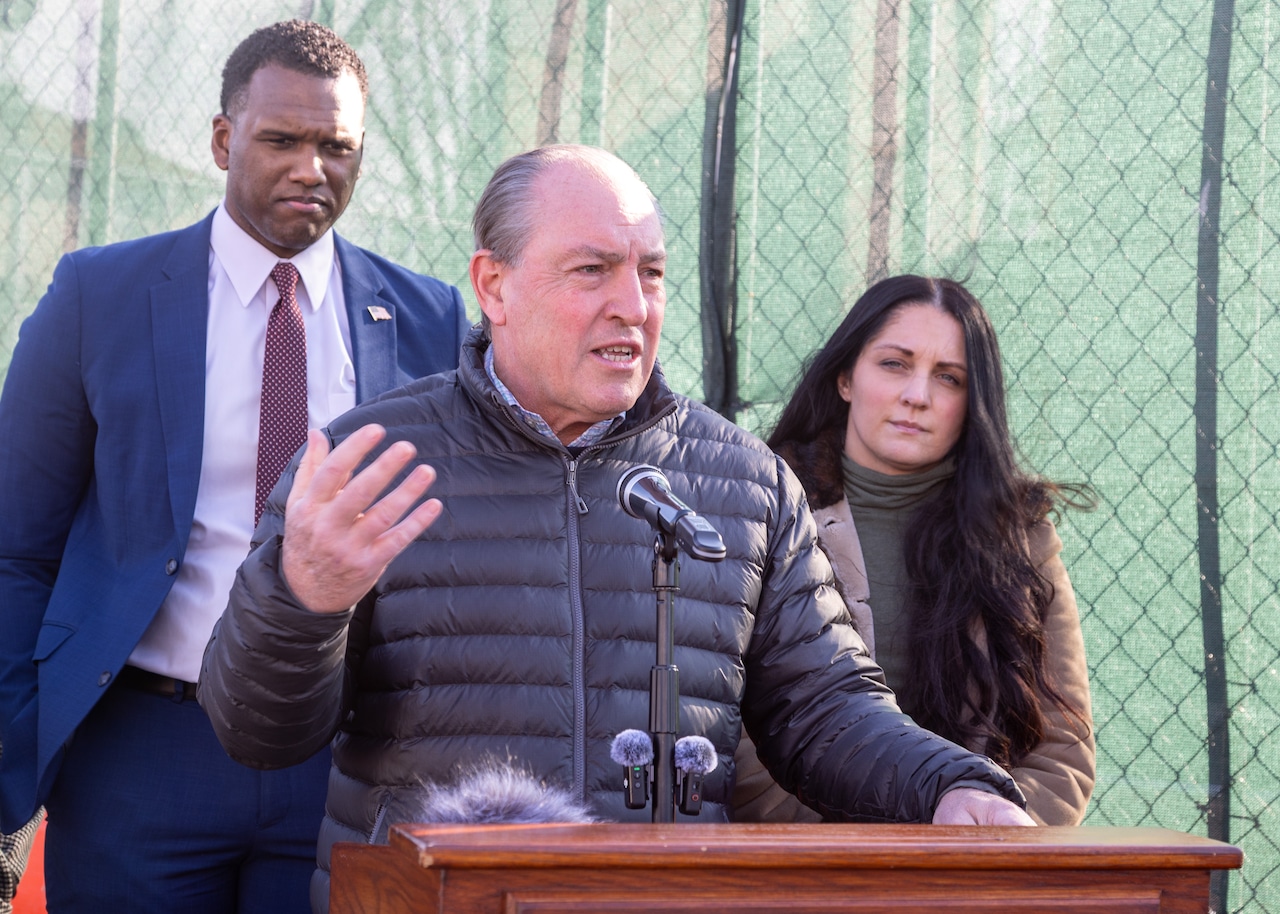
STATEN ISLAND, N.Y. — A group of Staten Island elected officials are joining together to put distance between battery energy storage systems and the surrounding community.
On Thursday, State Sen. Jessica Scarcella-Spanton, Assemblymember Charles Fall and Borough President Vito Fossella announced new efforts to curb battery energy storage systems — commonly referred to as BESS — from appearing in residential areas.
“If you think about the individuals who are responsible for signing off on a project like this,” said Fall, “you’ve got to ask yourself the question — would they ever want to see something like this next to their homes? The answer is no.”
“Why are we seeing this next to residents in this neighborhood or in other parts of Staten Island? It doesn’t make sense,” added Fall, a Democrat representing the North Shore and parts of Brooklyn and Manhattan.
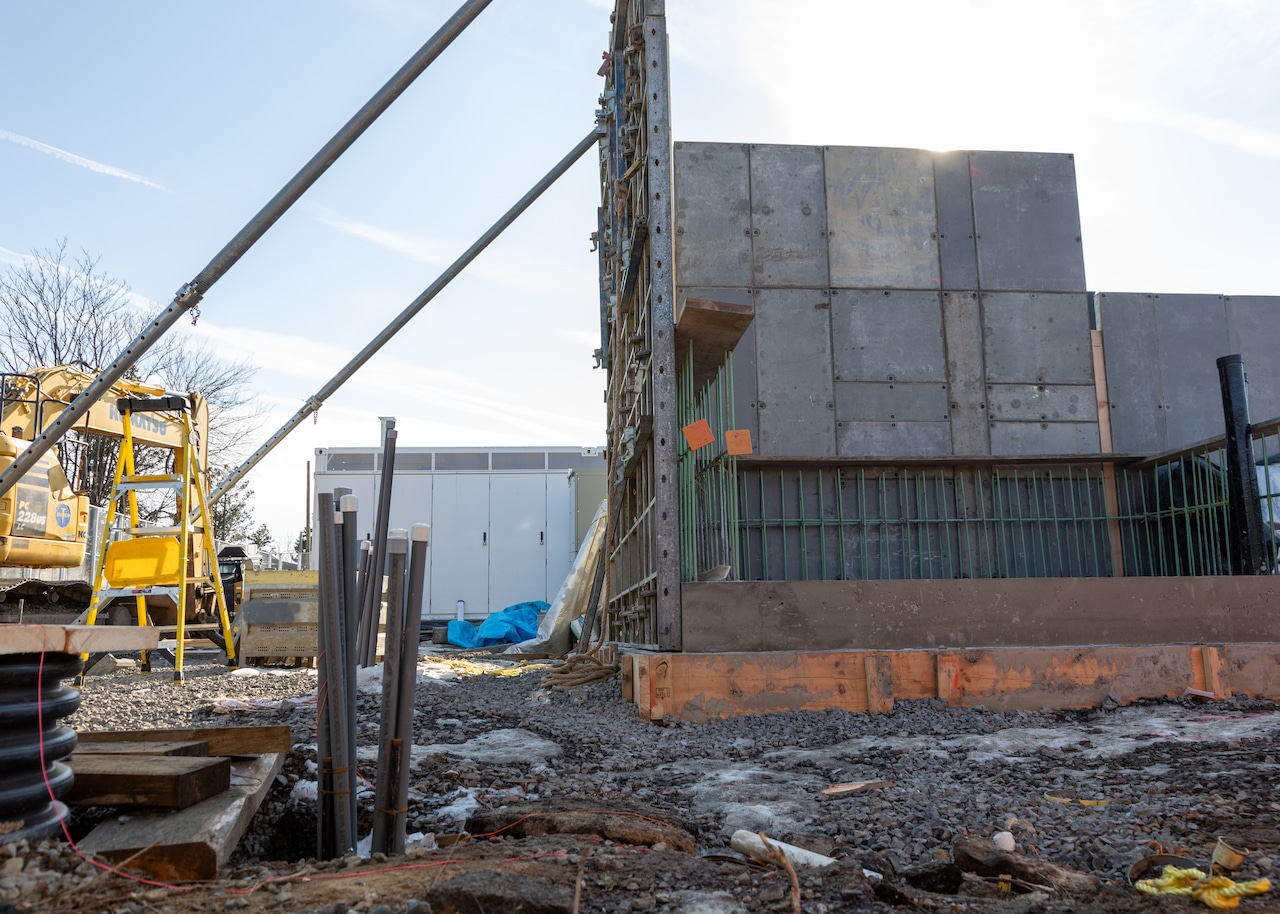 The battery energy storage system that is under construction at 2166 Forest Ave. in Mariners Harbor on Thursday, Jan. 22, 2026(Advance/SILive.com | Mike Matteo)
At a press conference outside a BESS site under construction in Mariners Harbor, Scarcella-Spanton and Fall announced they are signing on to a bill in Albany that would establish a minimum distance between the battery storage system sites and nearby homes, schools, and farms.
In addition, Scarcella-Spanton — a Democrat who represents the North Shore and South Brooklyn — announced legislation she introduced which would require that Community Boards are notified when a battery storage system is planned for a nearby neighborhood.
The bill would also mandate annual safety inspections for the BESS sites.
“While these facilities are often framed as a part of our clean energy future, the reality is that they are poorly sited and inadequately monitored,” Scarcella-Spanton said.
“We see how quickly they can go up in flames and we want to make sure that they are not by your homes, by your businesses and collectively, we’re all working together with our community partners to make sure we pass this legislation,” she continued.
Those in attendance on Thursday also expressed concerns that the BESS sites are being pushed onto Staten Island, despite significant pushback.
“It seems like those cries have been falling on deaf ears to date, so we’re going to take another arrow out of the quiver and approach it from a state level,” said Fossella, a longtime opponent of the battery storage sites on Staten Island.
“We just keep banging that drum as loudly as possible to say that we don’t want these things near people’s homes or businesses. We believe they’re unsafe.” the borough president added.
This legislative effort comes as more BESS sites are planned for Staten Island.
Applications for 58 battery energy storage systems were approved by the NYC Department of Buildings in 2025 and another 98 are currently under evaluation for placement throughout the five boroughs. At least 15 of those locations are slated for Staten Island, with 10 additional sites under evaluation, according to city records.
The release of those numbers came as a new set of BESS standards adopted by the State Fire Prevention and Building Code Council officially went into effect on Jan. 1.
“Battery Energy Storage Systems are key to modernizing our grid and optimizing power generation and transmission,” the New York State Energy Research and Development Authority noted in a press release, which detailed the updated requirements. “New York, through the work of its Inter-Agency Fire Safety Working Group, has implemented some of the most robust BESS standards in the nation — strengthening the reliability and resilience of our electricity system and prioritizing the safety of our communities.”
BESS refers to a technology that uses a group of batteries to store electrical energy, allowing the energy to be released later when needed.
The sites essentially act as backup power sources for homes or the electrical grid, particularly during peak demand or power outages. They are often used in conjunction with renewable energy sources like solar power.
Developers and green energy proponents tout the lithium-ion structures — which started popping up in several NYC neighborhoods in 2022 — as quiet neighbors that are a necessary agent for renewable change. They are designed to remove pressure from the city’s stressed grid, using rechargeable batteries to store electrical energy from various sources, and then releasing that stored energy when needed.
Over the past three years, borough residents and local officials have voiced concerns about their siting. Community Boards voted against their proximity to bakeries and storefronts and elected officials issued a moratorium on applications filed within residential districts.
In one instance, an energy developer retracted plans to place batteries in a Bulls Head church parking lot.
Plans to construct an eight-acre battery energy storage system on a busy strip of Victory Boulevard in Travis were also recently scrapped after the company responsible for its development missed several key decommissioning plan deadlines.