
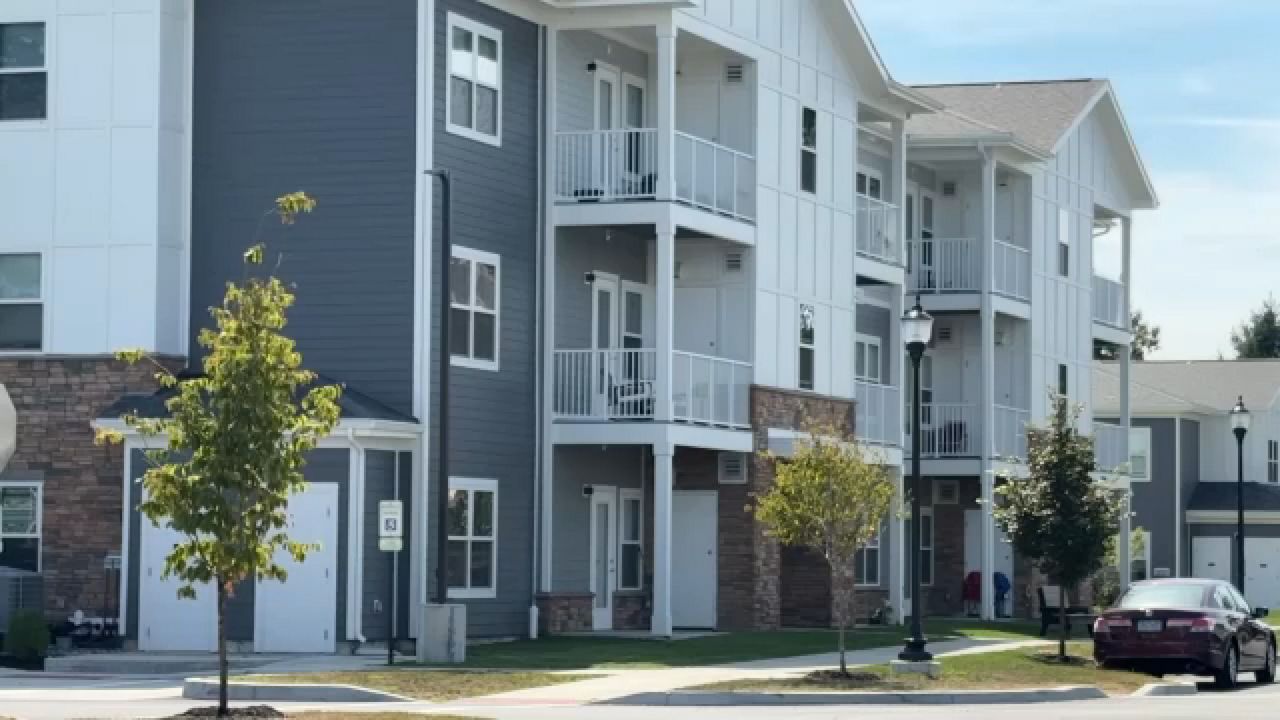
A budget fight is brewing over New York’s environmental review process as Gov. Kathy Hochul proposes updates to the building mandate that can be its own worst enemy.
Housing and other development projects in the state often get stuck in red tape — tangled in a lengthy State Environmental Quality Review Act, or SEQRA process, performed by local governments before approving plans.
Hochul said the current law, which dates back over 50 years, is outdated and has aggravated the state’s lack of affordable housing.
“They slow down the very projects that help us fight climate change, create housing and strengthen our communities,” the governor said Jan. 13 during her State of the State address. “When a town or city decides to move forward, they shouldn’t get stuck in regulatory hell.”
Hochul’s budget, released this week, includes language to streamline the process and exempt certain projects from review altogether in attempts to hasten development — including mixed-use housing projects up to 100 units outside New York City, and up to 500 units in the five boroughs.
“In the 1970s, [the law] was to stop things like dirty power plants or highways bulldozing through neighborhoods, but today, [it’s] often used to block exactly the type of climate-friendly projects that we need… like apartment buildings for seniors next to transit in Manhattan or adding solar panels on a building in the Hudson Valley,” said Annemarie Gray, executive director of housing nonprofit Open New York.
Communities often weaponize the required environmental review process to oppose or delay development, driving up costs.
The review has delayed the construction of a child care center with housing on top in Buffalo for over a decade, Gray said.
Hochul’s proposal, backed by the Business Council of New York State and the state Association of Counties, would also exempt parks and recreation projects, child care facilities, water or green infrastructure from the review.
“For too long, unnecessary red tape has stood in the way of new housing and critical infrastructure that are consistently found to have no environmental impacts,” a spokesperson with Hochul’s office said in a statement. “The governor is stepping up to address this with her ‘Let Them Build’ agenda, a set of commonsense reforms to get the state out of the way of progress, allowing localities to build housing and other crucial projects faster and more affordably while continuing to protect the environment.”
But some environmental groups are concerned the changes could erode protections for the state’s natural resources, that certain exemptions are too large and could have consequences — especially upstate.
“Every municipality has a very unique personality, unique populations, unique needs,” said Drew Gamils, a senior attorney with Riverkeeper. “Some municipalities might have more scenic vistas that you want to account for, more historic [and] cultural resources that should be included and considered before an exemption is granted.”
Gamils agrees the law should be updated, but said environmental groups must be included in conversations about changes that could be included in the spending plan.
Earlier this week, Assembly Speaker Carl Heastie said he expects the issue to be the second-most contentious item to get the budget done by April 1.
“When you start to change the way that local communities do their reviews, that takes conversations,” he told reporters in Albany.
Senate Environmental Conservation Committee chair Pete Harckham said he’s reviewing the governor’s SEQRA reforms, and expects to hear more at Wednesday’s budget hearing.
“One thing is certain: We will have to balance our tremendous need for new affordable housing statewide with environmental protections that safeguard our natural resources and open spaces,” the senator said in a statement to Spectrum News 1.
Legislation to reform the review process cleared the state Senate last year. Senate Housing Committee chair Brian Kavanagh is supportive of making changes in the budget.
“I welcome the governor’s attention to this issue and the executive budget proposal, which takes a somewhat different approach and includes some good new ideas, but is also more limited in some ways,” he said Friday. “I look forward to productive negotiations to update SEQRA in ways that will genuinely help us address the housing crisis, which I am confident we can achieve without sacrificing legitimate environmental concerns.”