
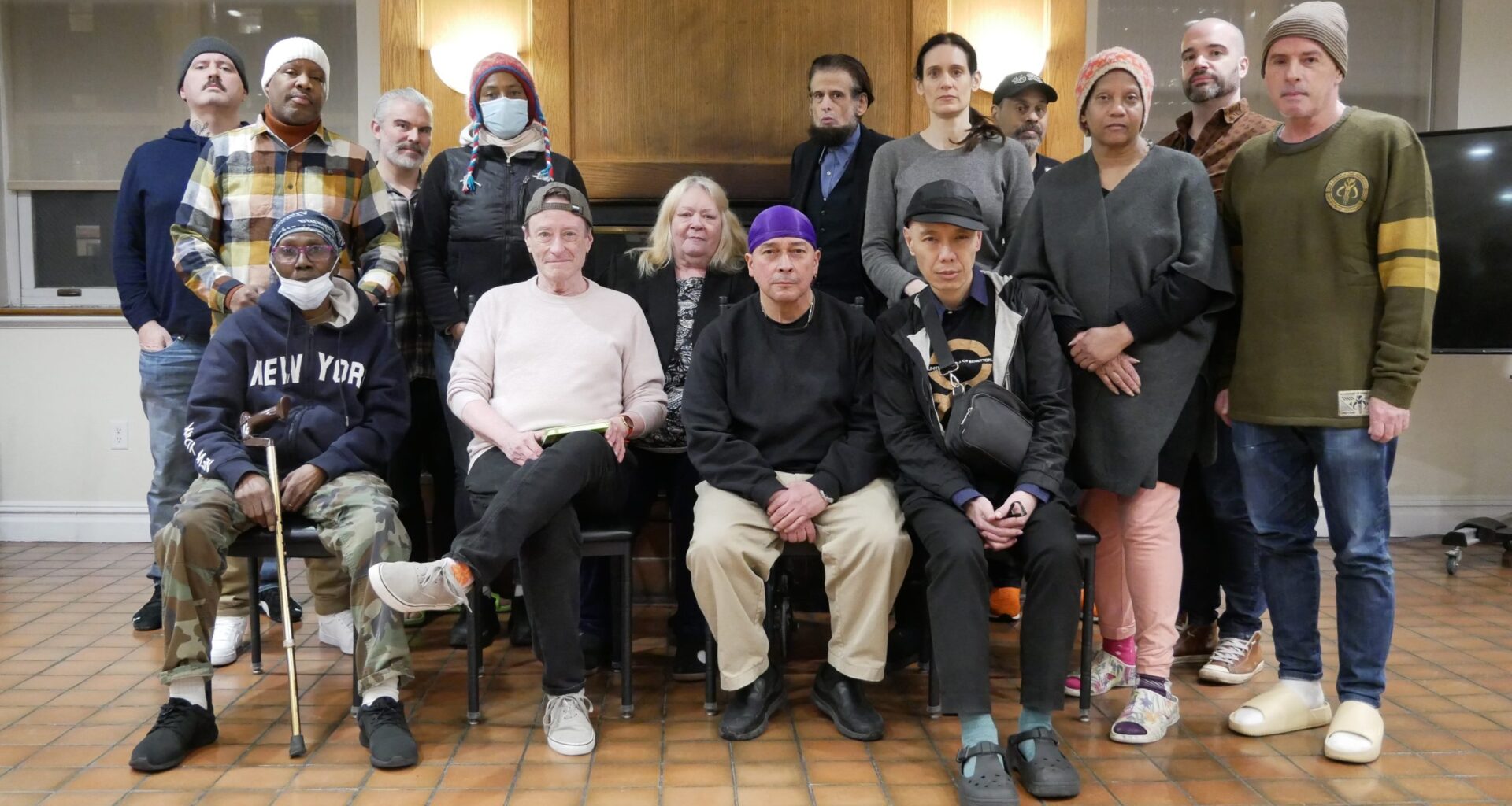
Tenants of the Times Square Hotel are raising alarms about the condition and security of the city’s largest supportive housing residence.
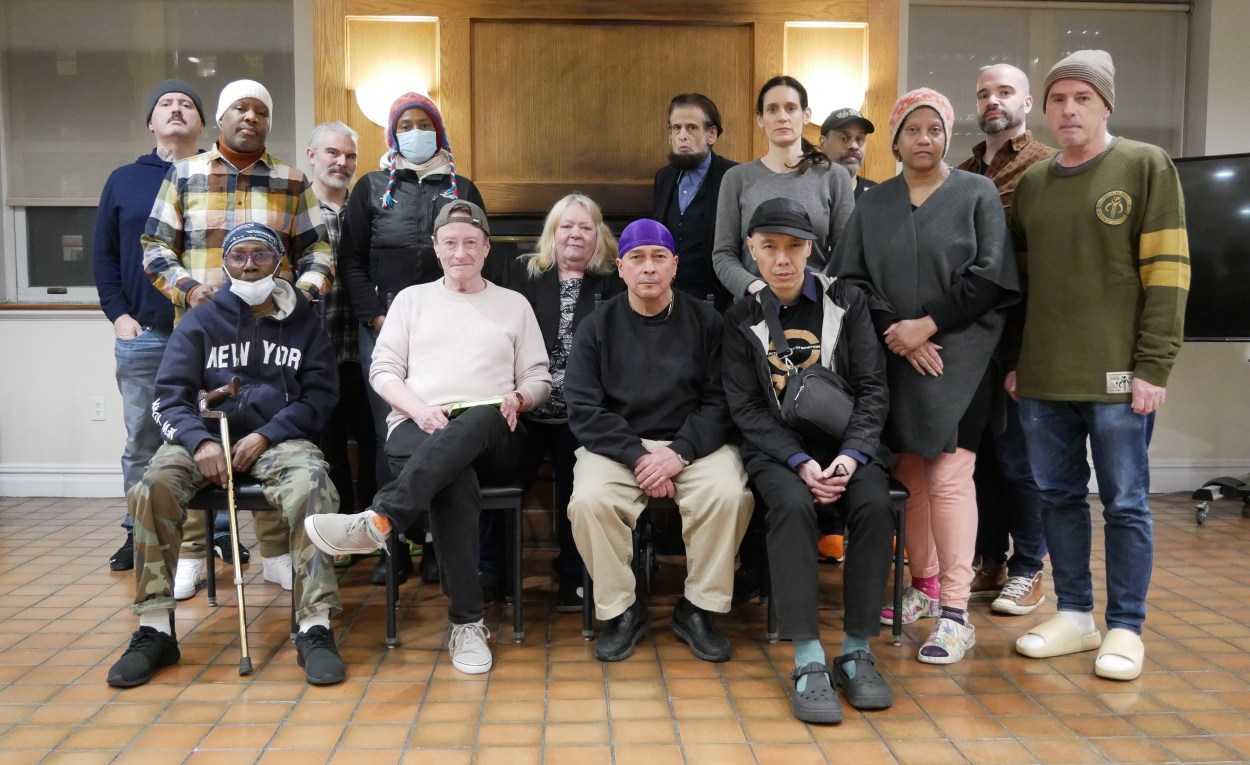 Members of the Times Square Tenant’s Association at a recent meeting. Photo: Brennan LaBrie
Twenty-three residents of the Times Square — a former hotel on 8th Avenue that now houses low-income residents, individuals referred from shelters, and those facing mental health and substance abuse challenges — have filed a civil lawsuit against the two nonprofits that operate the building.
In the suit, filed in October, the tenants allege that Breaking Ground — the largest developer and manager of supportive housing in the city — and the Center for Urban Community Services (CUCS) have “failed to remedy multiple hazardous conditions and maintain basic building security.”
“From the outside it looks like a normal building, but on the inside it’s in disrepair,” said resident Michael Muñoz, who signed onto the lawsuit as a petitioner.
The issues plaguing Muñoz’s apartment, listed in the lawsuit, reflect building-wide trends. These include a defective window, stove and fridge, leaking pipes and water damage, mold, insufficient heat in the winter and a roach infestation.
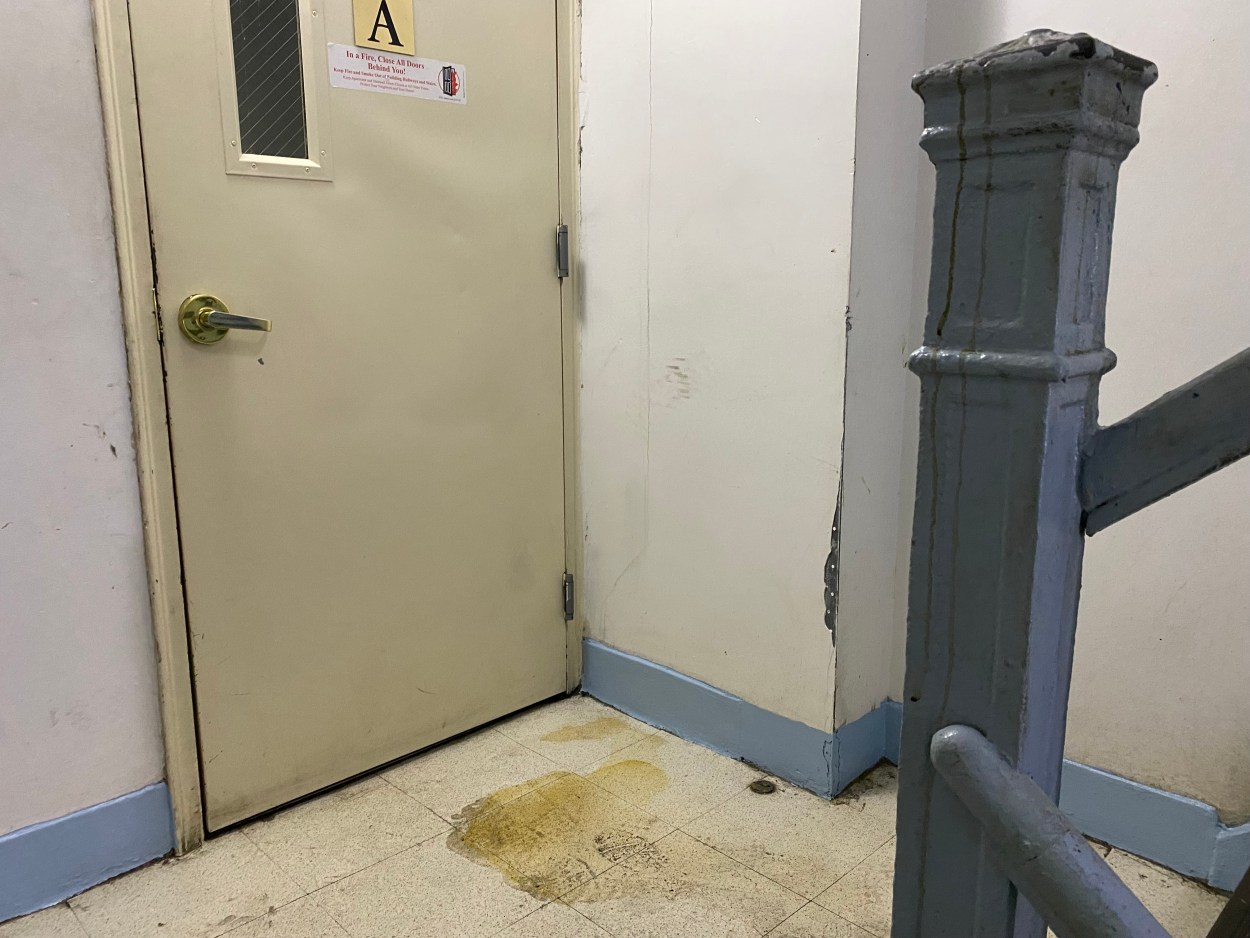
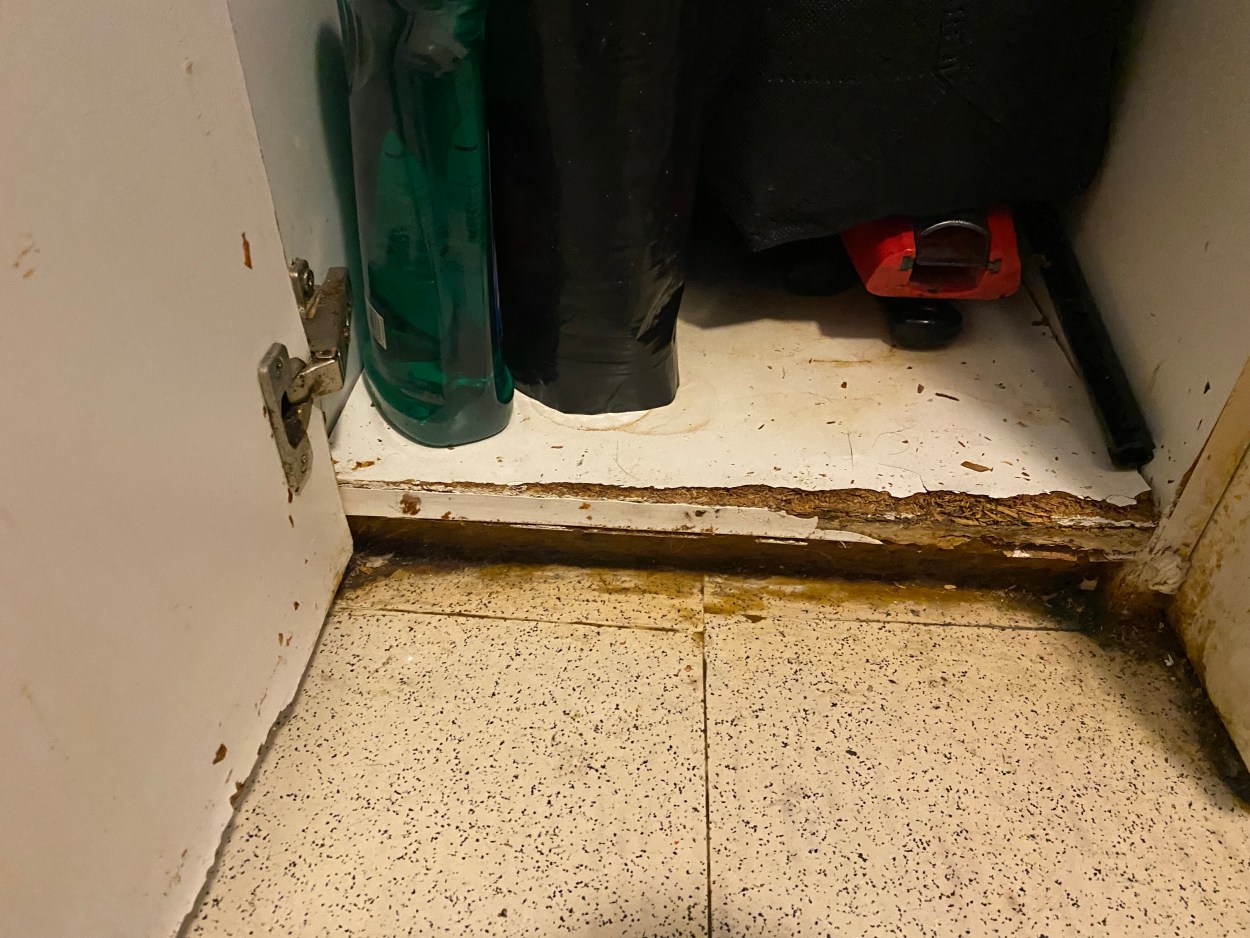
Dirty hallways and stairwells and crumbling cabinetry are among the complaints made by tenants. Photos: Brennan LaBrie
The lawsuit points to the building’s 143 active Department of Housing Preservation and Development (HPD) violations, which include roach and mice infestations, broken doors and cabinets, defective amenities like toilets and heating, mold and unsanitary conditions in public areas. The building has accumulated 477 complaints to HPD in the past two years and has been involved in 18 housing court cases since 2009.
Catherine Tronzo, co-chair of the Times Square Tenants’ Association, claims “significantly reduced housekeeping,” including an elimination of weekend staff, has led to these “filthy and unsanitary” conditions. Management’s responses to complaints and work orders have been slow and inconsistent, she added, often leading to wait times of several months.
Resident Kevin Reese said that he waited about five months for a new coat of paint over his peeling walls, and the job was rthen ushed and incomplete. He’s still waiting for management to replace cabinetry that’s been slowly crumbling since he arrived in the building in 2017, he added.
“They put in work orders, but nobody comes in to do nothing,” he said.
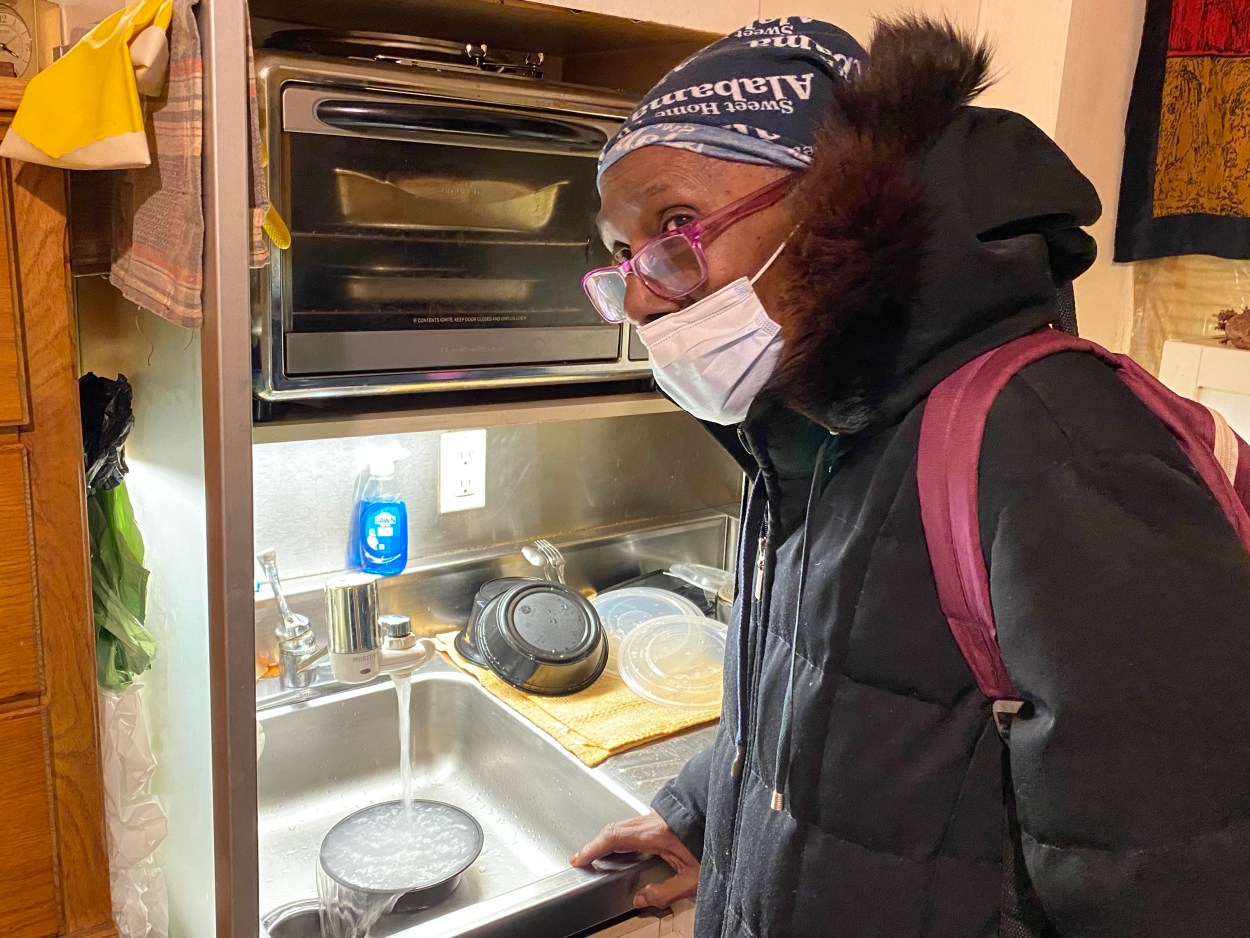 Resident JJ Bell shows W42ST the conditions in her apartment. Photo: Brennan LaBrie
All HPD violations have been addressed, a Breaking Ground spokesperson told W42ST, adding that many cases remain “open” due to a lengthy reinspection timeline and an inspection backlog dating back to the pandemic. A “heightened level of oversight” on the building by city and state agencies, they said, results in a volume of citations “not unusual for a property of this scale and age.” Requests that pertain to “cosmetic” issues, like wear and tear on cabinetry, may not be prioritized, they added.
Breaking Ground said claims that management has been unresponsive to tenant concerns were untrue. “Since the Times Square Tenants’ Association formed in May 2025, we have remained in ongoing communication with its leadership through regular meetings and extensive correspondence to address concerns raised,” they said. “In response, we implemented a new complaint-tracking system to ensure all issues are logged and addressed, with a guaranteed response within 10 business days.”
Among 24 categories of building-wide issues listed in the lawsuit, security sits at the top of tenant concerns. They allege that, between a broken front gate, lax guest screening and a perceived drop in security presence across the building, they feel unprotected from outside threats and volatile tenants.
“The building is open — you sometimes don’t know what to expect or who to expect.” Muñoz said.
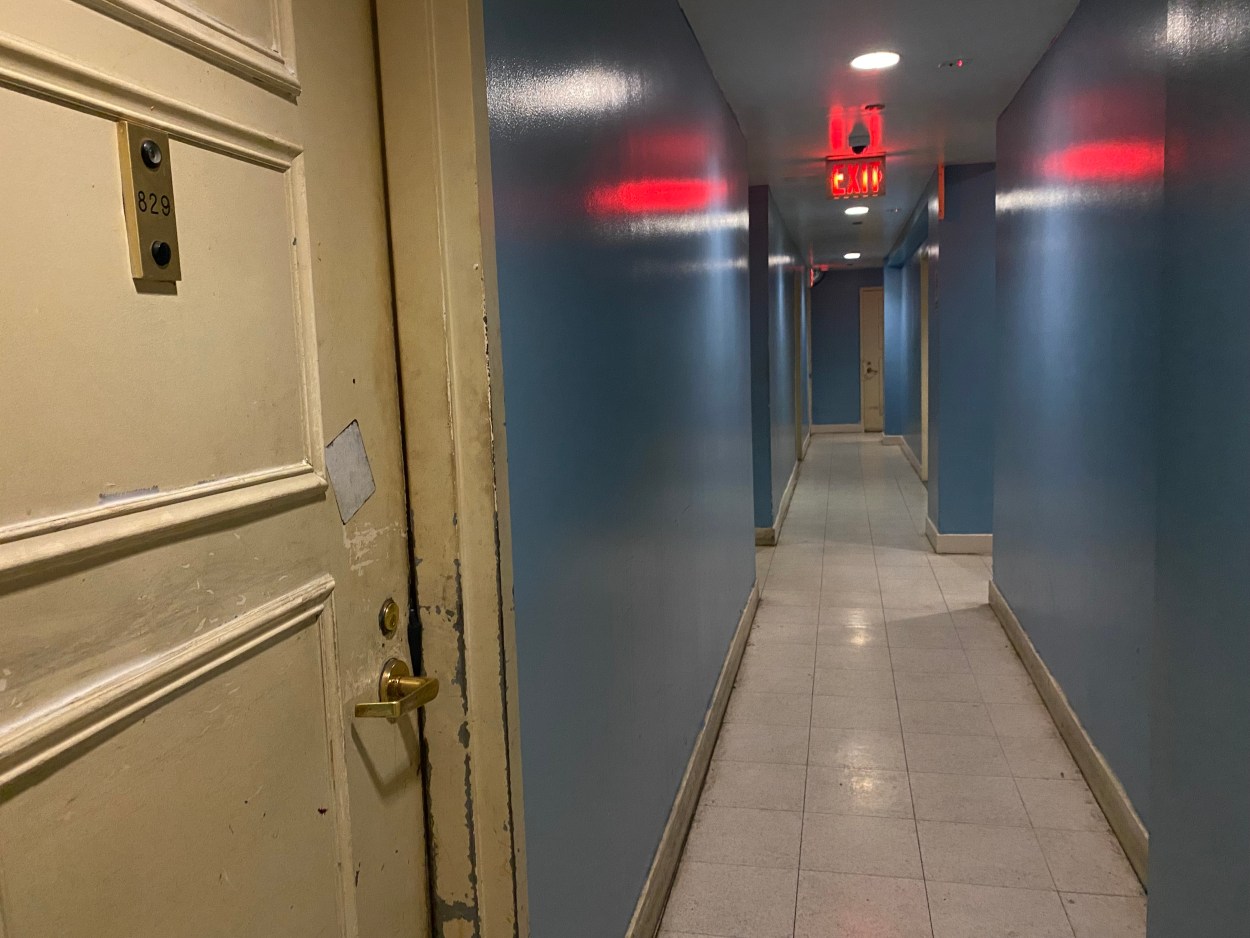 In the halls of the building’s eighth floor. Photo: Brennan LaBrie
Breaking Ground said it is researching replacements for the building’s “aging access system,” which it claims has been victim to “repeated vandalism.” The spokesperson denies any reduction in 24-hour security presence and adds that all visitors are screened upon entry.
Tronzo and Muñoz both said they witness frequent fights in the building’s lobby, with little to no intervention by security staff. Muñoz has personally been threatened with violence in the elevator. Both added that these incidents have increased since the pandemic, when they noticed more new tenants experiencing mental health issues.
“The building has changed,” Muñoz said. “It’s no longer safe.” Violent threats, screaming episodes, trashed apartments and urine and feces found in the hallways are just some of the incidents that residents say have increased in recent years.
“It’s hard to sleep at night — there’s too much noise,” said Reese, who has also experienced people overdosing and passing out in front of his door.
The building’s violent incidents have received citywide coverage before, including the 2024 stabbing death of a 55-year-old tenant by a neighbor.
This is not the first time the safety of a Hell’s Kitchen Breaking Ground property has been called into question by tenants. In November 2023, a 71-year old was stabbed to death by his roommate at the Dorothy Ross Friedman Residence on W57th Street, then managed by Breaking Ground and the Entertainment Community Fund. In the aftermath, residents shared longstanding concerns about their safety with W42ST, which they said were ignored by building management.
While Times Square tenants have perceived a rise in higher-need residents in recent years, Breaking Ground says the tenant mix at the building has remained largely unchanged. Since purchasing the former hotel in 1991, the organization has consistently designated 50-60 percent of units for individuals experiencing homelessness, mental health challenges, or substance use disorders, a spokesperson said. The remaining apartments are reserved for low-income residents, with eligibility criteria set by the city.
“The tenant population at the Times Square has remained consistent for more than 35 years,” the spokesperson said. “What has changed across the sector is the overall acuity of needs, including increased mental health crises and substance use — a trend widely recognized by housing providers and public agencies.”
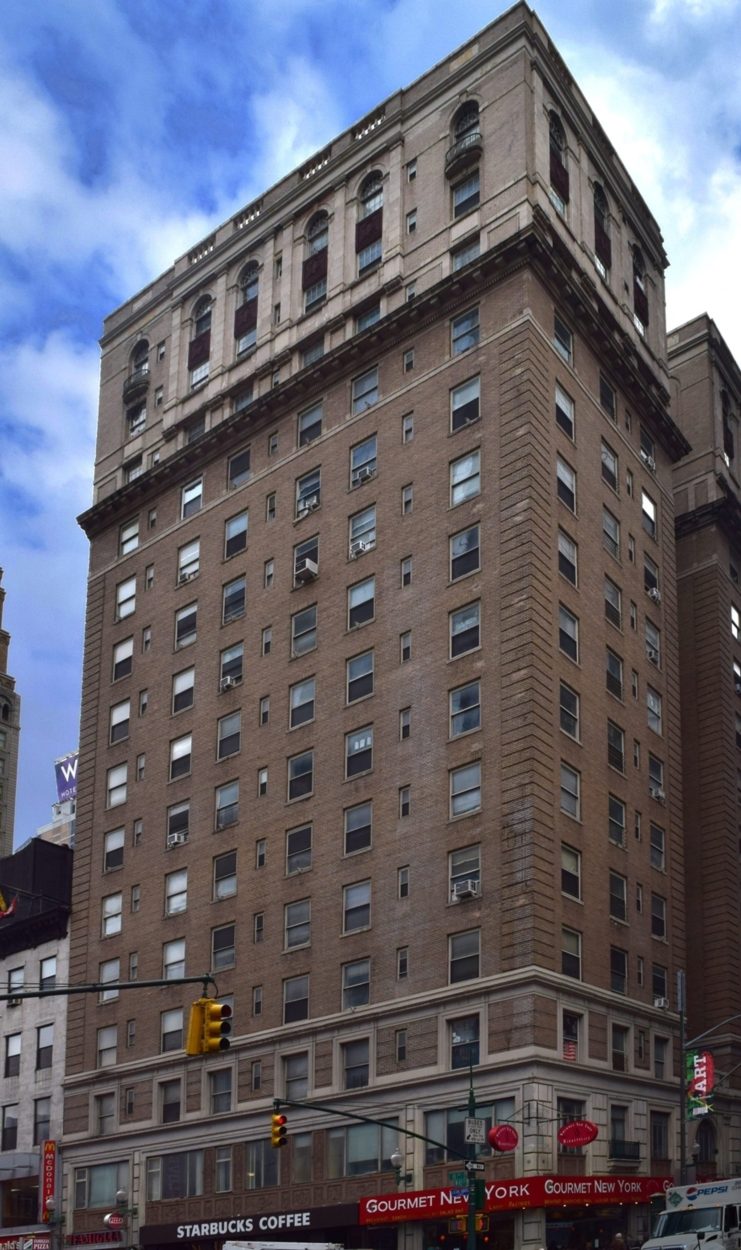
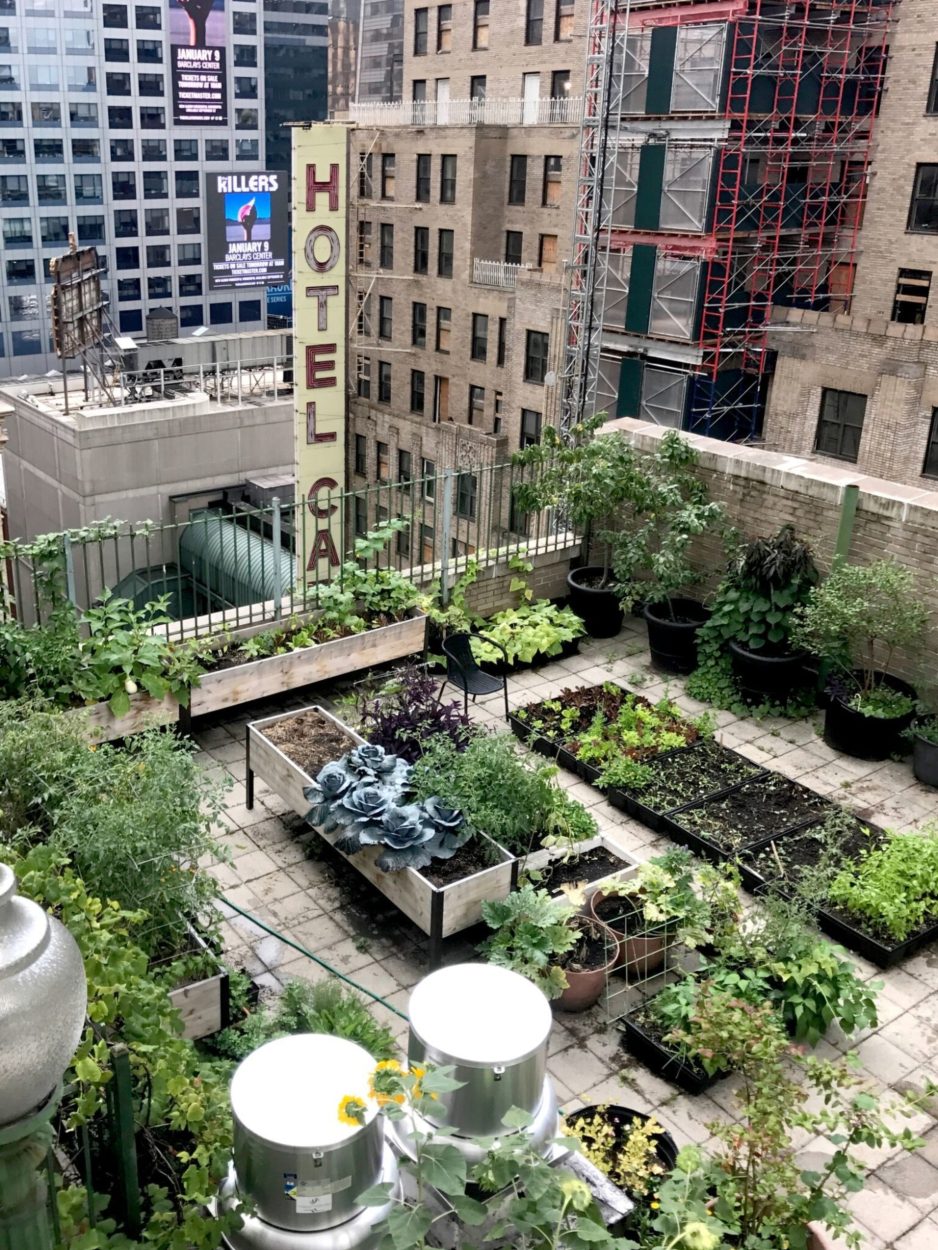
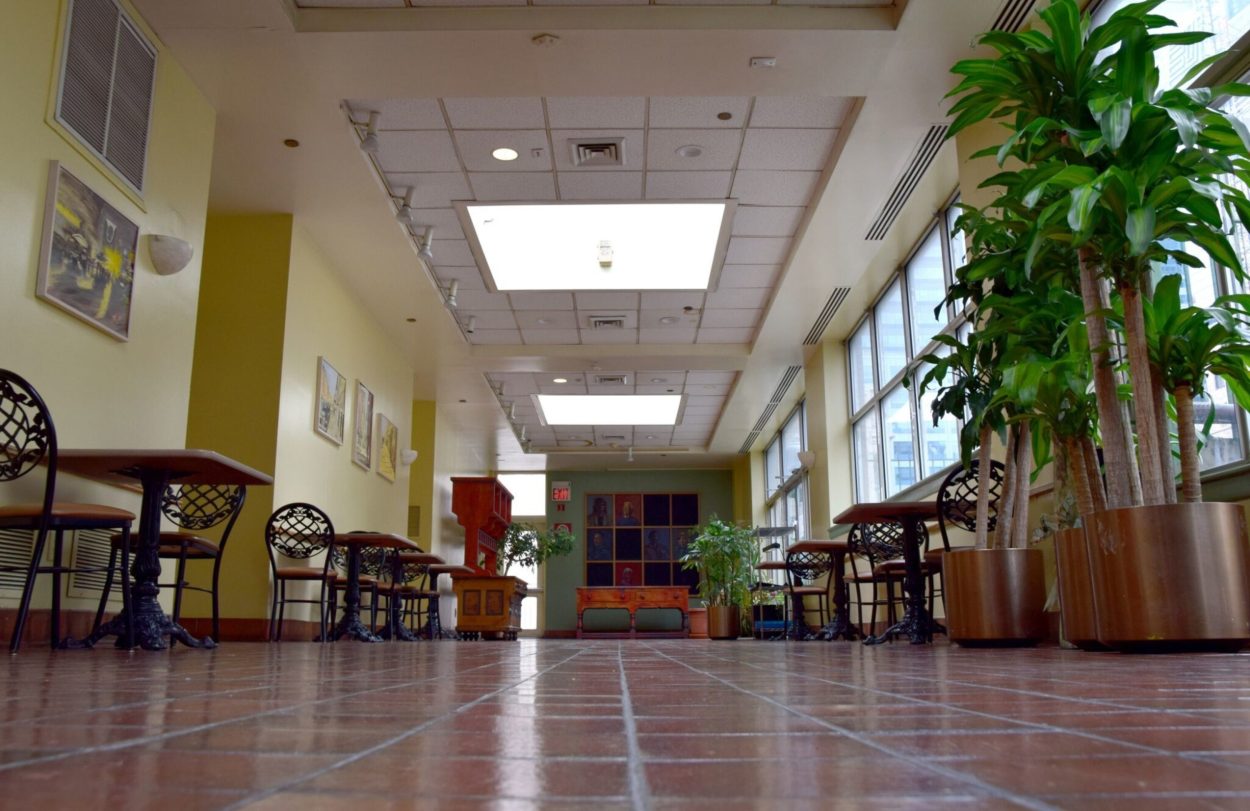
The Times Square is Breaking Ground’s flagship supportive housing residence with 652 units for low-income and formerly homeless adults, persons with serious mental illness, and persons living with HIV/AIDS. Photos: Breaking Ground
Amid those broader pressures, Breaking Ground is continuing to expand its footprint citywide. Earlier this month, the organization and Slate Property Group acquired the Stewart Hotel at 7th Avenue and W31st Street, with plans to convert the building into 575 affordable apartments — part of a broader effort to increase supportive and affordable housing capacity as demand grows across the city.
At the Times Square, Breaking Ground and the Center for Urban Community Services say they have increased and adapted on-site support and services in response to rising needs, while also “prioritizing the safety of residents and staff.” Tenants like Tronzo, however, say those efforts have fallen short. “Some of these people need more structure and protection,” she said.
On top of declines in building conditions and safety, tenants say services that foster health and community in the building — like the art room, gym and rooftop garden — have had hours cut, while other amenities like the library have been shuttered. Front desk hours have also become inconsistent, resulting in increased package theft, Muñoz said.
“It just seems like everything has been downsized and is a skeleton of what it used to be,” Tronzo said. Breaking Ground did not offer comment on hour reductions due to ongoing legal proceedings.
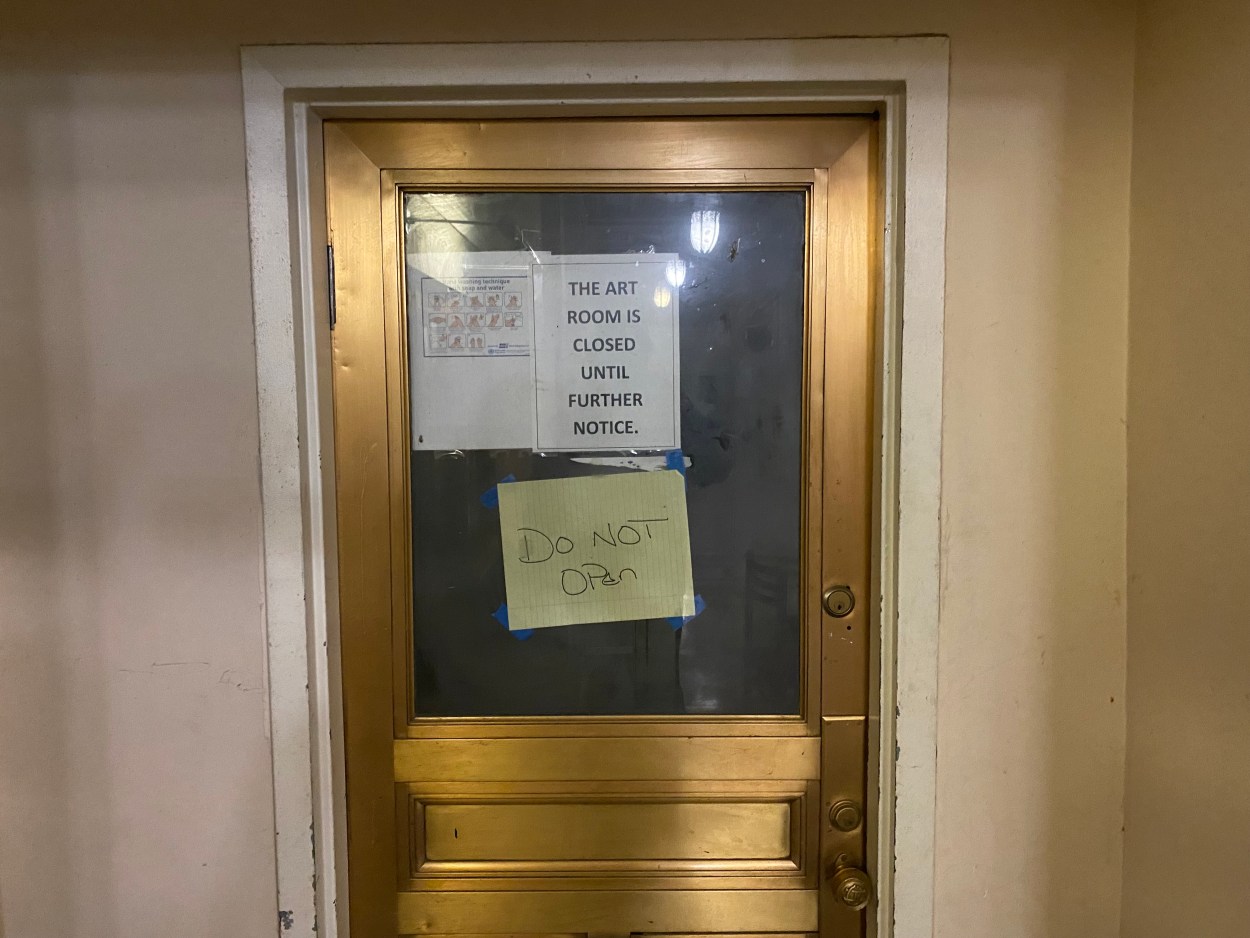 The art room, an amenity enjoyed by many tenants, is closed, along with the library. Photo: Brennan LaBrie
More than 30 tenants have filed an application for rent reduction based on decreased building-wide services through the state’s Division of Housing and Community Renewal. Meanwhile, 100 tenants signed a letter to Breaking Ground CEO and President Brenda Rosen requesting a meeting to express their concerns.
The tenants association is also in conversation with the offices of Councilmember Erik Bottcher and Assemblymember Tony Simone, and is awaiting their next court appearance on February 4.
“As a group, we just want to live in a safe, clean, functioning home like anyone else,” Muñoz said.