
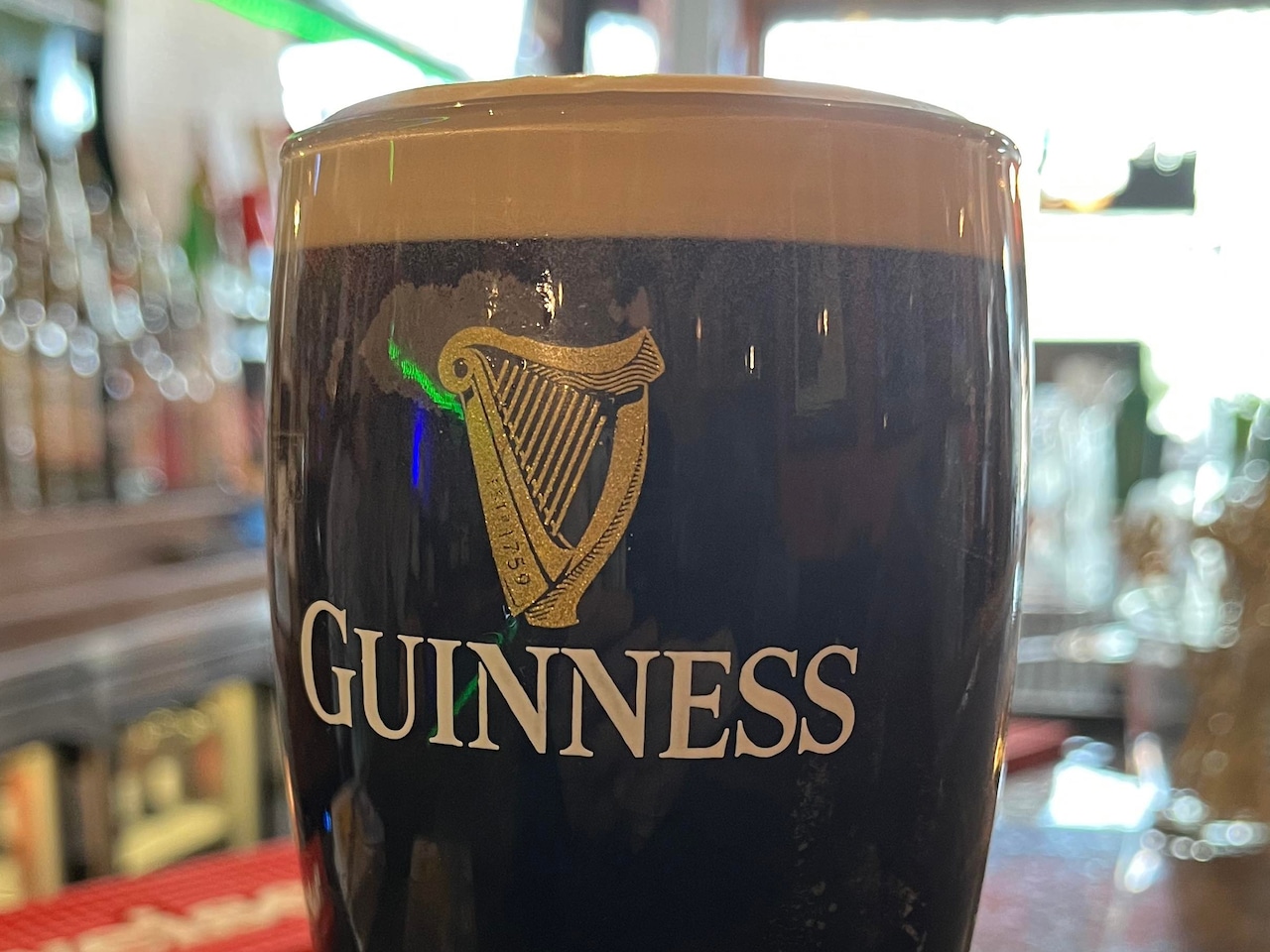
STATEN ISLAND, N.Y.— You came here looking for answers. So here it is in a nutshell: Hit the glass at a 45‑degree angle and fill until the liquid reaches the gold harp on the logo. Set it down and let it rest for exactly 119.5 seconds (but who’s counting?) so the nitrogen cascade can do its thing. Then top it off while holding the glass straight. The goal is to get that tight, creamy head. Now here’s a detailed look…
1. Start with the right glass
A clean, dry, branded Guinness glass (sometimes called a gravity glass) shows off the stout’s deep color and creamy cap. The embossed harp also serves as your first‑pour marker.
2. Angle and target
Hold the glass at a 45‑degree angle and pour toward the harp. Stop when the liquid reaches the logo—about three‑quarters full.
3. Patience with the “surge and settle”
Set the glass down and let the nitrogen do its work—the foam darkens, the body turns onyx, and the head forms. Give it about 119.5 seconds.
4. Build the head
Return to the tap and push the handle forward to reduce pressure, then finish the pour with the glass upright. This builds that dense, velvety head without large bubbles.
5. Presentation on point
Serve with the harp facing the guest. It’s a small, prideful finish.
6. Behind‑the‑bar baselines
Guinness runs on a 75 percent nitrogen and 25 percent CO₂ blend. Kegs should rest at least 24 hours in the cooler before tapping, be stored at 38 degrees and served between 38 and 43 degrees.
Guinness uses a nitrogen‑based system rather than traditional carbonation, creating a smoother texture that hits a different part of the palate compared with standard draft beer.
Saloonkeeper Joe O’Toole of Joyce’s Tavern in Eltingville explains that once the Guinness has settled, the bartender pushes the tap handle forward to lower the pressure for the second pour, allowing the head to build properly.
Other reliable Guinness spots across the borough include The Kettle Black in West Brighton, Jody’s Club Forest, and The Point. O’Neill’s of Port Richmond, Doc Hennigan’s in Westerleigh, Randall Manor Tavern in West Brighton, Duffy’s in West Brighton, and Miller’s Ale House in New Springville also pour a faithful pint.
The Guinness legacy traces back to its founder, Arthur Guinness, who signed the famous 9,000‑year lease at St. James’s Gate Brewery in Dublin in 1759—ensuring that today’s rituals have deep, storied roots.
It’s a history that still echoes through every pint raised during parade season. Staten Island’s St. Patrick’s Parade on Forest Avenue steps off Sunday, March 1, 2026, and New York City’s Fifth Avenue parade follows on Tuesday, March 17, 2026—the actual St. Patrick’s Day.