
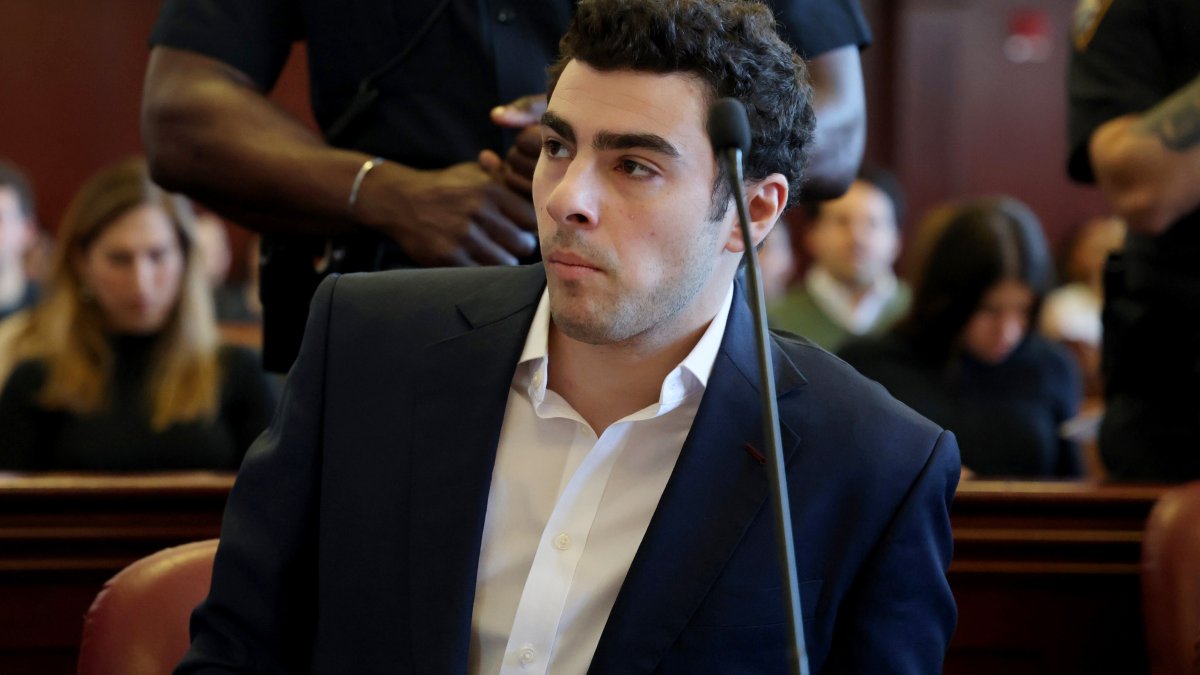
A judge on Friday ruled against prosecutors seeking the death penalty against Luigi Mangione, taking capital punishment off the table in the point-blank Manhattan killing of UnitedHealthcare CEO Brian Thompson.
Prosecutors had said they would appeal such a decision. Keeping the death penalty on the table could have delayed the trial. In that case, the next phase wouldn’t start until January 2027. Those cases are more complex and take more time to prepare. With the death penalty off the table, opening statements start Oct. 13.
Mangione’s lawyers had argued that the charges enabling prosecutors to seek capital punishment against the 27-year-old were technically flawed, and that the government prejudiced him by publicly declaring its intent to pursue the death penalty before obtaining an indictment.
U.S. District Judge Margaret Garnett also rejected a defense motion to suppress key evidence, including Mangione’s backpack, which was found with him at the time of his arrest, and contents therein. The defense had sought to suppress it, saying established police procedures were violated during the search and seizure.
Mangione has pleaded not guilty to federal and state murder charges, which carry the possibility of life in prison. The state trial has not been scheduled.
Thompson was killed Dec. 4, 2024, as he walked to a Manhattan hotel for UnitedHealth Group’s annual investor conference. Surveillance video showed a masked gunman shooting him from behind.
Officers began searching the backpack at the McDonald’s restaurant where Mangione was arrested while eating breakfast. Prosecutors say officers searched the bag legally because Altoona police protocols require promptly searching a suspect’s property at the time of arrest for dangerous items and police later obtained a warrant.
A loaded gun magazine was among the items found at the McDonald’s.
Officers continued searching the bag at a police station and found the gun and silencer. They performed what’s known as an inventory search and found the notebook and other notes, including what appeared to be to-do lists and possible getaway plans, according to testimony.
That search, which involves cataloging every piece of a suspect’s seized property, is also required under Altoona police policy, prosecutors said. Laws concerning how police obtain search warrants are complex and often disputed in criminal cases.
As part of her inquiry, Judge Garnett ordered federal prosecutors to provide her with a copy of the affidavit submitted to obtain a federal search warrant in the matter. Mangione lawyer, Marc Agnifilo, questioned Snyder about a police department general order effective Feb. 1, 2016, regarding arrest, search and seizure procedures.
The defense contends that searching the backpack before getting a warrant may have influenced how the affidavit was written, but prosecutors say no specific details about items, such as the notebook writings, were mentioned in the document.