
Staten Island Chuck’s pick is in! Did he agree with Phil?
STATEN ISLAND, N.Y. — His name is ubiquitous with Groundhog Day.
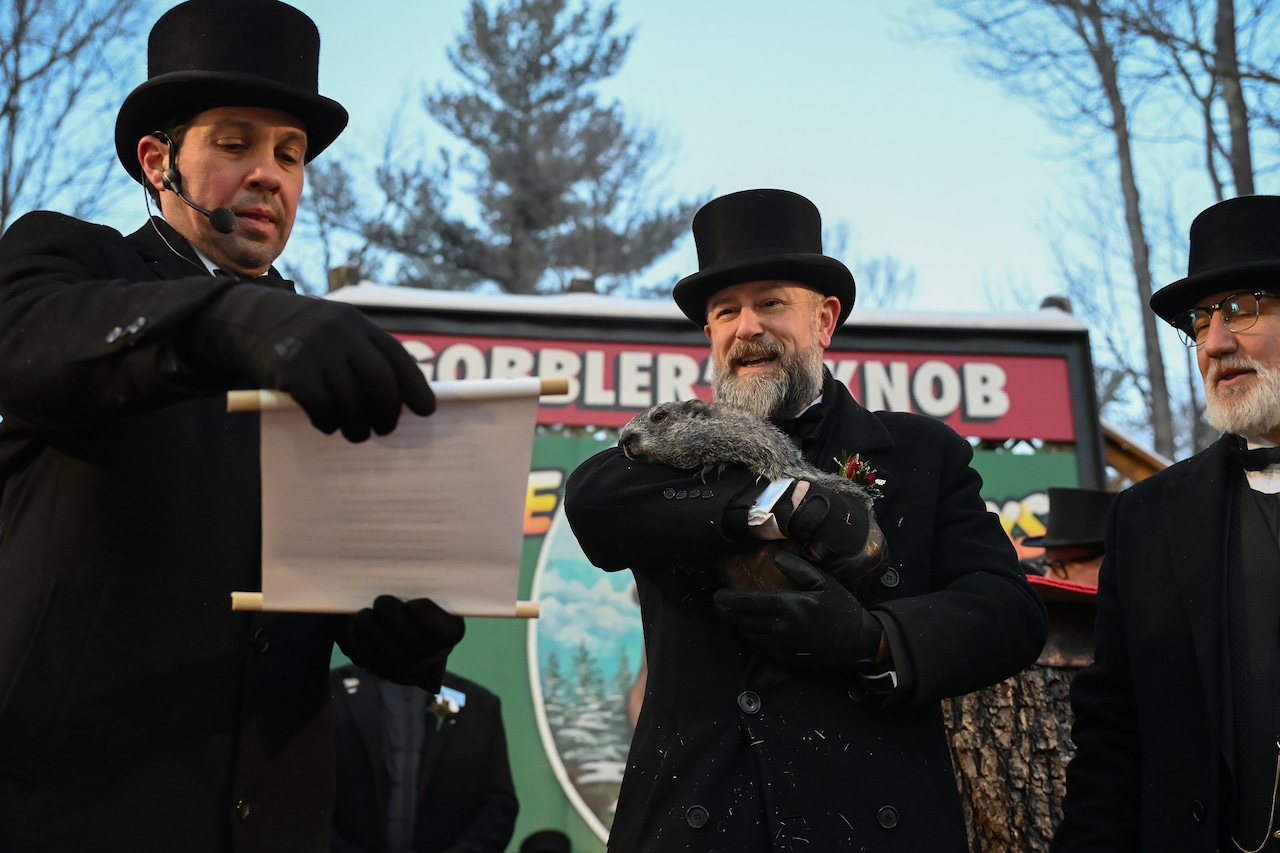
Early Monday morning, Staten Island Chuck’s rival, Punxsutawney Phil, called for six more weeks of winter after seeing his shadow.
He shared his prediction from his home at Gobbler’s Knob, in Punxsutawney, Pennsylvania, where he’s been delivering his predictions since 1886.
For those unable to attend, a livestream of this year’s ceremony was available.
Looking for another prediction?
Staten Island Chuck is making his prediction from the Staten Island Zoo, West Brighton, at 8:30 a.m. Monday.
While the ceremony is closed to the public this year due to the weather, the Advance/SILive.com will be on hand to cover the prediction. You can watch that ceremony from our Facebook page.
Accuracy rate
Over the years the pair have been at odds, while both Chuck and Phil predicted an early spring in 2024. According to students at Susan E. Wagner High School, both were correct in their predictions.
In 2025, Chuck again predicted an early spring, while Phil did not. And again, Staten Island’s student weather trackers confirmed Chuck’s accuracy.
Sorry, Phil. Better luck next time.
Students from the high school will again this year track and analyze data from their school’s weather station. They’ll once again track temperature readings from Feb. 2 to March 20, to see if Chuck’s prediction holds up.
According to the StormFax Weather Almanac, Phil has an overall accuracy rate of 39% over 135 years.
Chuck, on the other hand, has a better than 85% accuracy rate since he began monitoring weather in 1981, according to the data.
Groundhog Day history
The Groundhog Day tradition can be traced to Candlemas, an early Christian holiday where candles were blessed and distributed. Those who celebrated Candlemas decided that clear skies on the holiday meant a longer winter.
The Germans eventually began to believe that if the sun made an appearance on Candlemas Day, a hedgehog would cast a shadow — predicting six more weeks of harsh winter weather. And it was the Germans who brought this belief to the United States.