
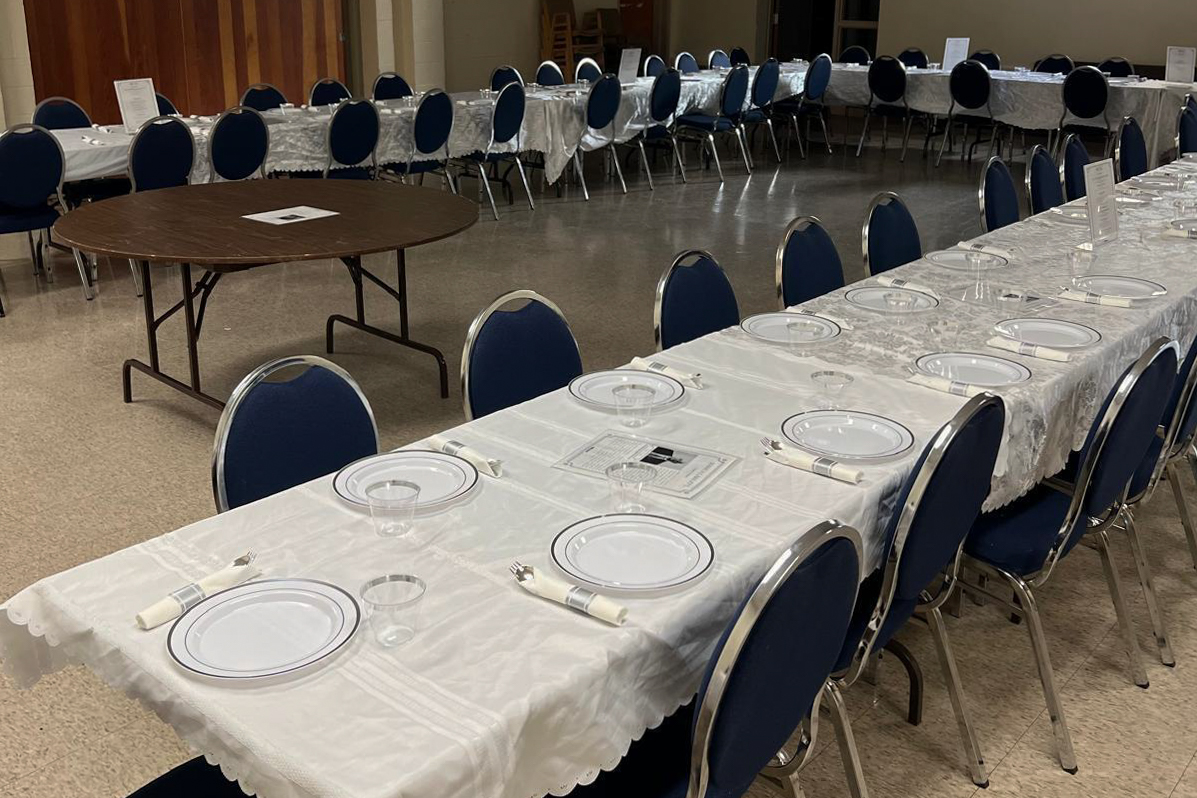
The dinner began at 7 p.m., with Shalom Aleichem, which was a greeting sentiment and welcomed everyone to the Shabbat. It was followed by Kiddush and Hamotzi, a wine blessing and breaking of the bread done before eating.
The food was prepared by volunteers of Hillel Queen’s and started the day before the Shabbat. The dishes that were prepared were diverse in nature and the recipes came from the Holocaust Survivor Cookbook. These recipes were chosen by Katz and Lechter, with input from Hillel Queen’s staff, with the Katz mentioning at the event that the goal was to “have a variety, so everyone could have something”.
The Shabbat included eight recipes, including salads, chicken paprikash, cooked vegetables, and desserts such as apple crumble and honey cookies. There were menus scattered along the table, with the names of the survivors below them and a deeper description of who the survivor was and a bit about their life on separate pages that were dispersed throughout the room.
Between dinner and dessert, there was a short discussion about a quote from the Torah, led by Professor Dueck. This reflective portion of the Shabbat tied Jewish tradition with the educational focus of Holocaust Education week.
After eating, they ended the night with a featured musical element that was taught and led by the new Queen’s professor Uri Schreter. He taught the group several Yiddish songs, including “Sholem Lid,” a Hasidic tune, and “Di Sapozhkelekh,” written by southern Ukrainian composer Broyna Sakina. This musical element added a cultural dimension to the night, that highlighted a sense of community.
In an interview with The Journal, Katz and Lechter were happy with the increased attendance from their weekly Shabbat Dinners, which they attributed to increased outreach on social media as well as through classes here at Queen’s. They noted the goal of hosting the Shabbat at the Beth Israel and having it open to a wider audience was to make Holocaust education more accessible and inclusive, and also to reiterate the sense of community with Hillel Queen’s and Hillel Kingston.
Upon reflection, Katz and Lechter said that one of the most impactful aspects of this Shabbat and the planning process was going through the recipes and learning about the lives of the Holocaust survivors these recipes were from. They noted that these recipes had to travel thousands of kilometers and down generations, with most recipes being created from limited resources.
Hillel Queen’s hopes to continue this Special Outreach Shabbat Dinner in the future for Holocaust Education Week, and to build on the success of this year’s event.
Tags
Hillel Queen’s, Holocaust Remembrance Week, Shabbat
All final editorial decisions are made by the Editor(s) in Chief and/or the Managing Editor. Authors should not be contacted, targeted, or harassed under any circumstances. If you have any grievances with this article, please direct your comments to journal_editors@ams.queensu.ca.