
Rail: I would love to know more about your concept of “autobiomythography.” As well as “near fiction,” which is not totally clear to me. And why do you think we are experiencing such reluctance toward memoir when it was the most popular genre not long ago?
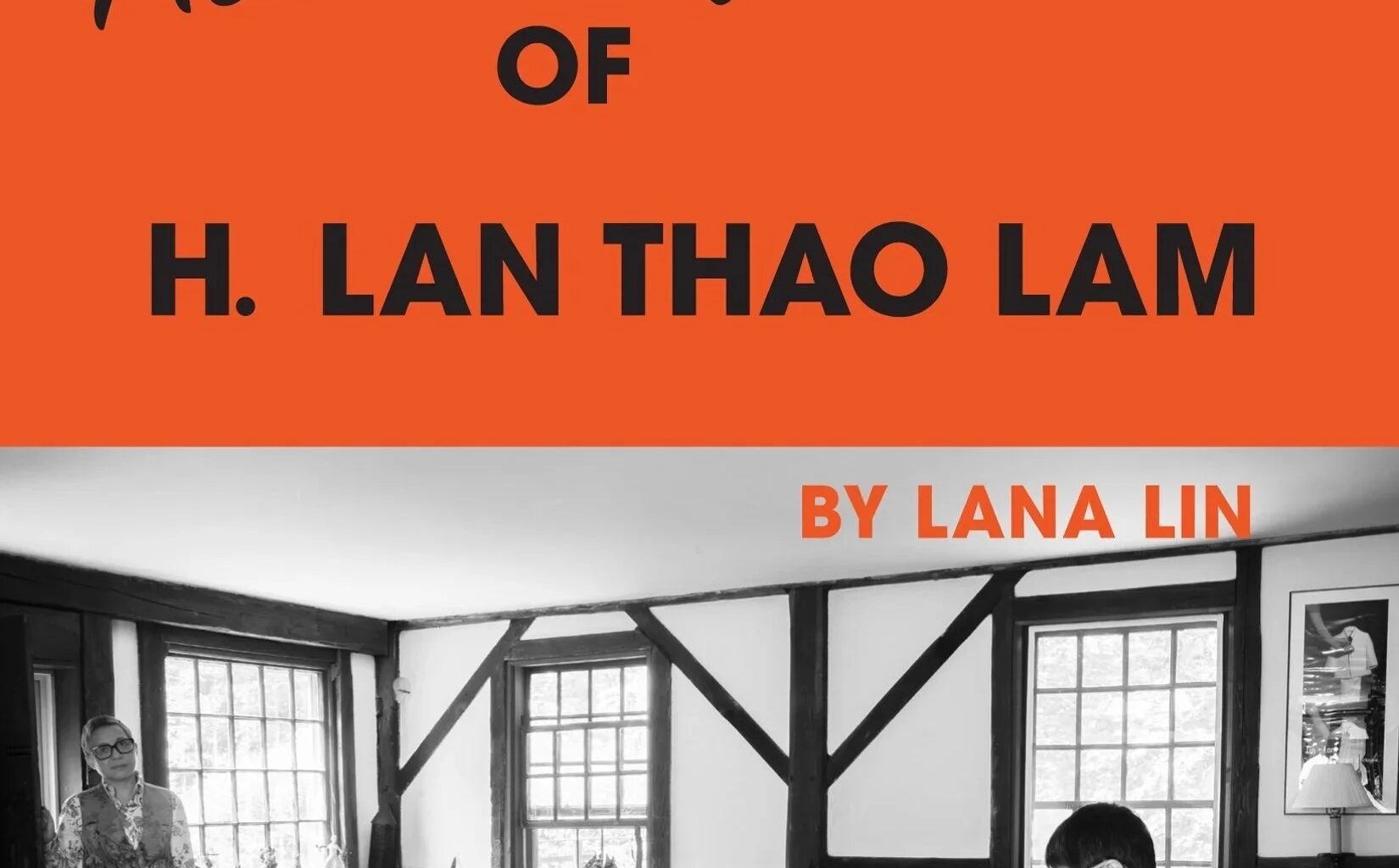
Lin: Maxine Hong Kingston is credited with inventing a new form in The Woman Warrior: Memoirs of a Girlhood Among Ghosts. The reissued 1989 book description reads: “An exhilarating blend of autobiography and mythology, of world and self, of hot rage and cool analysis.” Although I wouldn’t pit rage and analysis against each other in that manner, this is a pretty good definition of “autobiomythography” to me. In The Autobiography of H. Lan Thao Lam, the narrator refers to Kingston when making a case for including the inconsequential details of daily life for people that are not heroes or celebrities or victims or otherwise notable:
What of the seemingly insignificant, unverifiable, imaginative minutia that composes the non-heroic vernacular of people of color? This gossamer substance that interweaves our lives fuels dream work, mythmaking, and fantasies and, as Kingston notes of women of color, keeps us alive.
Autobiomythography, as biomythography was to Lorde, is a survival strategy.
“Near fiction,” is not my phrase, but as I understand it, it is something that comes close to fiction. And definitely I feel like my book brushes up against fiction. I think memoir has the capacity to reveal the porous border between fiction and nonfiction. My autobiomythography questions the mythology of the autonomous, bounded self: How can we really know who we are when we are constantly in flux? How do we know where we end and another begins when we are permeable beings that absorb our loved and hated objects?
If “near fiction” is a genre of Dorothy books, I would say it applies to Nathalie Léger’s Suite for Barbara Loden, which combines literary criticism, biography, memoir, and autofiction into a hybrid text that is officially categorized as fiction. We could really get into the weeds with the distinctions between autofiction, autotheory, autobiographical novel, autobiographical essay, narrative nonfiction…
But hasn’t memoir always been a somewhat denigrated genre, even when it has enjoyed popularity? There’s a popular conception of memoir as self-indulgent and lacking in literary substance. But I think some people whose literary tastes lean toward seemingly more substantive nonfiction don’t recognize books that they do embrace as memoir—for instance, Omar El Akkad’s One Day, Everyone Will Have Always Been Against This and Saidiya Hartman’s Lose Your Mother are deeply researched, critical works of nonfiction that could also be categorized as memoir. I was also reluctant to call my work memoir without qualifying it as “experimental” or inventing a new category of “autobiomythography.”
Rail: How has your partner dealt with this being out in the world? You two are collaborative artists of course, but has this managed to be on that same level of collaboration? How did you two manage this book’s creation and then its delivery into the world?
Lin: After the book launch, Lan Thao related an anecdote about how two of their students came up to them, excited about Lan Thao’s book. Lan Thao corrected them, as they have had to do on numerous occasions, saying that their partner Lana wrote the book. The students were in awe of what I think seemed to them like a radical act of trust, generosity, and care. They put it something like this: my friend here just bought me a matcha tea that I didn’t even ask for, but that is “next level love.” This is a brilliant encapsulation of the heart of the book: next level love. Lan Thao underscores that we collaborate in life and in art, but not on this book. Lan Thao’s participation in the book was deeply collaborative in the sense that they gave me blanket permission to write it as I pleased and spent many hours talking with me formally and informally about memories, facts, and feelings pertaining to their life and their family’s lives. But the book is not a collaboration. I alone must take responsibility for it. The effect it’s had on our lives was that for much of the fall we hardly saw one another because I have been touring with the book; it hasn’t otherwise changed our relationship. Writing the book confirmed my/our next level love—I suppose we have gained this wonderful phrase to describe it because the book is out in the world.
Rail: Can you speak to your work in all these different mediums? Being a filmmaker and video artist and now an author? What does it even mean to be a multidisciplinary artist in this world today?
Lin: I feel like most artists today are to some degree multidisciplinary and becoming increasingly so, which I fully embrace as someone who likes to work from idea to medium, and between idea and medium. Collaborating with Lan Thao, who was trained as a multidisciplinary artist to seek the medium that is most appropriate to the idea, I have become much more attuned to medium as a choice that emerges out of a project’s needs. The Autobiography of H. Lan Thao Lam is a book because it is modeled on a book. The device of writing through the voice of another is distinctly literary. I gesture toward that in my book when I say that I fear that I am writing myself out of existence, but then I wonder if I have written myself into existence. For me, the book could only exist as a book and not a film, although I tried once prior to writing it to propose it as a film, but the proposal really didn’t make sense to me, which was probably evident to the funders because I didn’t get the fellowship. I have made films that similarly had to be films because their source material was film, and they were about the materiality of analogue film and its analogous relationship to mortality.