
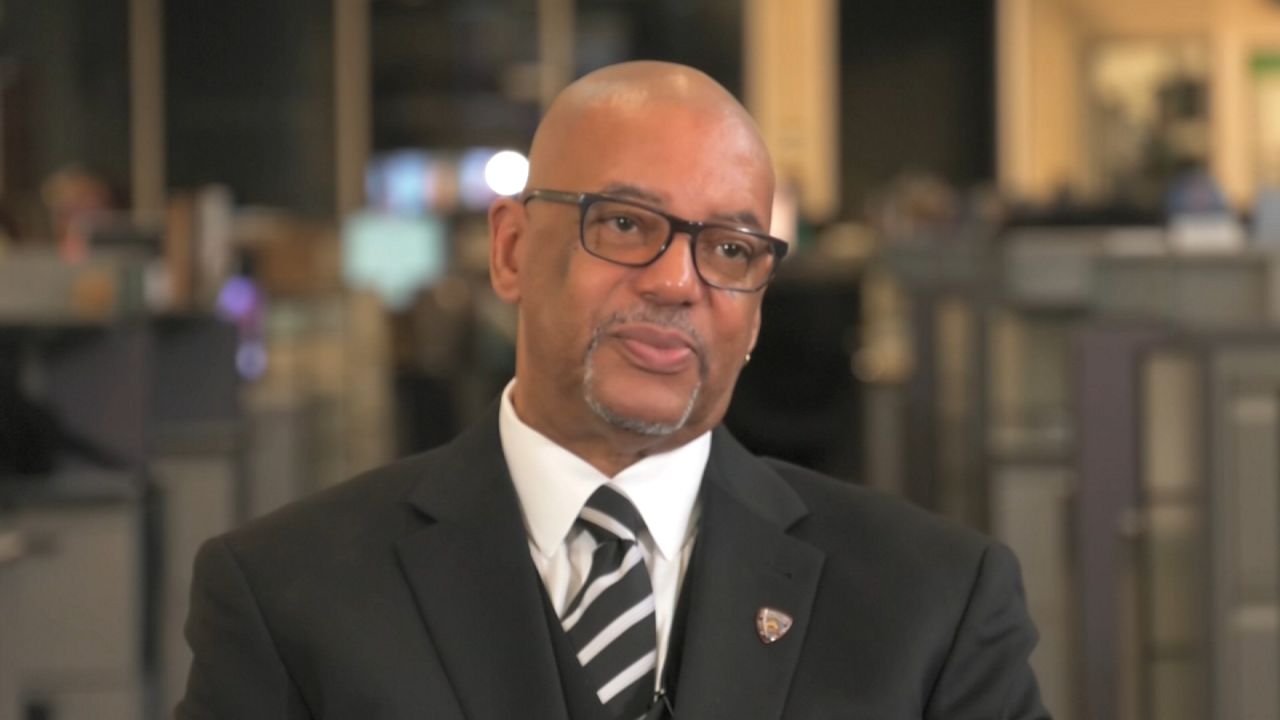
Stanley Richards is making history.
“Being appointed commissioner of the Department of Correction, I see the officers. I see the incarcerated people. And my job is to lift that up and make sure our jails are safe,” Richards told NY1.
What You Need To Know
Stanley Richards is the first correction commissioner to serve time behind bars
Richards said he will work with both the union and the newly-appointed federal receiver
Richards dismissed any power struggle that could occur between the department and its federal oversight
Richards will become the first leader of city jails who served time behind bars. He spent time on Rikers and in prison in the late 1980s, serving time for robbery.
Now — as the department faces its biggest upheaval yet — he will take over. He sat down exclusively with NY1 in his first interview since receiving the position.
“What do you do to finally fix Rikers Island?” NY1 asked.
“That’s the seed-planting work, is looking at all the policies and updating them, making sure we are doing training that is appropriate for the people we have detained today, making sure we have posts covered, making sure we are modernizing our systems,” Richards said.
Richards will become the correction commissioner just weeks after a federal judge appointed what’s commonly called a receiver to overhaul the city’s jails after years of dysfunction and violence.
Nicholas Deml will be known as a remediation manager — appointed by a federal judge with wide latitude to make changes on Rikers.
“I will work in partnership with the remediation manager to do those things, because when we do those things, it is about making sure our jails are safe,” Richards said.
But what happens when they disagree?
“I think you will see Nick and I working hand in hand,” Richards said. “If we have differences of strategy, we will work those differences out. The north star for Nick and the north star for me is safe jails.”
Richards has served in leadership on Rikers before.
He was a top deputy at the department in 2021, during the height of the staffing crisis in city jails, where thousands of correction officers were not showing up to work.
It was a relationship that became quite fractured, something Richards wants to change.
“I want to be in partnership with the unions to make sure that the officers, number one, are safe and protected. Number two, that they don’t feel isolated and thrown away, that they are valued,” he added. “And I am going to come to the table just like that.”