
Dania Darwish’s earliest memory of helping a domestic violence survivor dates back to the seventh grade. At her neighborhood public library, a woman asked her to look up how to file a police report while her children, too young to help, watched.
She talked with Darwish about grown-up issues, telling her, “Be very careful who you spend the rest of your life with” and sharing poems she’d written about feeling trapped in her house like a bird.
The woman didn’t have a therapist or anyone she felt could understand. “So she confided in me, a very young person, and told me, ‘Listen, I’m experiencing this in my house,’ ” Darwish said. “‘I need to get away. This is why I’m asking you to Google these things for me.’ ”
Experiences like that pushed Darwish to a career of public service, including stints with Amnesty International and the Muslim American Society. But it’s come full circle with the Asiyah Women’s Center, the city’s first emergency shelter for Muslim, BIPOC and refugee women and children.
Seeing the gap
Over the years in between, Darwish had met other women who felt trapped and who leaned on her to navigate services. During Ramadan, she saw people staying overnight at her local mosque with nowhere to go. Later, working at a public health nonprofit, she met women with bruised bodies and only $10 in their pockets. They were afraid of going to city shelters after facing Islamophobia and racism.
It became clear that these women needed housing and other services with and from people who understood their lived experiences and how to navigate trauma.
Darwish had studied human rights at UCLA and worked with global nonprofit organizations, including the United Nations, on issues such as women’s economic empowerment. While impressive, she found these large NGOs often more concerned with ideals than action. She decided to turn to grassroots work in her own community. In 2018, Darwish co-founded Asiyah Women’s Center.
The power of word of mouth
Once word got out of the idea for a shelter for Muslim and refugee women, support poured in: A mosque member offered to rent the second floor of their Brooklyn home. It was a clear vote of confidence in their vision. “There’s not a lot of landlords who say, ’Ok, that’s fine, you can work a domestic violence apparatus upstairs,’ ” Darwish recalled.
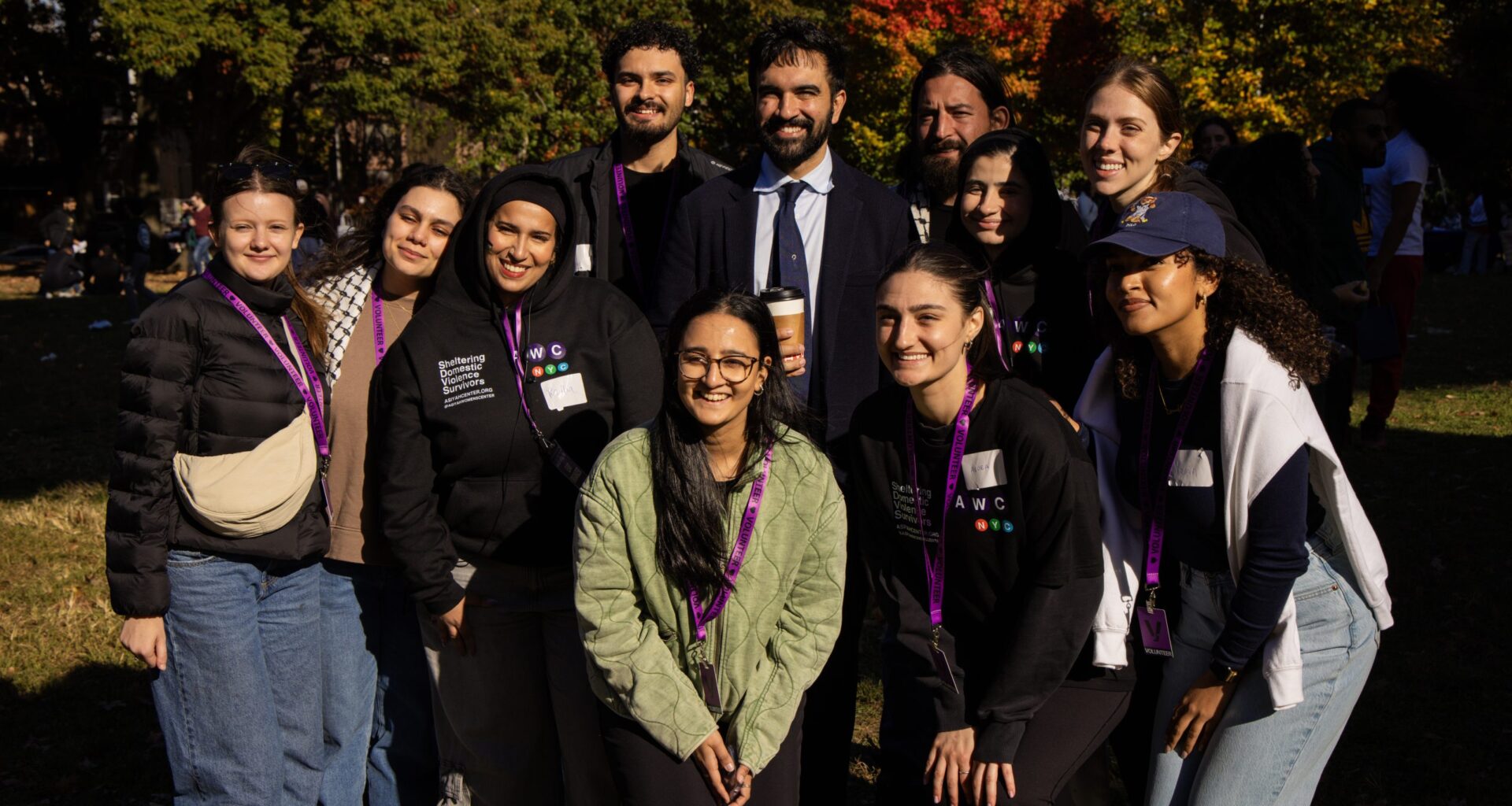
When the space was preparing to open in August 2018, volunteers arrived from across the boroughs to assemble bunk beds, stock groceries and make the place homey. All of them had either firsthand or secondhand experience with domestic violence, Darwish said: “It was a beautiful act of solidarity across women of color and across Muslim women who understand how hard life can be, but how important it is to show up for each other.”
When she first started the nonprofit, she thought it would be as easy as simply welcoming survivors of domestic violence and homelessness. Quickly, she realized she would need to provide more than a rented space to meet women’s needs, including mental health services.
For the first three years, Asiyah was almost entirely volunteer-run. Now the center has a team of seven staffers, including a case manager and two residential aides or “aunties in residence” — one of whom is Darwish’s mom.
(The nonprofit’s other co-founder, Mohamed Bahi, had stepped away from the nonprofit before later serving as liaison for former Mayor Eric Adams.)
Funding and financial empowerment
Neighbors gave the nonprofit its first seed money through GoFundMe and LaunchGood. Since then, it has relied on a mix of government, philanthropic and community funding, with Darwish adding grant writer to her many other hats.
Recently, her nonprofit won the Brooklyn Org’s $100,000 Spark Prize. Part of that will go to serve more survivors in a new space, an abandoned church that needs renovation. The money will also help the organization provide financial education, a crucial service given that financial abuse is one of the top reasons survivors stay with or return to abusive partners.
Mutual aid before it was a buzzword
The Asiyah Women’s Center’s services are especially needed now, Darwish said, “in light of what’s happening to immigrants and refugees in this political landscape.”
The center emphasizes empowerment rather than charity. Darwish’s mom, Ameera Opeissy, leveraged her experience as a Syrian immigrant and modeled this care by helping new arrivals choose winter clothes and find halal food and offering guidance.
“When someone was sick, there were meal chains and care practices — essentially mutual aid, before the terms ‘nonprofit’ or ‘mutual aid’ existed,” she said. Now Asiyah is a part of that ecosystem that women can count on.
Darwish’s lessons for entrepreneurs:
1. Choose your “hard” and just start: “If you want to start something, because you see and you have seen a gap in the community, do not be afraid to start. Life is going to be hard no matter what route you choose to take. And aging is a very scary thing, but […] you’re going to be 30 anyway, you’re going to be 40 anyway. So it’s important to fill your life with meaning and with things that you fear to do, because the things that you fear to do are the most important things that you should and need to do.”
2. Leverage your own experience to identify gaps: In high school, a swimming instructor told other students Darwish might swim differently because of her hijab — and that they should let their teacher know if it made them uncomfortable. “It became very clear that my needs or my identity were going to be accommodated to the extent of how other people would feel instead of how it would make me feel.”
3. Give back to yourself as much as you give back to others: “If you burn out while doing this work, then there will be no more work.” Darwish blocks off time where she won’t check emails or check in on others. “You get so emotionally involved in making sure that people are OK to the point where you forget that you also need to be OK.”