
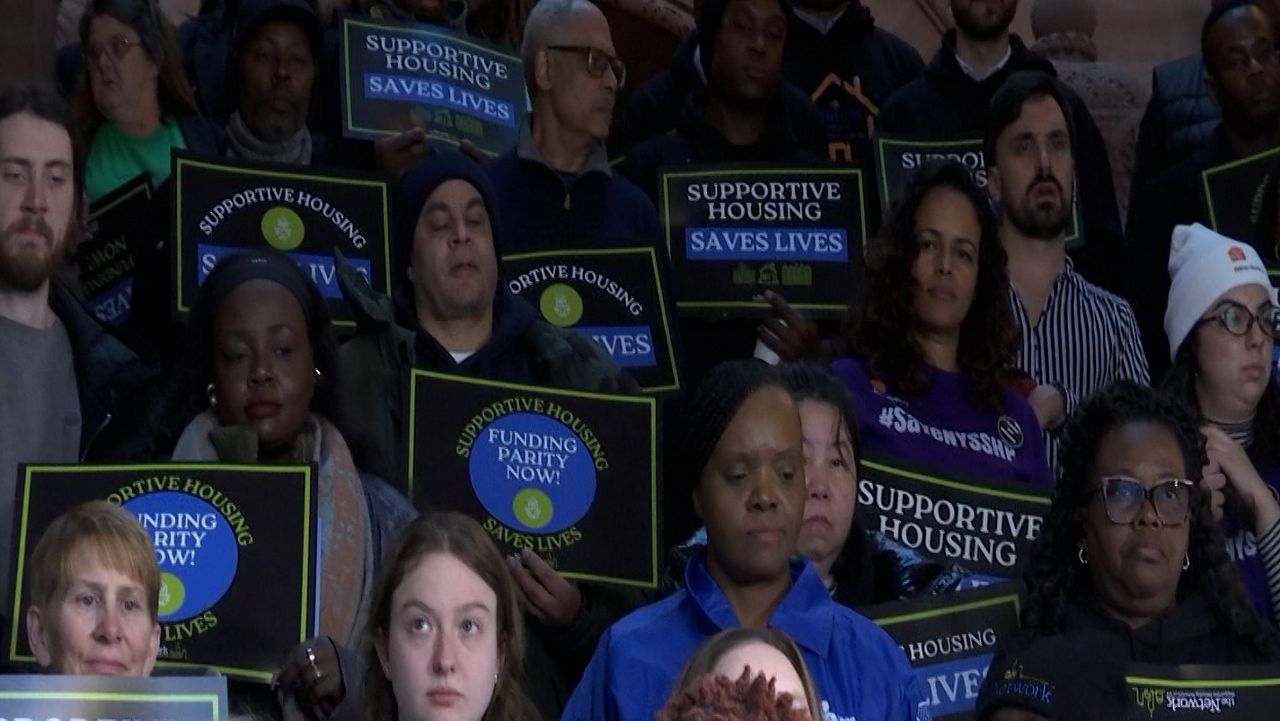
Advocates for better access to supportive housing, including nonprofit providers, tenant advocates and key state lawmakers, gathered at the state Capitol Thursday to press Gov. Kathy Hochul and legislative leaders to do more to address community needs as they negotiate the state budget.
They pointed to instability coming out of Washington as well as the threat of potential cuts and eligibility changes as just part of what is fueling the need for more funding than what Hochul included in her executive budget proposal.
Last month, Hochul touted $153 million overall in new resources to meet supportive housing needs and to maintain existing units, while stressing the importance of protecting vulnerable New Yorkers, but there are specific areas of need that advocates insist require more attention.
The coalition is pushing for a 4% increase to the state Supportive Housing Program. They stressed that while a hard fought increase last year was a significant victory, it came after years of disinvestment and falls short of what the Supportive Housing Network of New York has identified as $62.1 million needed to meet current realities.
There is also frustration that the governor’s proposal did not include any increase for the Homeless Housing Assistance Program, and advocates would also like to see a 2.7% targeted inflationary increase across human services contracts to bolster and better support the workforce.
The network’s executive director, Pascale Leone, urged Hochul and the Legislature to build on past investments while acting as a firewall against further federal threats.
“New York has the power and I’ll say the responsibility to protect its most vulnerable residents by strengthening the supportive housing system we control right here in New York. We know that supportive housing system works,” she said. “It keeps people housed, it reduces homelessness, it stabilizes communities, and it saves lives.
State Assembly Housing Committee Chair Linda Rosenthal stressed that on top of any challenges coming out of Washington, the lack of investment by the state in previous years has created a need to catch up before even addressing current headwinds.
“The wins were great, but we have a lot to make up and that’s why we have to build on the progress and ensure that we don’t leave these programs behind ever again,” she said. “We owe to to the people to create a system supports their needs, keeps a roof over their heads, and keeps their homes in good and livable condition.”