
STATEN ISLAND, N.Y. — A scheduled court date for a Staten Island man claiming innocence in a 1993 double murder has been pushed back two months, which his lawyers argue is indicative of law enforcement’s refusal to address past transgressions.
Philip Robinson, now 57, was found guilty by a jury of murdering his female friend and the woman’s 2-year-old son inside a Tompkinsville apartment on Feb. 25, 1993. Currently he is serving out two sentences of 25 years to life in Sing Sing Correctional Facility in Ossining, New York.
After the defense filed a motion to lift the conviction or have the case re-examined, the district attorney requested additional time to respond.
The request was granted by Justice Marina Mundy, who rescheduled the appearance for April 10 in state Supreme Court, St. George.
Robinson’s counsel, meanwhile, has expressed frustration with the pace at which things are moving, and is skeptical that his client is getting a fair shake.
“This is the longest response I’ve seen to a 440 motion in any of the five boroughs, especially after a lengthy district attorney investigation,” said Brooklyn-based defense attorney James Henning.
A 440 motion is a post-conviction legal procedure allowing a defendant to challenge a conviction or sentence.
“I think that unlike the other boroughs, Staten Island has not dealt with the reality of how cases were prosecuted in the 80s and 90s. They haven’t yet confronted how things were too often done in those days.”
Conversely, District Attorney Michael E. McMahon has said his office “takes the possibility of anyone being wrongfully convicted with the utmost seriousness.”
“That is precisely why we fought vigorously to secure funding for the creation of a dedicated Conviction Review Unit — an independent body within our office tasked solely with examining claims of wrongful convictions,” wrote McMahon in a recent statement about Robinson’s case.
A lengthy investigation into Robinson’s case by the Conviction Integrity Review Unit was launched in 2022.
It included several interviews across multiple states, and ultimately they determined the jury got it right.
“Since its establishment, we have overturned convictions when the facts, the law, and justice demanded it. Reasonable people can, and often do, disagree,” McMahon went on to say in the statement.
“In this case, over 30 years ago, 12 reasonable jurors that heard evidence, not speculation, concluded that the defendant was guilty.”
Since the creation of the Conviction Integrity Review Unit on Staten Island in 2018, there have been three cases overturned; a murder, a robbery and a serial rape case.
Other cases have been reviewed and deemed righteous convictions, including Robinson’s and the 1994 murder conviction of Foster Thompson.
Grisly ‘93 murders of Theresa, Tommy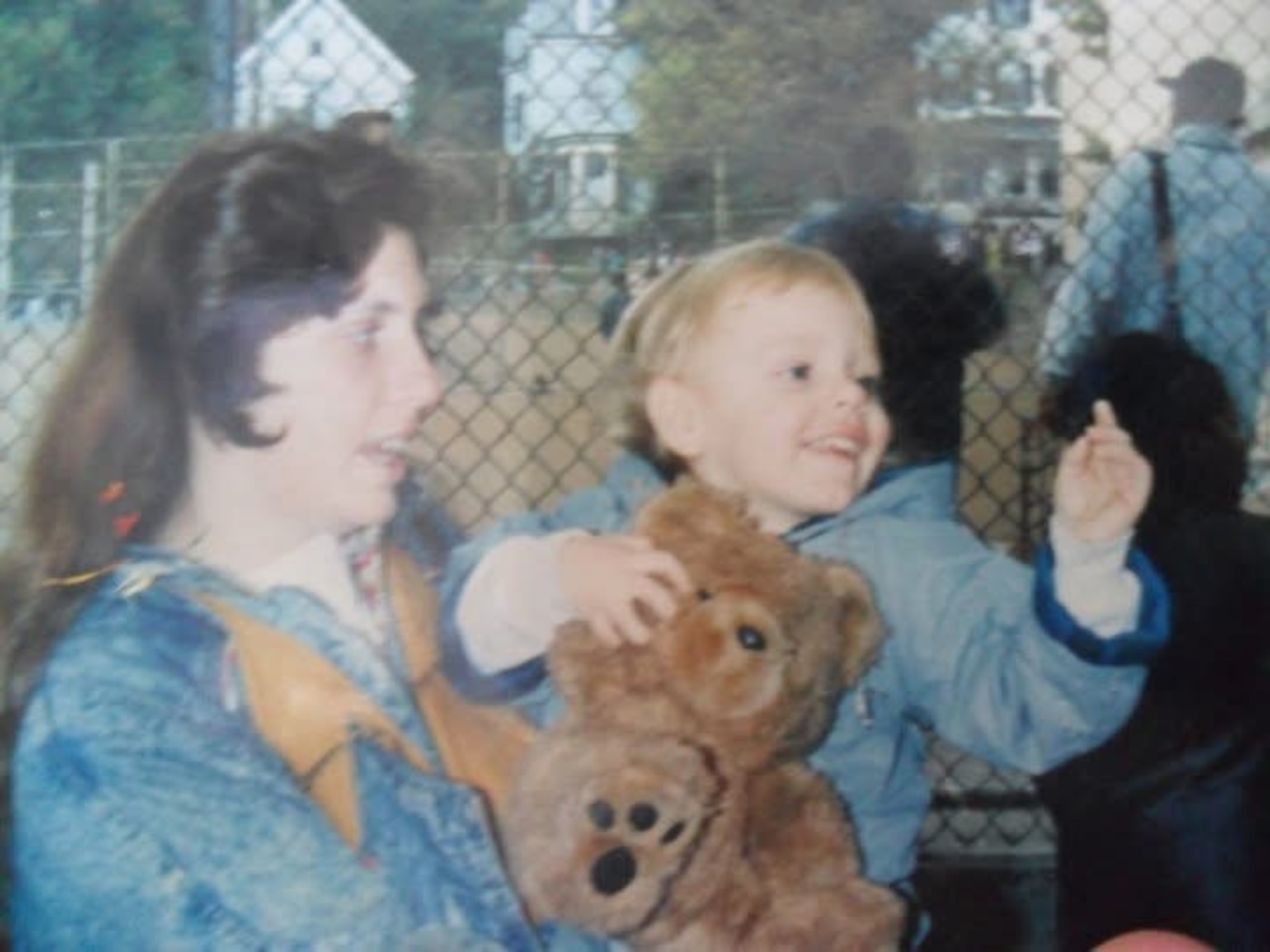 Theresa Jones holding her son Tommy prior to both of them being murdered inside their Tompkinsville apartment on Feb. 25, 1993.(Courtesy of LIzziey Bartlett)
Investigators called to the murder scene on the evening of Feb. 25, 1993, were led to the bludgeoned bodies of Theresa Jones, 27, and her 2-year-old son, Tommy Moriarty Jr.
The apartment was inhabited by Jones, her two children and her common-law husband, Tom Moriarty.
At the time, Robinson was crashing on the family’s couch. Jones’ kids referred to him as “Uncle Phil.” He worked two jobs as a cab driver and construction worker. Jones’ family said recently that he was a close friend of Jones and their relationship was platonic.
Police at the scene were met by Moriarty. He told them he discovered the victims bludgeoned to death on the bathroom floor. Moriarty informed police that Robinson’s construction bag had gone missing from the home, according to Robinson’s court filings.
Days into the investigation
A day after the murders, Robinson’s construction bag containing a bloody hammer was discovered in an abandoned hospital on Castleton Avenue.
Robinson said previously that upon learning about what happened, he showed up to the 122nd Precinct stationhouse in New Dorp to clear his name.
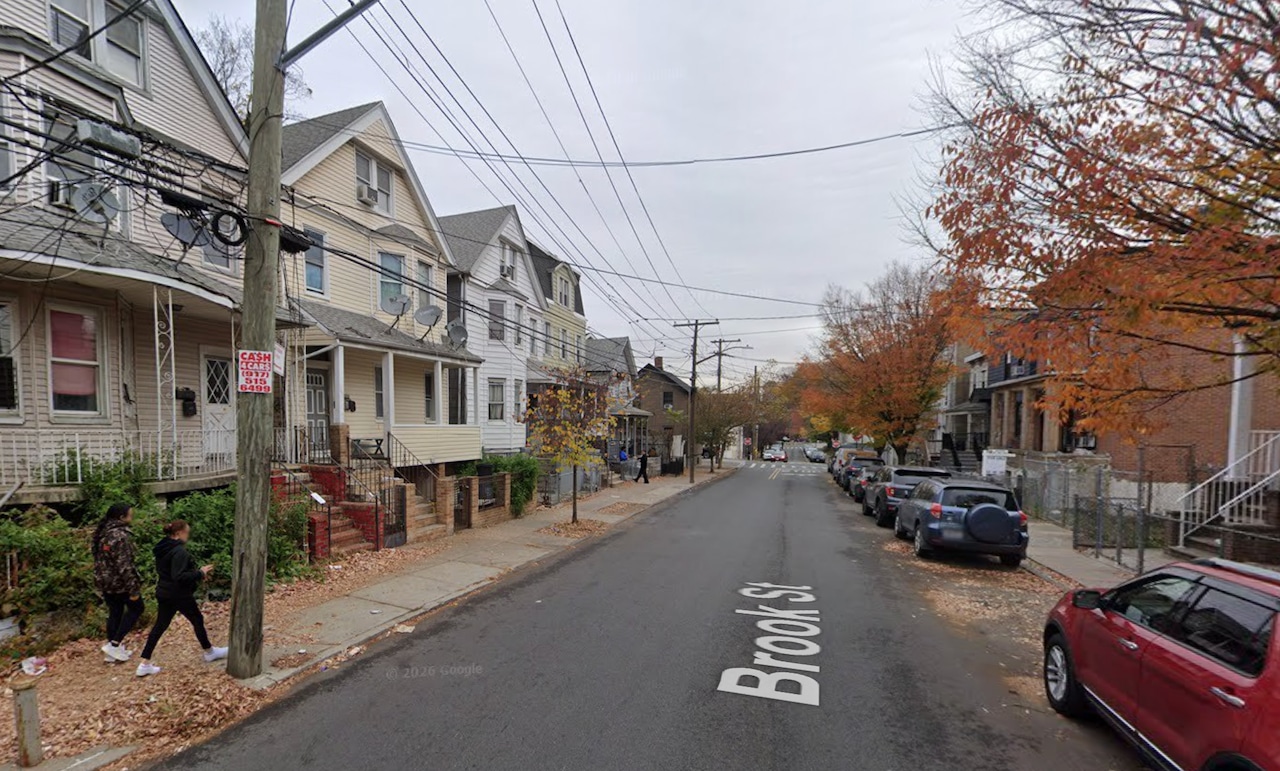 A current view of Brook Street in Tompkinsville, where Theresa Jones and her 2-year-old son Tommy were discovered bludgeoned to death on tghe evening of Feb. 25, 1993.(Google Maps)
The lead detective claimed in police reports and testimony, later cited in court filings, that Robinson gave incriminating statements. Robinson, however, denies these statements, and the defense argues they were never properly recorded or signed.
Prosecutors at trial cited a speck of blood on Robinson’s sock. A DNA expert testified that genetic material found in the cells of the blood on Robinson’s sock was consistent with the DNA of Thomas Moriarty Jr., according to Advance archives. There was no other physical evidence conclusively linking him to the crime scene, the defense argues.
In an outburst at his sentencing in 1995, Robinson inferred that Jones’ common-law husband, the now-deceased Thomas Moriarty Sr., may have committed the slayings, according to Advance/SILive.com archives.
Family had doubts
Dating back to the time of the slaying, Jones’ family had doubts about whether Robinson was the killer.
Jones’s daughter, Lizziey Bartlett, now 41 and living in Florida, recalled Moriarty as a heavy drinker who fought often with her mother. In a recent interview, she said there “were broken bones” and that there were “escape plans” if things got too out-of-hand.
 Thomas Moriarty, who was Jones’ common-law husband and Tommy’s father, met police at the crime scene on the evening of Feb. 25, 1993. (Courtesy of Lizziey Bartlett)
In the moments after the slaying, Jones’ then 11-year-old sister, Franny Rozo, was walking toward the apartment, returning from a doctor’s appointment.
“(Moriarty) swung the door open and said ‘there’s a woman and baby dead,” Rozo said. ”(Robinson) didn’t do it. I know he didn’t do it.”
Police at the time determined Moriarty’s alibi checked out.
Court filings by the defense allege police “prematurely” cleared Moriarty as a suspect and argue that evidence of anger, domestic conflict, and opportunity were never fully investigated.
A wrongful conviction, defense argues
There are holes in the investigation beginning from the first minutes officers arrived, according to the defense’s court filings.
For starters, police allowed Moriarty to walk through the crime scene before detectives arrived to see if anything was missing, court documents allege.
Two days after the murders, the bag and bloody hammer were found in an abandoned hospital by men who lived nearby. The lead detective directed them to search the area for the bag, rather than conducting the search himself, according to Robinson’s court filings.
“There were multiple moves by the lead detective that don’t make any sense in the grand scheme of how homicides are reliably investigated,” said Henning.
Robinson said in a recent interview with NBC New York that he believes he may have been targeted because he is Black and the victims were white.
The most compelling evidence, however, has come in the form of DNA testing. It shows that skin cells found under Jones’ fingernails belong to two other unknown individuals, not Robinson, according to court filings on behalf of Robinson.
“At minimum, I don’t think any court should have confidence in the verdict,” said Henning.
D.A. responds to motion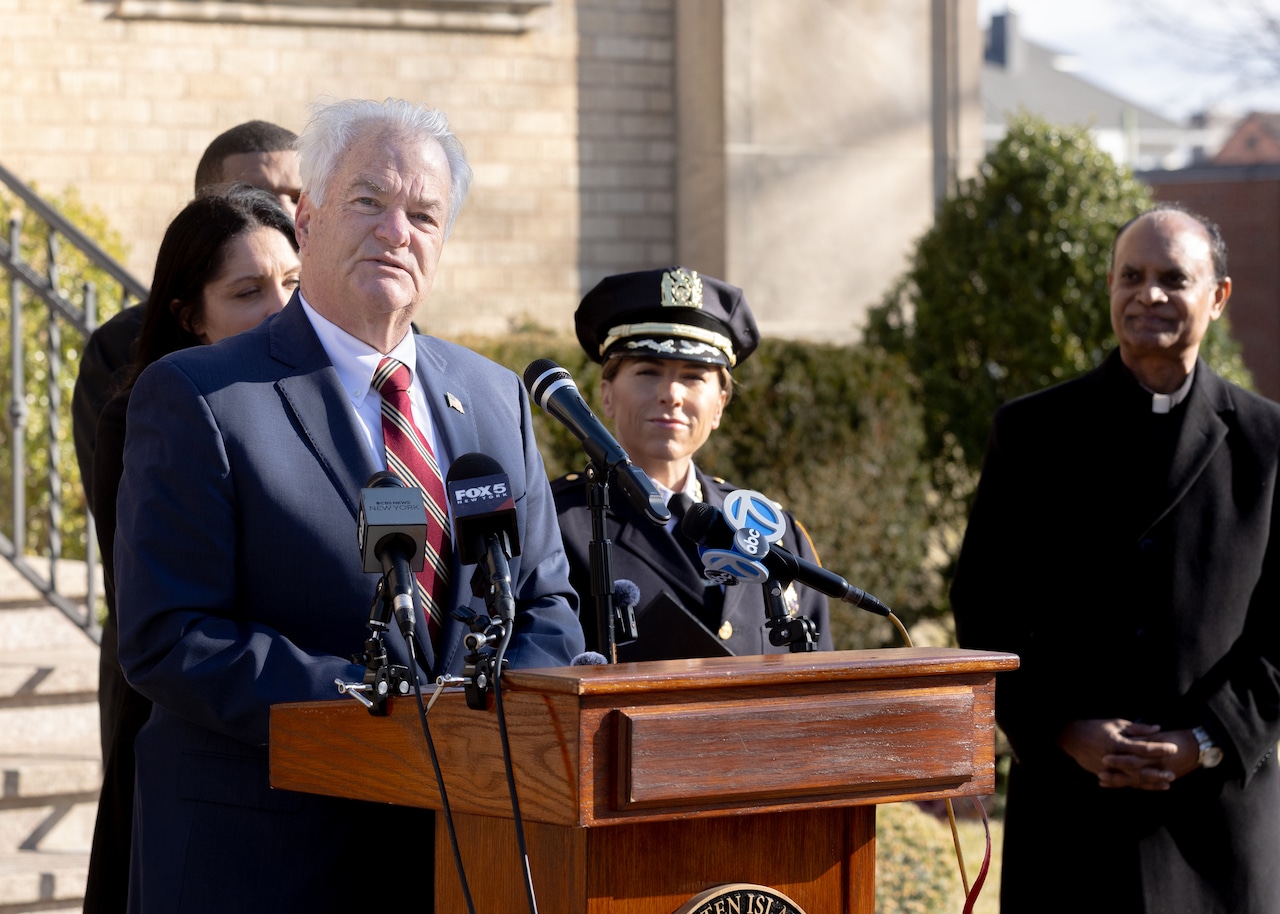 Richmond County District Attorney Michael McMahon speaks at a press conference held outside of St. Ann’s R.C. Church in Dongan Hills which was the subject of one of several recent disturbances at Catholic churches in recent weeks. Thursday, Jan. 15, 2026.(Advance/SILive.com | Jason Paderon)
The district attorney’s statement regarding Robinson’s motion went on to say the following:
“At the request of the defense, we agreed to investigate the possibility that this conviction for the murder of a mother and child was wrongful. Over the course of two years, our Conviction Review Unit conducted an exhaustive review of the evidence and interviewed surviving witnesses.
“At the conclusion of that process, we reached the same determination as the jury; the conviction was supported by the evidence. Our justice system provides the defendant with additional legal avenues to pursue beyond our review, and he has chosen to exercise those additional options.
“As a result, this matter is now the subject of pending litigation. Out of respect for that ongoing process, we will not comment further on the specifics of the case outside of our filings and responses to the Court.”
Conviction Integrity Review Unit
To submit a request for a conviction to be considered for re-investigation by the district attorney’s Conviction Integrity Review Unit, see statenislandda.org/wp-content/uploads/2024/04/CIRU-Intake-Form_compressed.pdf