
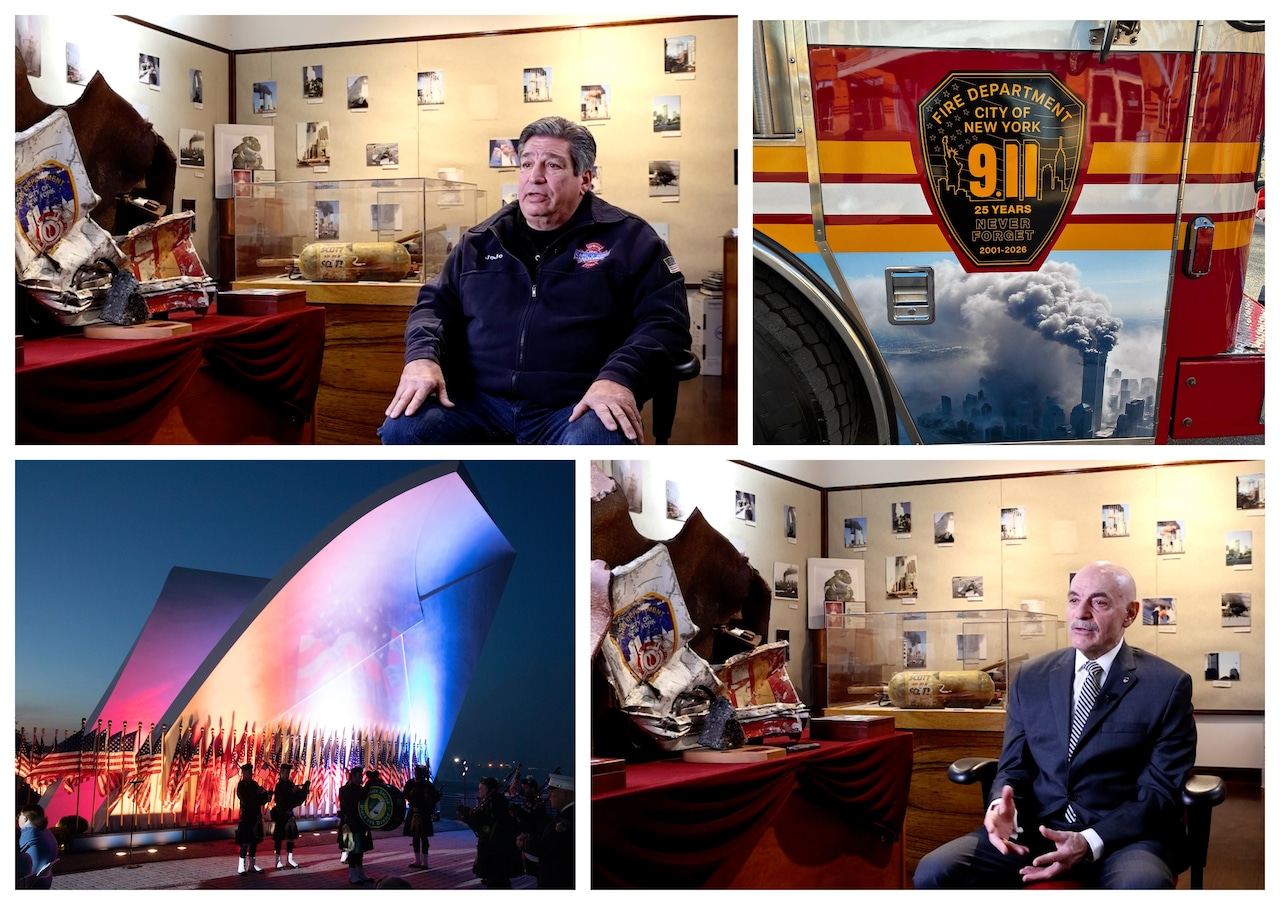
STATEN ISLAND, N.Y. — For traditional-age college students, the events of Sept. 11, 2001, are part of history – not a memory. That’s why several organizations on Staten Island are teaming up to create a new college-level curriculum about 9/11, 25 years after the attacks.
Students learn about 9/11 the same way earlier generations may have learned about events like the Cold War or the moon landing. In 2022, non-profit Tunnel to Towers provided educators with extensive resources about 9/11 for students in grades K-12.
But a college-level curriculum hasn’t been developed — until now.
“They’ve heard about 9/11, they don’t really know what it means if they weren’t born before it, unless you’ve had a family member that was affected — on Staten Island, that’s almost everybody,” said Salvatore Cassano, former FDNY commissioner and executive board member with Tunnel to Towers. “It’s so important for them to learn what happened that day, the history of it, how resilient we were as a city, as a [fire] department, and maybe it’ll give them an idea of going into public service, as well. Here’s so many stories that we’re going to tell them, and how we’re going to explain pre-Sept. 11, Sept. 11, and then post-Sept. 11.”
Through a partnership with the Staten Island Advance/SILive.com editorial team, the College of Staten Island, Tunnel to Towers, and the Carl V. Bini Memorial Fund, a new video-based curriculum is being developed to give historical context of the events of Sept. 11, 2001, to the current generation and those that come after.
The first video has already been released.
“As the 25th year approaches of Sept. 11, we see time has passed and like we’ve seen with other tragedies and other things that have happened in our country’s history, people started to forget. The one thing that’s different on Sept. 11, in my opinion and in most people’s reality is the fact there is no real curriculum and there is no real story,” said Massimo DiDonna, founder and president of the Carl V. Bini Memorial Fund.
The initial plan is to offer a non-credit course at the College of Staten Island through adult education, with a goal of eventually creating a credit-bearing program, according to Robert Wallace, executive legal counsel and chief administrator in charge of community partnerships and government relationships at CSI.
“It’s important for any institution to be part of the community,” said Wallace. “… If we establish a sustainable program that reflects Staten Island’s unique connection to the events, we will have met our goal.”
Joseph “JoJo” Esposito, an FDNY firefighter with Rescue 5, explained that many people don’t truly understand what first responders experienced on Sept. 11, 2001, in the days after, and even years later. He recalled how New Yorkers came together, were kind to each other, clapped for first responders — until people moved on with their life again.
“People forget about all that stuff, and those are the people who need to remember,” said Esposito. “If you weren’t personally attached to it, I understand. These people are like, ‘Another funeral?’ Because we have a funeral twice a week with people dying from 9/11 diseases. So it’s never-ending for us. But those are the people who need to remember.”
It’s why firsthand accounts, like those of Esposito and Cassano, will be documented on video. The organizations will collect these stories from firefighters and other first responders who witnessed the attacks on 9/11 and their impact on the United States and New York.
The curriculum will cover various aspects of the events of 9/11, including leadership recovery, mental health and operational reforms. It’s driven by the community’s deep connection and the ongoing impact the events of 9/11 had on Staten Island.
“We talked about having people come in and talk about their experiences, talk about how we rebuilt the city, how we rebuilt the FDNY, how it brought back patriotism to the country. These are some of the talking points that we’re going to hopefully get into the curriculum,” said Cassano.
The goal, according to Wallace, is for the curriculum to be completed by the 25th anniversary this year.
Cassano said he hopes that, once rolled out at the College of Staten Island, it will expand to other college campuses.