
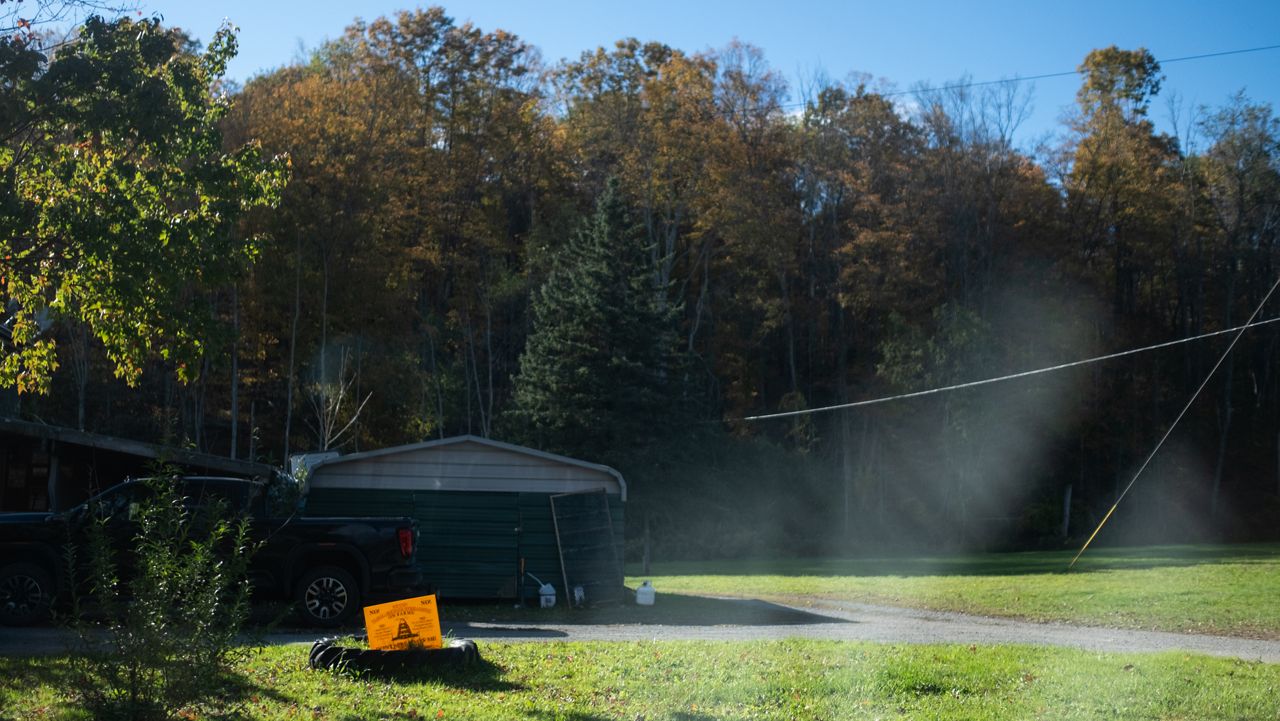
While a bill to place a five-year moratorium on spreading chemical-laden sewage sludge on New York’s farmland didn’t get a vote in the state Assembly last year, lawmakers and environmental advocates are renewing their push to pass it this year.
“Sewage sludge, a byproduct of wastewater treatment plants, has been marketed as an affordable fertilizer alternative to farmers and sold as compost in big-box stores to home gardeners, but evidence shows sludge spreading puts rural communities, surface and groundwater, and food systems at serious risk,” said Caitlin Ferrante, conservation program manager for the Sierra Club Atlantic Chapter, an environmental advocacy group.
Sewage sludge, also known as biosolids, often contains per- and polyfluoroalkyl substances (PFAS), a group of over 10,000 chemicals that do not break down in the environment. They are used for their moisture-resistant properties in different cleaning products, non-stick cookware and other household items, then they end up in wastewater treatment plants.
PFOA and PFOS are two specific forever chemicals linked to human health issues such as an increased risk of cancer, decreased immune ability, child development issues and birth defects, according to the U.S. Environmental Protection Agency.
Last year, residents in both Steuben and Albany counties found that their drinking wells were contaminated with PFAS, E. coli and coliform after sewage sludge was spread on fields near the homes.
“[The bill] would place a five-year moratorium on the spreading of sewage sludge on any land in New York, giving pause for the state to access where the sludge is coming from and to evaluate the practice of spreading in general. We should be protecting our remaining farmlands, our water supplies and our communities as a whole as we work to better understand a sustainable and responsible way to deal with our waste,” Ferrante said during a press conference Wednesday in Albany.
The legislation is currently in the environmental committee for both the state Assembly and state Senate. Last year, the Senate passed it but stalled in the Assembly and did not get a vote.
New York Water Environment Association, a member organization for wastewater treatment operators, advocated against the bill last year, arguing that there aren’t good options for disposing biosolids, and the moratorium would cost New Yorkers more money.
“There are three ways for us to deal with biosolids. We either burn it – which New York state is not interested in incineration anymore in any form – land apply on farm fields or other places, or put it on a landfill as daily cover,” said NYWEA executive director Khris Dodson in an interview last year.
Adding biosolids to landfills has also seen opposition in New York state.
Besides the moratorium, lawmakers have proposed a group of bills that would ban the use of PFAS in beauty, consumer and household products. Another bill would reduce the maximum level of certain PFAS chemicals that can be found in drinking water, bringing it from the current level of 10 parts per trillion for PFOA and PFOS to 4ppt. The federal government has said that by 2029, municipalities must be under the new maximum contaminate levels.
Under the Biden administration, the EPA released a draft risk assessment that found people living on or near sites that were spread with sewage sludge are at risk of contamination from PFAS chemicals. Particularly if they rely on food crops, animal products or drinking water from on or near those sites.
The New York Department of Environmental Conservation has said source control is its approach to keeping PFAS out of sewage sludge that is spread on farmland. They are currently accepting comments on stricter regulations for the use of biosolids, but last week, DEC officials said they aren’t considering a ban.
Assemblymember Anna Kelles, D-Ithaca, said she backs an all-above approach, including a moratorium and banning products that contain PFAS where alternatives exist.
“PFAS contamination is not a single-source problem. It’s the predictable result of allowing these chemicals in everyday products and then acting surprised when they show up in our water, soil and food,” said Kelles, who is a sponsor of the bills. “That includes a needed pause on landspreading of biosolids while New York sets enforceable standards and builds a real testing and remediation response, so farmers and communities are not left to shoulder a problem they did not create.”