
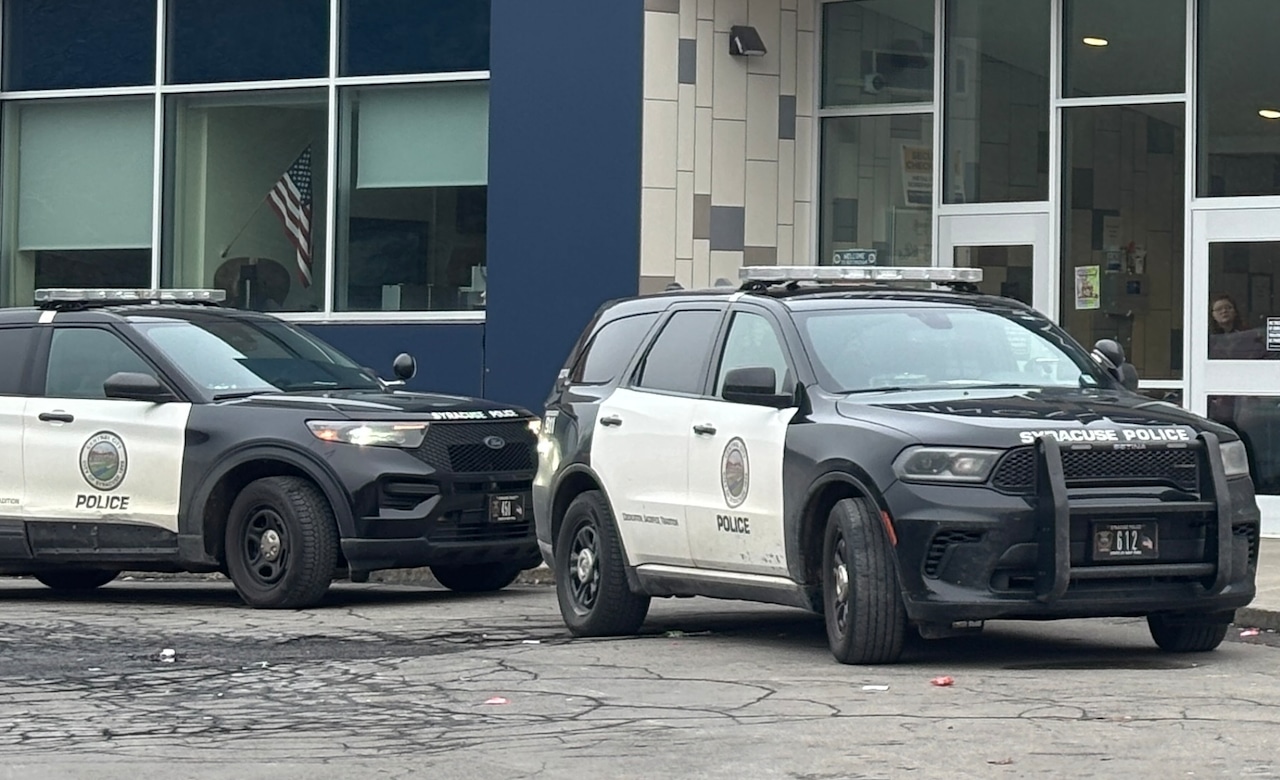
Syracuse, N.Y. — Several New York state lawmakers, including from the Syracuse area, are backing a bill that would limit public access to certain kinds of law enforcement disciplinary records.
The bill would unwind one of the police reforms enacted in New York after the 2020 murder of George Floyd in Minnesota that led to mass protests. Lawmakers that year repealed a decades-old law that kept police disciplinary records secret.
Now, lawmakers are proposing legislation that would block public access to records related to “unfounded,” “exonerated” and pending complaints against law enforcement officers.
Unfounded complaints are defined in the legislation as those that are “determined to lack factual basis and are dismissed without disciplinary actions or criminal charges.”
Exonerated complaints are defined as those where “the alleged conduct occurred but was determined to be lawful.”
Transparency advocates say it is important to release all allegations of wrongdoing because they say police departments have historically cleared many officers too easily. The bill would change the law so that many complaints against officers would never become public.
In New York City, for example, the legislation would seal the vast majority of police disciplinary records from the past five years.
An independent review board there has found more than two-thirds of misconduct allegations over that time period to be unfounded, without enough evidence to make a ruling or determined the officer acted lawfully.
Tom Speaker, the legislative director at the watchdog group Reinvent Albany, said it is wrong to limit public access to public records.
“The real problem is not false accusations against police officers,” he said. “It’s a lack of serious enforcement against abuse of power by police officers.”
Speaker said complaints, even if they are determined to be unfounded or an officer is exonerated, can help track a pattern of conduct.
“You might have an officer with 10 claims against them and maybe seven are labeled unfounded. That’s something that we think the public should want to know,” he said. “Because maybe the internal police disciplinary process sees it as unfounded, but the public might have a different perspective.”
Law enforcement personnel records in New York state had long been considered “confidential” under state Civil Rights Law section 50-a. Officers needed to approve of their records being released.
The Legislature voted in 2020 to repeal section 50-a and make the records available through the state Freedom of Information Law.
One of the legislators who voted then to allow public access to the records was Assemblymember Al Stirpe, D-Cicero. He is now a co-sponsor of the legislation to restrict access.
Stirpe said he thinks the legislature needs to be “a little more careful” and only allow records related to proven wrongdoing to be released. He said he has heard from “day one” from police unions on the issue.
“I’m for accountability. Everybody has to be accountable,” he said. “The one thing is you don’t have to go by hearsay. It has to be something that’s proven, that there’s some conclusion.”
Stirpe also said he wasn’t sure whether the public could distinguish whether information released from an officer’s personnel record was proven.
“I think it can easily cause a false impression,” he said.
State Sen. Chris Ryan, D-Geddes, is also a co-sponsor of the legislation. His spokesperson, Brooke Schneider, said the bill fixes an “unintended consequence” of the 2020 reforms.
“Senator Ryan believes we must protect the public while also ensuring that law enforcement officers are not subjected to undue harm from accusations that were never substantiated,” she said.
The Assembly bill has been referred to that chamber’s governmental operations committee.
The committee chair — Assemblymember John McDonald III, D-Cohoes — said he supports the bill.
“As a former mayor who oversaw a decent size police department, I understand the public’s concerns but also that of law enforcement,” he said. “No one wants to have an allegation without merit in their file.”
The Senate bill has been referred to that chamber’s codes committee. A spokesperson for the committee chair — state Sen. Zellnor Myrie, D-Brooklyn — did not respond to a request for comment.