
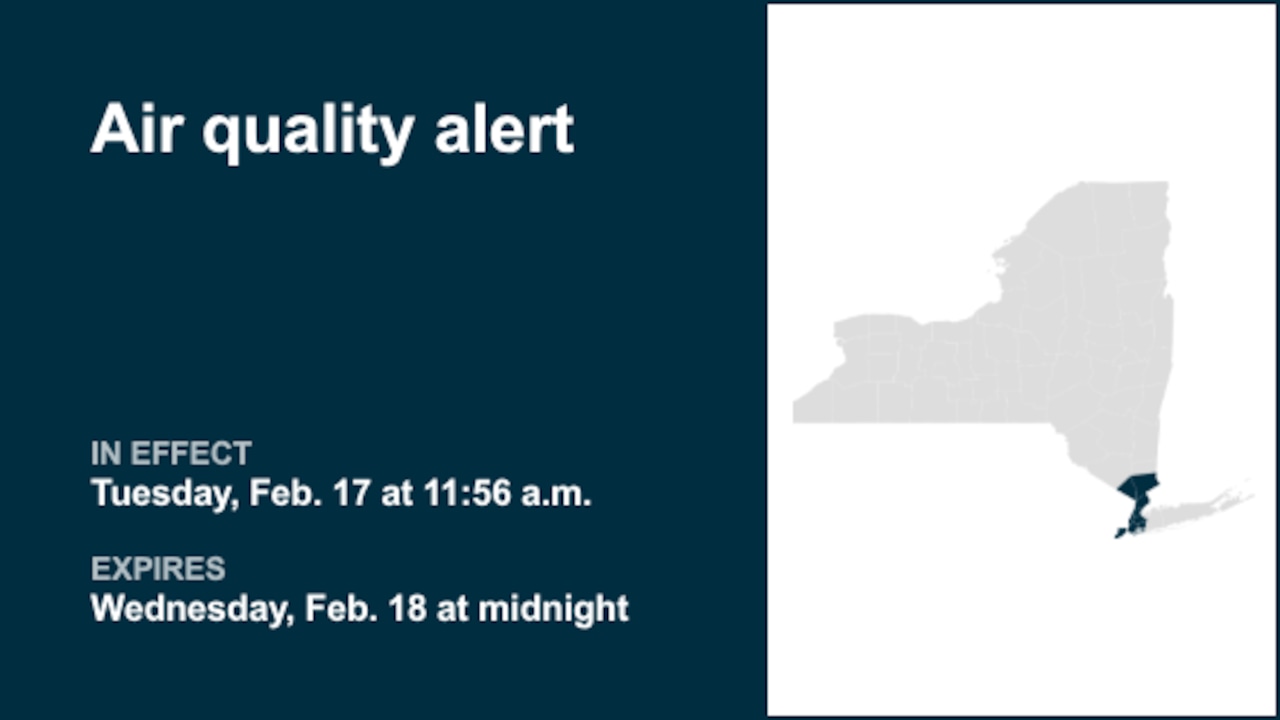
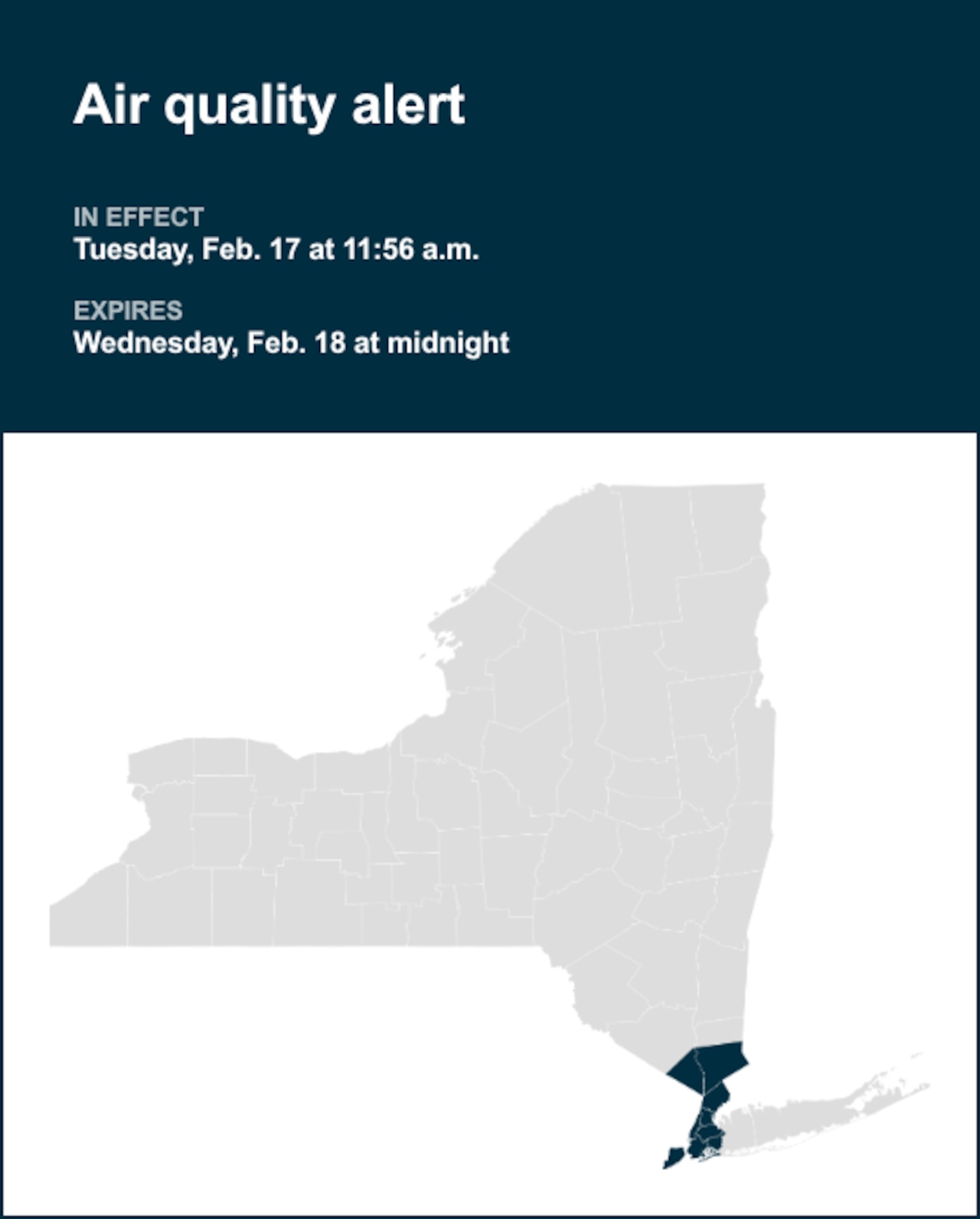
The National Weather Service reported an air quality alert at 11:56 a.m. on Tuesday in effect until Wednesday at midnight for Manhattan, the Bronx, Staten Island, Brooklyn and Queens as well as Rockland and Westchester counties.
“The New York State Department of Environmental Conservation has issued an Air Quality Health Advisory for the following counties: New York, Bronx, Kings, Queens, Richmond, Westchester, Rockland Until midnight tonight. Air quality levels in outdoor air are predicted to be greater than an Air Quality Index value of 100 for the pollutant of Fine Particulates. The Air Quality Index, or AQI, was created as an easy way to correlate levels of different pollutants to one scale. The higher the AQI value, the greater the health concern. When pollution levels are elevated, the New York State Department of Health recommends that individuals consider limiting strenuous outdoor physical activity to reduce the risk of adverse health effects. People who may be especially sensitive to the effects of elevated levels of pollutants include the very young, and those with preexisting respiratory problems such as asthma or heart disease. Those with symptoms should consider consulting their personal physician,” comments the weather service.
 Guidance for air quality alerts: Insights from the weather service
When an air quality alert pops up on the radar, deciphering its implications is crucial. These alerts, issued by the weather service, come with straightforward yet essential guidance to ensure your safety:
Retreat indoors whenever feasible:
If possible, remain indoors, especially if you have respiratory issues, other health concerns, or fall within the senior or child demographics.
Trim outdoor activities to essentials:
When venturing outside becomes unavoidable, limit your outdoor exposure strictly to essential tasks. Reducing your time outdoors is the name of the game.
Reduce pollution contributors:
Be conscious of activities that contribute to pollution, such as driving cars, using gas-powered lawnmowers, or relying on motorized vehicles. Curtail their use during air quality alerts.
No open burning:
Resist the urge to burn debris or any other materials during an air quality alert. This practice only adds to the air pollution problem.
Stay informed:
Stay updated by tuning in to NOAA Weather Radio or your preferred weather news outlet. Staying informed helps you make wise choices regarding outdoor activities during air quality alerts.
Focus on respiratory health:
If you have respiratory issues or health problems, exercise extra caution. These conditions can make you more vulnerable to the adverse effects of poor air quality.
Following the recommendations from the weather service helps bolster your safety during air quality alerts, minimizing your exposure to potentially harmful pollutants. Stay vigilant, stay protected, and make your health the top priority.