
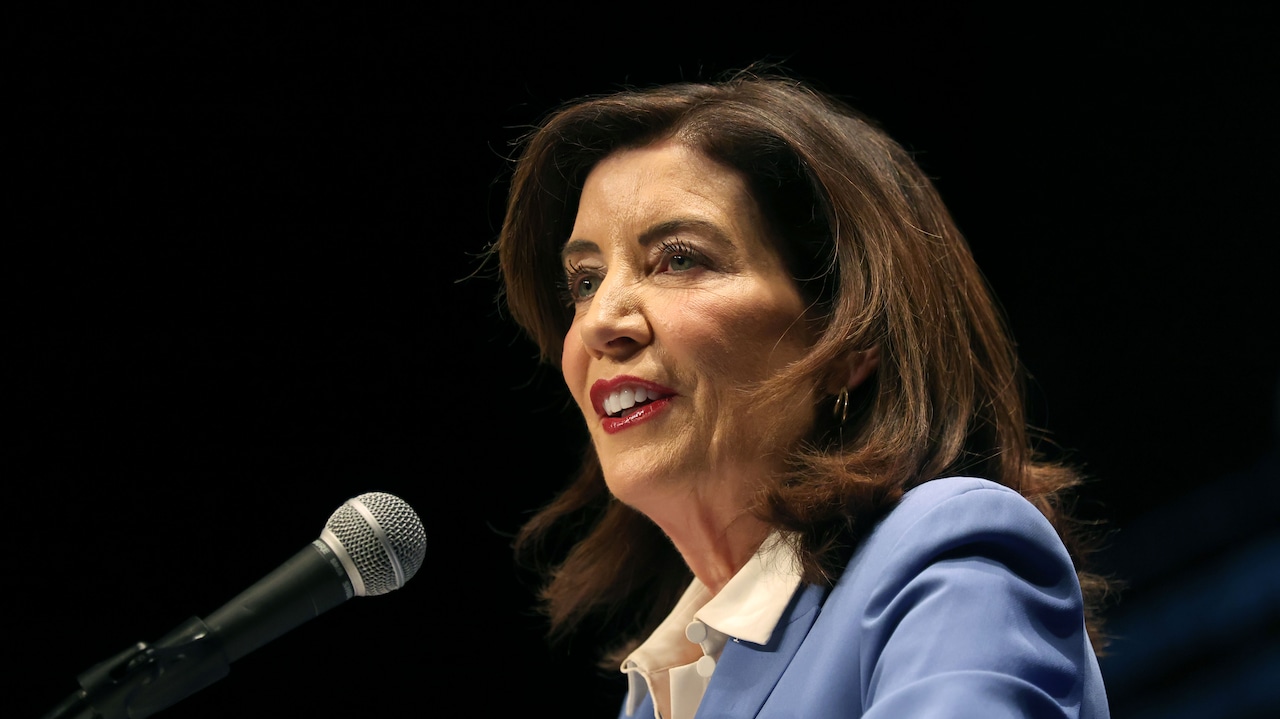
By Chris Gelardi | New York Focus
This story originally appeared in New York Focus, a nonprofit news publication investigating power in New York. Sign up for their newsletter here.
In December 2024, the New York state prison system made national news when guards were caught on video beating an incarcerated man to death. Soon after the footage’s release, Governor Kathy Hochul publicly sprang into action, visiting the facility where 43-year-old Robert Brooks was killed and announcing a suite of initiatives aimed at boosting prison oversight and accountability.
“The system failed Mr. Brooks, and I will not be satisfied until there has been significant culture change,” Hochul said at the time.
The governor’s measures included $2 million for the Correctional Association of New York, or CANY, a 182-year-old nonprofit organization tasked by state law with overseeing prison conditions. The legislature negotiated the figure up to over $3 million, and the allocation was included in last year’s state budget. The money allowed the small organization — the only body at the time tasked with regularly overseeing state prison conditions — to hire 10 new full-time employees. Those hires helped CANY visit more prisons, closely monitor problem facilities, and establish metrics for improvement.
Now, the governor is pulling the plug: Her budget proposal for next fiscal year includes no state money for CANY.
Before last year, CANY mostly funded its legally enshrined oversight duties through foundation grants and individual donors. The state money came at an especially urgent time: After Brooks’s murder, prison corrections officers launched a three-week wildcat strike, during which guards killed another incarcerated man. The strike ended with a mass firing, and the resulting staffing shortage has contributed to frequent lockdowns and deteriorating conditions.
With its increased budget, CANY launched an initiative to focus attention on six prisons with some of the most serious problems. The organization visited each facility three times over nine months, interviewing incarcerated people and staff. CANY staff worked with the prisons’ administrators to identify core problems, come up with metrics to measure them, and begin to track them. It was more collaborative and productive than the organization’s routine oversight process, which typically involves visiting each of the system’s 42 facilities every four or five years and writing a comprehensive report, explained Jennifer Scaife, CANY’s executive director.
“Staff at these facilities are actually really into it,” Scaife said of the initiative. “Security staff say, ‘I like this, this makes sense. I really appreciate being part of the conversation.’” It offered a model that CANY could scale up to the rest of the system, she said — if the funding were there.
CANY understood the last year’s funding boost as a permanent commitment to ensuring that the embattled prison system has proper oversight.
So did legislators who deal with prison issues. “It was completely reasonable to believe that this funding would be renewed each year,” state Senator Julia Salazar, head of her chamber’s corrections committee, told New York Focus.
“It’s completely unsustainable and virtually useless to only allocate the funds for one year,” Salazar said.
Salazar added that she hopes that the legislature can reinstate the funding during the state budget negotiation process. The state Senate and Assembly will release budget counterproposals around the end of the month, and the final budget legislation is due on April 1.
“Governor Hochul will continue to negotiate in good faith with the state legislature to deliver a budget that makes New York State safer and more affordable,” a spokesperson for Hochul said in a statement. The spokesperson noted that Hochul’s proposal would allow CANY to continue to access last year’s funds; Scaife said that the organization budgeted the money to run out at the end of the fiscal year.
The $3 million CANY is seeking is a drop in the bucket compared to other prison spending. It represents 0.07 percent of the Department of Corrections and Community Supervision’s annual budget, Scaife pointed out. It represents 0.2 percent of what Hochul is proposing to spend for National Guard deployments to help staff the prisons: They’ll end up costing $700 million this fiscal year, and Hochul has proposed an additional $535 million for next year.
“Patchwork, reactive reforms” don’t improve prison conditions, Scaife explained at a budget hearing last week.
“You can’t just do oversight for six months and then walk away,” she said.